
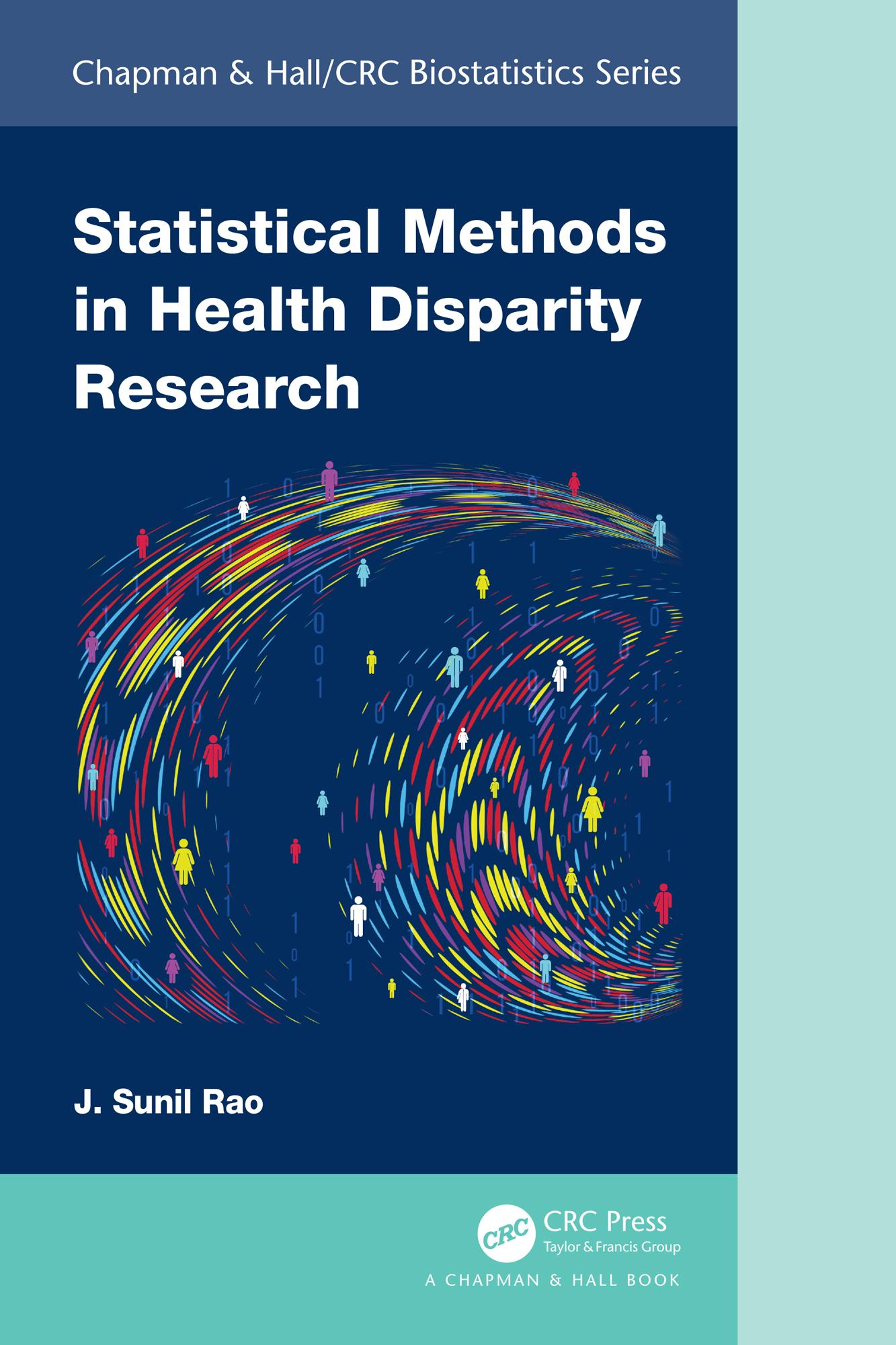
A health disparity refers to a higher burden of illness, injury, disability, or mortality experienced by one group relative to others attributable to multiple factors including socioeconomic status, environmental factors, insufficient access to health care, individual risk factors, and behaviors and inequalities in education. These disparities may be due to many factors including age, income, and race. Statistical Methods in Health Disparity Research will focus on their estimation, ranging from classical approaches including the quantification of a disparity, to more formal modeling, to modern approaches involving more flexible computational approaches.
Features:
- Presents an overview of methods and applications of health disparity estimation
- First book to synthesize research in this field in a unified statistical framework
- Covers classical approaches, and builds to more modern computational techniques
- Includes many worked examples and case studies using real data
- Discusses available software for estimation
The book is designed primarily for researchers and graduate students in biostatistics, data science, and computer science. It will also be useful to many quantitative modelers in genetics, biology, sociology, and epidemiology.
Maksa helposti kortilla, Klarnalla, Apple Paylla tai Google Paylla. Etkö ole tyytyväinen? Sinulla on aina 14 päivän palautusoikeus. Lue lisää ehdoistamme. Jos sinulla on kysyttävää, lähetä meille sähköpostia osoitteeseen hello@memmo.org.
Memmo tekee opiskelusta helpompaa – missä päin maailmaa ikinä oletkin. Meillä yhdistät kurssikirjat ja fiksut opiskelutyökalut yhteen paikkaan: tiivistelmät, visat, podcastit ja muistikortit. Ja sitten Ted, opiskelukaverisi, joka vastaa kaikkeen, mitä ikinä mietitkin. Yli 50 000 opiskelijaa opiskelee jo täällä – rakennettu auttamaan sinua oppimaan nopeammin ja stressaamaan vähemmän.