
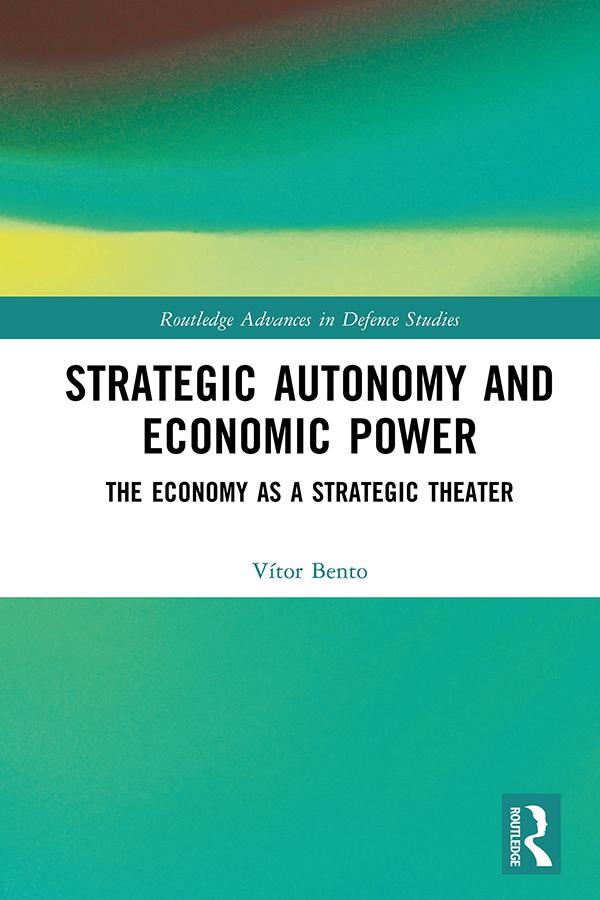
This book examines the effect of economic power on a state’s strategic autonomy.
Strategic autonomy is a fundamental condition for the availability of strategic options in the interaction of states. This book provides the first clear operational definition of the concept and offers an analysis of the relevance of the national economy to strategic autonomy. The main sources of economic power – size of the economy, position in trade and technological networks, savings, wealth, and finance – and their impact on strategic autonomy are analyzed in depth. The strategic governance of the national economy is also addressed as a way of ensuring that national economic power can work as strategic power for a country, providing it with strategic autonomy. The strategies pursued by China – which in under four decades has gone from an underdeveloped state to the main challenger of the dominant world power – and Germany – which, despite being defeated in World War II, having no nuclear weapons and having chosen to be a "civilian power", became the dominant power in Europe – are analyzed in depth, as two paradigmatic examples of the theory developed by the book.
This book will be of much interest to students of strategic studies, economics, foreign policy and International Relations.
Maksa helposti kortilla, Klarnalla, Apple Paylla tai Google Paylla. Etkö ole tyytyväinen? Sinulla on aina 14 päivän palautusoikeus. Lue lisää ehdoistamme. Jos sinulla on kysyttävää, lähetä meille sähköpostia osoitteeseen hello@memmo.org.
Memmo tekee opiskelusta helpompaa – missä päin maailmaa ikinä oletkin. Meillä yhdistät kurssikirjat ja fiksut opiskelutyökalut yhteen paikkaan: tiivistelmät, visat, podcastit ja muistikortit. Ja sitten Ted, opiskelukaverisi, joka vastaa kaikkeen, mitä ikinä mietitkin. Yli 50 000 opiskelijaa opiskelee jo täällä – rakennettu auttamaan sinua oppimaan nopeammin ja stressaamaan vähemmän.