
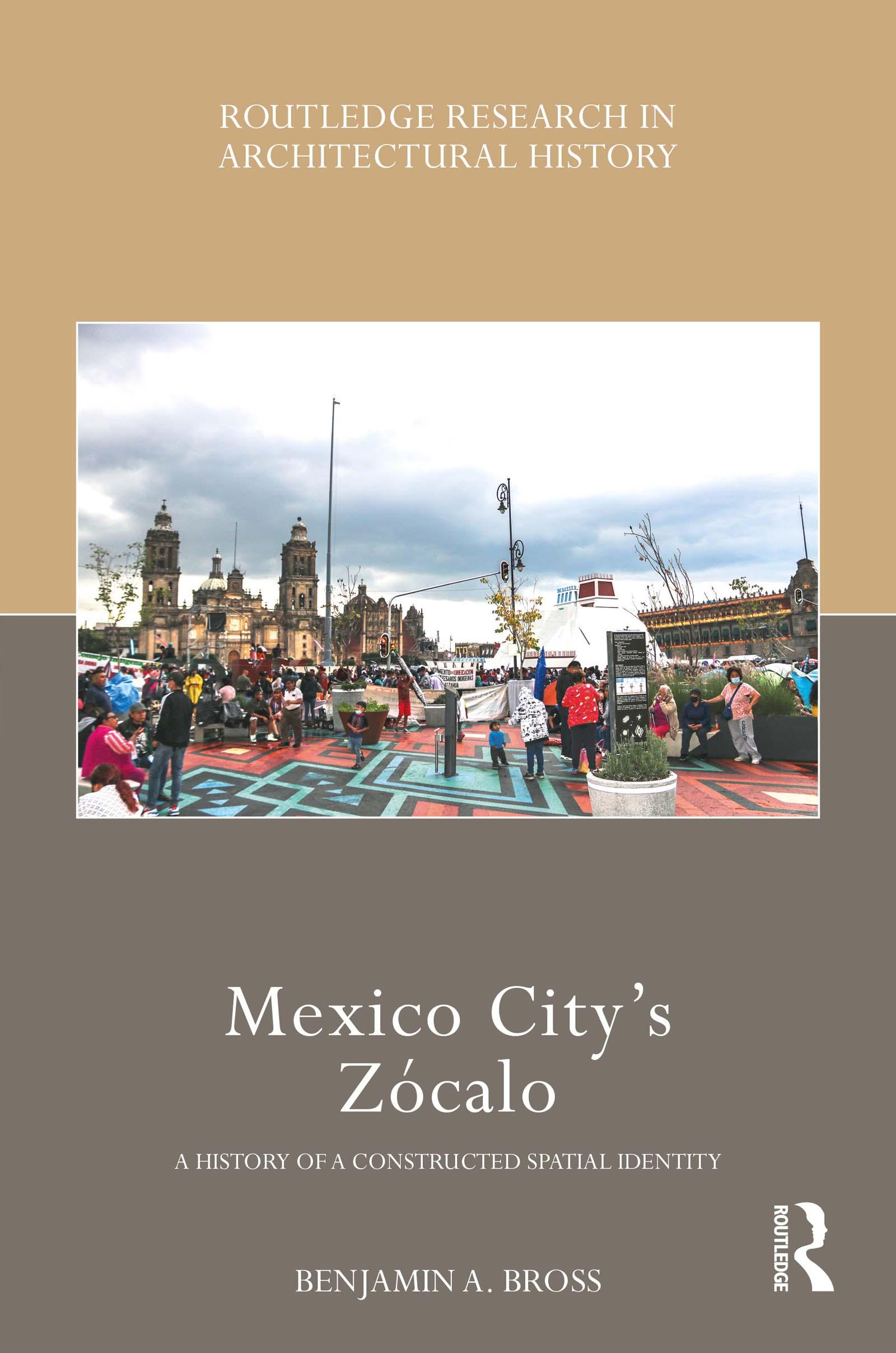
This book presents a case study of one of Latin America’s most important and symbolic spaces, the Zócalo in Mexico City, weaving together historic events and corresponding morphological changes in the urban environment. It poses questions about how the identity of a place emerges, how it evolves and, why does it change? Mexico City’s Zócalo: A History of a Constructed Spatial Identity utilizes the history of a specific place, the Zócalo (Plaza de la Constitución), to explain the emergence and evolution of Mexican identities over time.
Starting from the pre-Hispanic period to present day, the work illustrates how the Zócalo reveals spatial manifestations as part of the larger socio-cultural zeitgeist. By focusing on the history of changes in spatial production – what Henri Lefebvre calls society’s "secretions" – Bross traces how cultural, social, economic, and political forces shaped the Zócalo’s spatial identity and, in turn, how the Zócalo shaped and fostered new identities in return. It will be a fascinating read for architectural and urban historians investigating Latin America.
Maksa helposti kortilla, Klarnalla, Apple Paylla tai Google Paylla. Etkö ole tyytyväinen? Sinulla on aina 14 päivän palautusoikeus. Lue lisää ehdoistamme. Jos sinulla on kysyttävää, lähetä meille sähköpostia osoitteeseen hello@memmo.org.
Memmo tekee opiskelusta helpompaa – missä päin maailmaa ikinä oletkin. Meillä yhdistät kurssikirjat ja fiksut opiskelutyökalut yhteen paikkaan: tiivistelmät, visat, podcastit ja muistikortit. Ja sitten Ted, opiskelukaverisi, joka vastaa kaikkeen, mitä ikinä mietitkin. Yli 50 000 opiskelijaa opiskelee jo täällä – rakennettu auttamaan sinua oppimaan nopeammin ja stressaamaan vähemmän.