
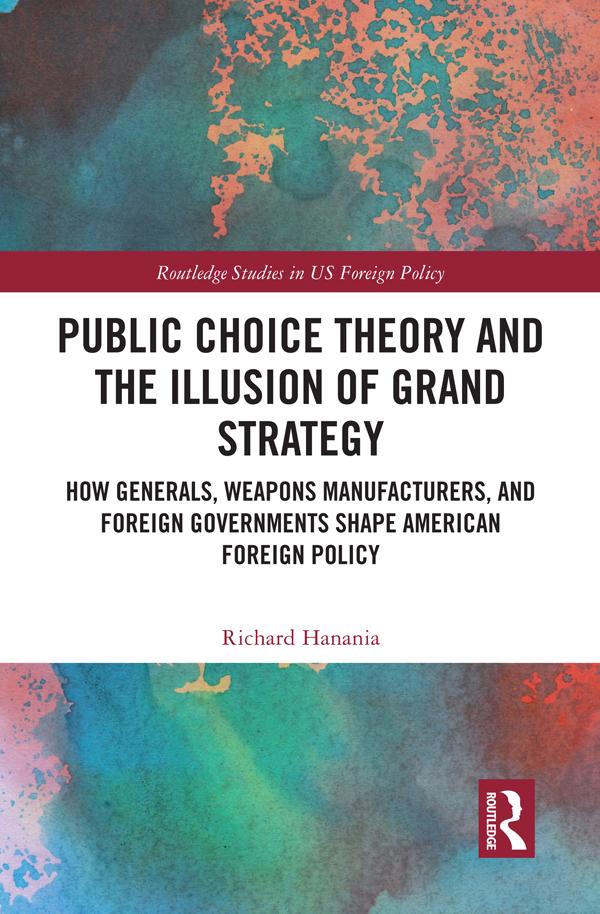
This book argues that while the US president makes foreign policy decisions based largely on political pressures, it is concentrated interests that shape the incentive structures in which he and other top officials operate.
The author identifies three groups most likely to be influential: government contractors, the national security bureaucracy, and foreign governments. This book shows that the public choice perspective is superior to a theory of grand strategy in explaining the most important aspects of American foreign policy, including the war on terror, policy toward China, and the distribution of US forces abroad. Arguing that American leaders are selected to respond to public opinion, not necessarily according to their ability to formulate and execute long-terms plans, the author shows how mass attitudes are easily malleable in the domain of foreign affairs due to ignorance with regard to the topic, the secrecy that surrounds national security issues, the inherent complexity of the issues involved, and most importantly, clear cases of concentrated interests.
The book will be of interest to students and scholars of American Studies, Foreign Policy Analysis and Global Governance.
Maksa helposti kortilla, Klarnalla, Apple Paylla tai Google Paylla. Etkö ole tyytyväinen? Sinulla on aina 14 päivän palautusoikeus. Lue lisää ehdoistamme. Jos sinulla on kysyttävää, lähetä meille sähköpostia osoitteeseen hello@memmo.org.
Memmo tekee opiskelusta helpompaa – missä päin maailmaa ikinä oletkin. Meillä yhdistät kurssikirjat ja fiksut opiskelutyökalut yhteen paikkaan: tiivistelmät, visat, podcastit ja muistikortit. Ja sitten Ted, opiskelukaverisi, joka vastaa kaikkeen, mitä ikinä mietitkin. Yli 50 000 opiskelijaa opiskelee jo täällä – rakennettu auttamaan sinua oppimaan nopeammin ja stressaamaan vähemmän.