
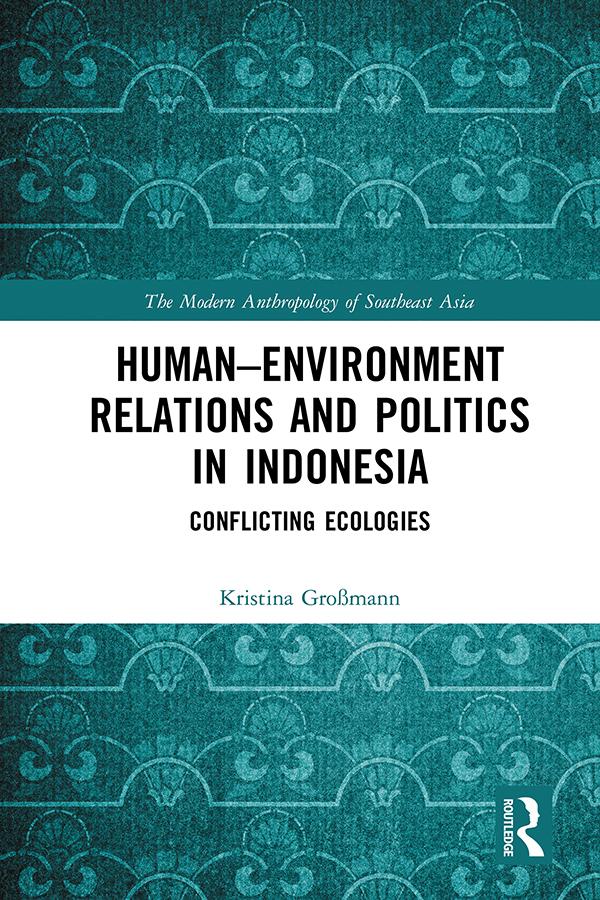
This book analyses how people in Kalimantan, the Indonesian part of the island of Borneo, relate to their environment in different political and historical contexts.
Drawing on multi-sited ethnographic studies of Dayak people, the indigenous inhabitants of Borneo, the book examines how human-environment relationships differ and collide. These "conflicting ecologies" are based on people's relation to the "environment", which encompasses the non-human realm in the widest sense, including forests, rivers, land, natural resources, animals and spirits. The author argues that relationality and power are decisive factors for the understanding and analysis of peoples’ ecologies. The book integrates different theoretical approaches, sheds light upon the environmental transformation taking place in Indonesia, as well as the social exclusion it entails, and highlights the conceptual shortcomings of universalistic concepts of human-environment relations.
An exploration of evolving human-nature relations, this book will be of interest to academics studying political ecology, environmental anthropology, sustainability sciences, political sciences, development studies, human geography, human ecology, Southeast Asian studies, and Asian studies.
Maksa helposti kortilla, Klarnalla, Apple Paylla tai Google Paylla. Etkö ole tyytyväinen? Sinulla on aina 14 päivän palautusoikeus. Lue lisää ehdoistamme. Jos sinulla on kysyttävää, lähetä meille sähköpostia osoitteeseen hello@memmo.org.
Memmo tekee opiskelusta helpompaa – missä päin maailmaa ikinä oletkin. Meillä yhdistät kurssikirjat ja fiksut opiskelutyökalut yhteen paikkaan: tiivistelmät, visat, podcastit ja muistikortit. Ja sitten Ted, opiskelukaverisi, joka vastaa kaikkeen, mitä ikinä mietitkin. Yli 50 000 opiskelijaa opiskelee jo täällä – rakennettu auttamaan sinua oppimaan nopeammin ja stressaamaan vähemmän.