
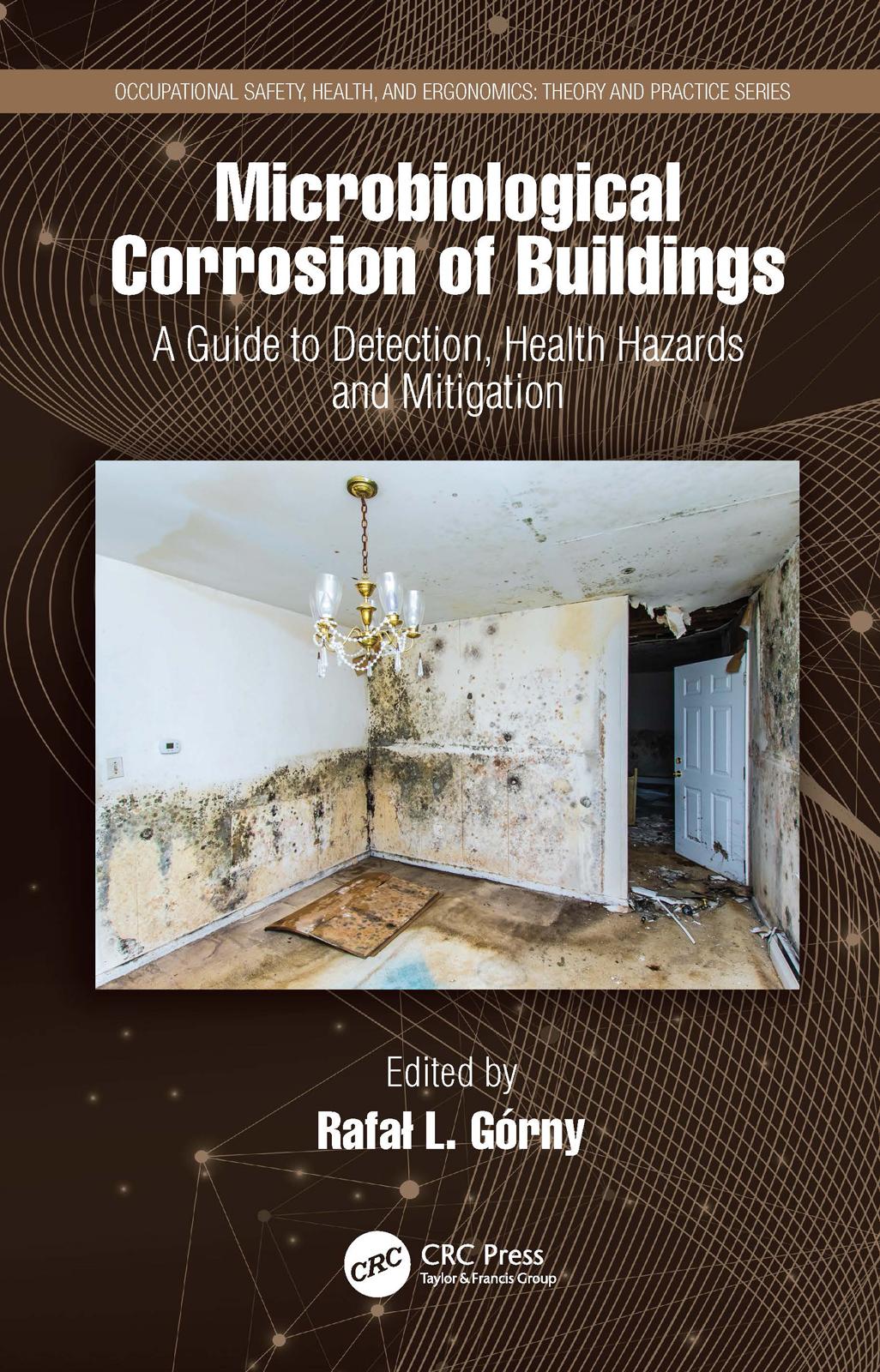
Environmental stress caused by water continuously exposes buildings to microbial colonization. This is highly evident when both minor dampness and mass flooding occur. The text describes how microbiological corrosion of buildings and the structures and substances derived from these hazards are responsible for adverse health effects on people exposed to these contaminated environments. Microbiological Corrosion of Buildings: A Guide to Detection, Health Hazards, and Mitigation describes the key elements and methods for neutralising and removing microbiological contamination, and the operating algorithm for checking the effectiveness of preventative solutions. Ideal for construction engineers, microbiologists and professionals in the field.
Features:
- Latest methods for detection of indoor microbial hazards
- Identifies the tools needed for natural, non-destructive and non-invasive methods of bio-corrosion removal
- Describes the social and health problems associated with exposure to microbiological hazards
- Provides case studies and examples of microorganisms responsible for microbial corrosion.
‘Climate change and the associated adverse effects, such as floods and whirlwinds, make the problem of microbiological corrosion of buildings that generates health risks and economic losses on a global scale, the focus of science and technology. The monograph presents a complex problem of building bio-corrosion, that requires knowledge of the distant fields of microbiology and building technology, for the use of both scientists and practitioners. This pioneering work of an interdisciplinary nature harmoniously combines knowledge on specific microbiological issues relating to the process of bio-corrosion and the associated health risks with detailed issues of construction technology concerning the prevention of bio-corrosion and its removal. The authors succeeded in combining a very high scientific level in the monograph with an accessible and understandable presentation of complex problems. The extensive references, ranging from "classical" items from many years ago to the most recent articles presenting the state of the art in this field, are worth emphasising.’
—Prof. Jacek Dutkiewicz, Ph.D., D.Sc., Institute of Rural Health in Lublin
Maksa helposti kortilla, Klarnalla, Apple Paylla tai Google Paylla. Etkö ole tyytyväinen? Sinulla on aina 14 päivän palautusoikeus. Lue lisää ehdoistamme. Jos sinulla on kysyttävää, lähetä meille sähköpostia osoitteeseen hello@memmo.org.
Memmo tekee opiskelusta helpompaa – missä päin maailmaa ikinä oletkin. Meillä yhdistät kurssikirjat ja fiksut opiskelutyökalut yhteen paikkaan: tiivistelmät, visat, podcastit ja muistikortit. Ja sitten Ted, opiskelukaverisi, joka vastaa kaikkeen, mitä ikinä mietitkin. Yli 50 000 opiskelijaa opiskelee jo täällä – rakennettu auttamaan sinua oppimaan nopeammin ja stressaamaan vähemmän.