
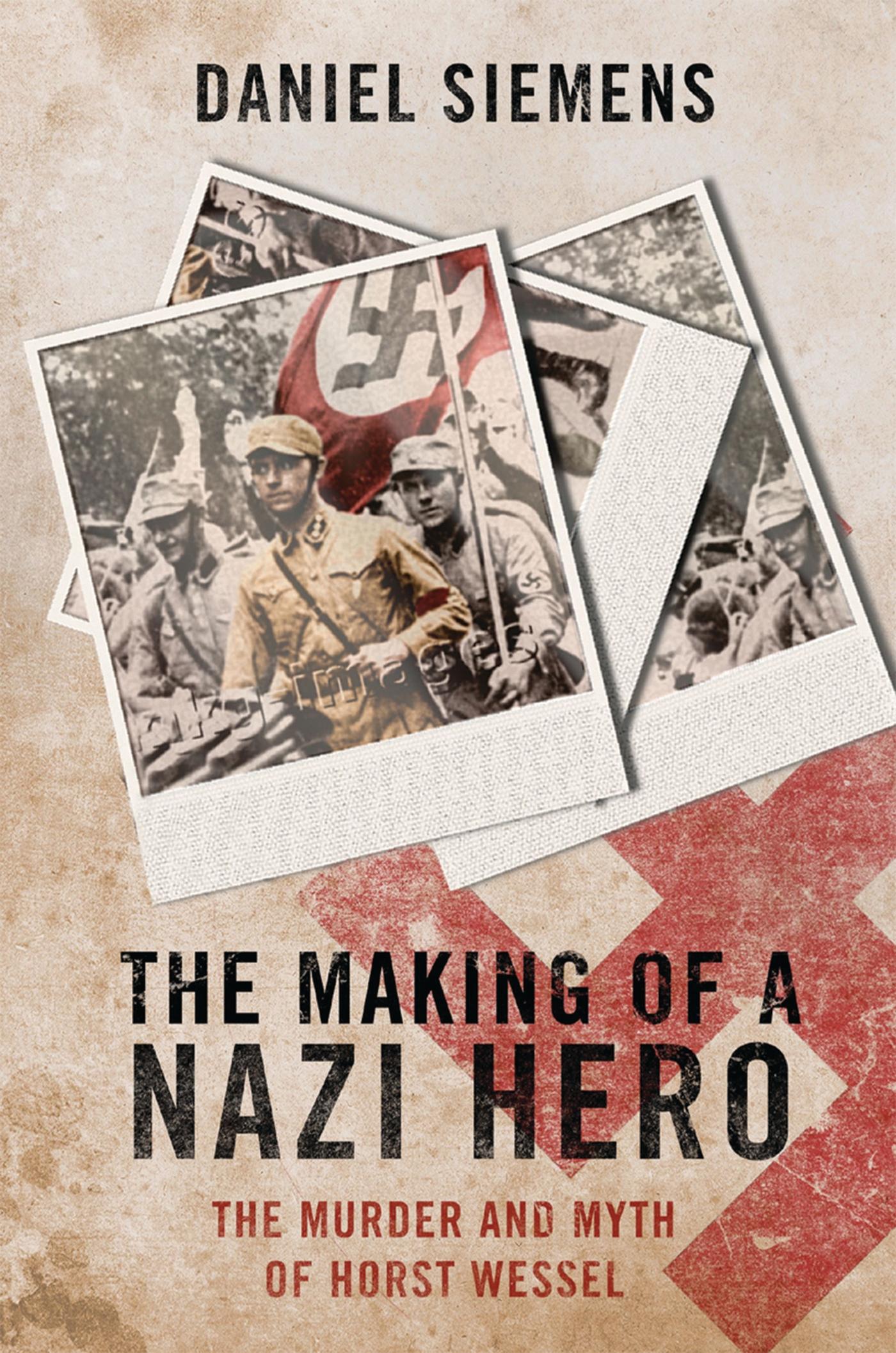
On 14 January 1930, Horst Wessel, a young and ambitious member of the SA was shot at close range at his home in Berlin. Although the crime was never completely solved, the murder was most likely committed by a group of communists with close ties to the city's gangland. Wessel later died from his injuries. Joseph Goebbels, whose attention had already been drawn to Wessel as a possible future Nazi leader, was the first to recognize the propaganda potential of the case. 'A young martyr for the Third Reich' he wrote in his diary on 23 February 1930 immediately after receiving the news of Wessel's death. This was the beginning of the myth-making that transformed an ordinary individual into a masculine role model for an entire generation. Two months later, thousands of people lined the streets for Wessel's funeral parade and Goebbels delivered a graveside eulogy. In the years that followed - and as Nazi power increased - Horst Wessel became the hero of the Nazi movement - with his elaborate memorial quickly becoming a site of pilgrimage.
The song Die Fahne Hoch for which Wessel had written the lyrics (and which subsequently became popularly known as the Horst Wessel Song) became the official Nazi party anthem and the Berlin district of Friedrichshain, where Wessel was murdered was renamed Horst-Wessel-Stadt in his honour. Numerous biographies and films followed. Using previously unseen material, Daniel Siemens provides a fascinating and gripping account of the background to Horst Wessel's murder and uncovers how and why the Nazis made him a political hero. He examines the Horst Wessel 'cult' which emerged in the aftermath of Wessel's death and the murders of revenge, particularly against Communists, committed by the SA and Gestapo after 1933. At the same time, the story of Horst Wessel provides a portrait of the Nazi propaganda machine at its most effective and most chilling.
The song Die Fahne Hoch for which Wessel had written the lyrics (and which subsequently became popularly known as the Horst Wessel Song) became the official Nazi party anthem and the Berlin district of Friedrichshain, where Wessel was murdered was renamed Horst-Wessel-Stadt in his honour. Numerous biographies and films followed. Using previously unseen material, Daniel Siemens provides a fascinating and gripping account of the background to Horst Wessel's murder and uncovers how and why the Nazis made him a political hero. He examines the Horst Wessel 'cult' which emerged in the aftermath of Wessel's death and the murders of revenge, particularly against Communists, committed by the SA and Gestapo after 1933. At the same time, the story of Horst Wessel provides a portrait of the Nazi propaganda machine at its most effective and most chilling.
Maksa helposti kortilla, Klarnalla, Apple Paylla tai Google Paylla. Etkö ole tyytyväinen? Sinulla on aina 14 päivän palautusoikeus. Lue lisää ehdoistamme. Jos sinulla on kysyttävää, lähetä meille sähköpostia osoitteeseen hello@memmo.org.
Memmo tekee opiskelusta helpompaa – missä päin maailmaa ikinä oletkin. Meillä yhdistät kurssikirjat ja fiksut opiskelutyökalut yhteen paikkaan: tiivistelmät, visat, podcastit ja muistikortit. Ja sitten Ted, opiskelukaverisi, joka vastaa kaikkeen, mitä ikinä mietitkin. Yli 50 000 opiskelijaa opiskelee jo täällä – rakennettu auttamaan sinua oppimaan nopeammin ja stressaamaan vähemmän.