
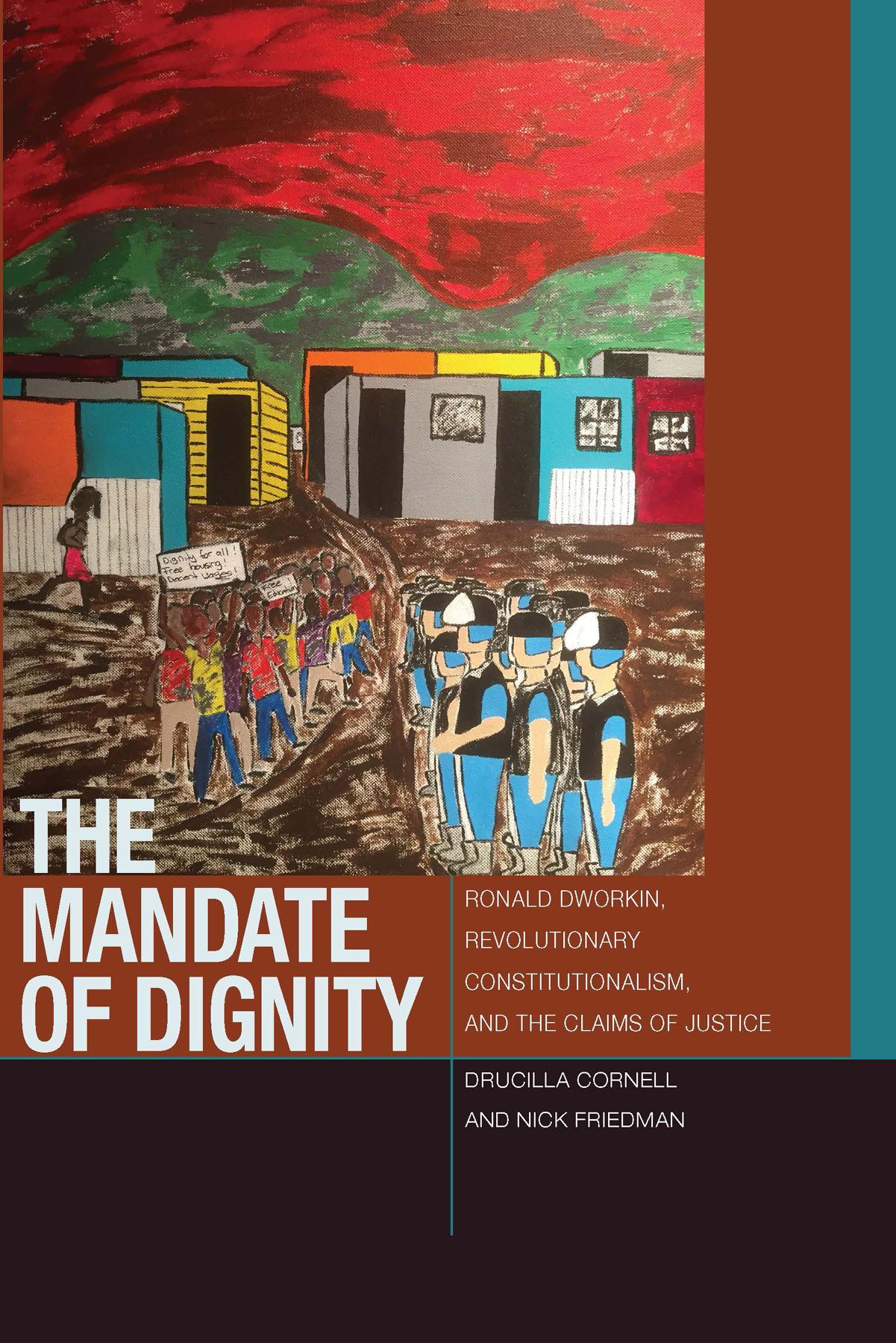
A major American legal thinker, the late Ronald Dworkin also helped shape new dispensations in the Global South. In South Africa, in particular, his work has been fiercely debated in the context of one of the world’s most progressive constitutions. Despite Dworkin’s discomfort with that document’s enshrinement of “socioeconomic rights,” his work enables an important defense of a jurisprudence premised on justice, rather than on legitimacy.
Beginning with a critical overview of Dworkin’s work culminating in his two principles of dignity, Cornell and Friedman turn to Kant and Hegel for an approach better able to ground the principles of dignity Dworkin advocates. Framed thus, Dworkin’s challenge to legal positivism enables a theory of constitutional revolution in which existing legal structures are transformatively revalued according to ethical mandates. By founding law on dignity, Dworkin begins to articulate an ethical jurisprudence responsive to the lived experience of injustice. This book, then, articulates a revolutionary constitutionalism crucial to the struggle for decolonization.
Maksa helposti kortilla, Klarnalla, Apple Paylla tai Google Paylla. Etkö ole tyytyväinen? Sinulla on aina 14 päivän palautusoikeus. Lue lisää ehdoistamme. Jos sinulla on kysyttävää, lähetä meille sähköpostia osoitteeseen hello@memmo.org.
Memmo tekee opiskelusta helpompaa – missä päin maailmaa ikinä oletkin. Meillä yhdistät kurssikirjat ja fiksut opiskelutyökalut yhteen paikkaan: tiivistelmät, visat, podcastit ja muistikortit. Ja sitten Ted, opiskelukaverisi, joka vastaa kaikkeen, mitä ikinä mietitkin. Yli 50 000 opiskelijaa opiskelee jo täällä – rakennettu auttamaan sinua oppimaan nopeammin ja stressaamaan vähemmän.