
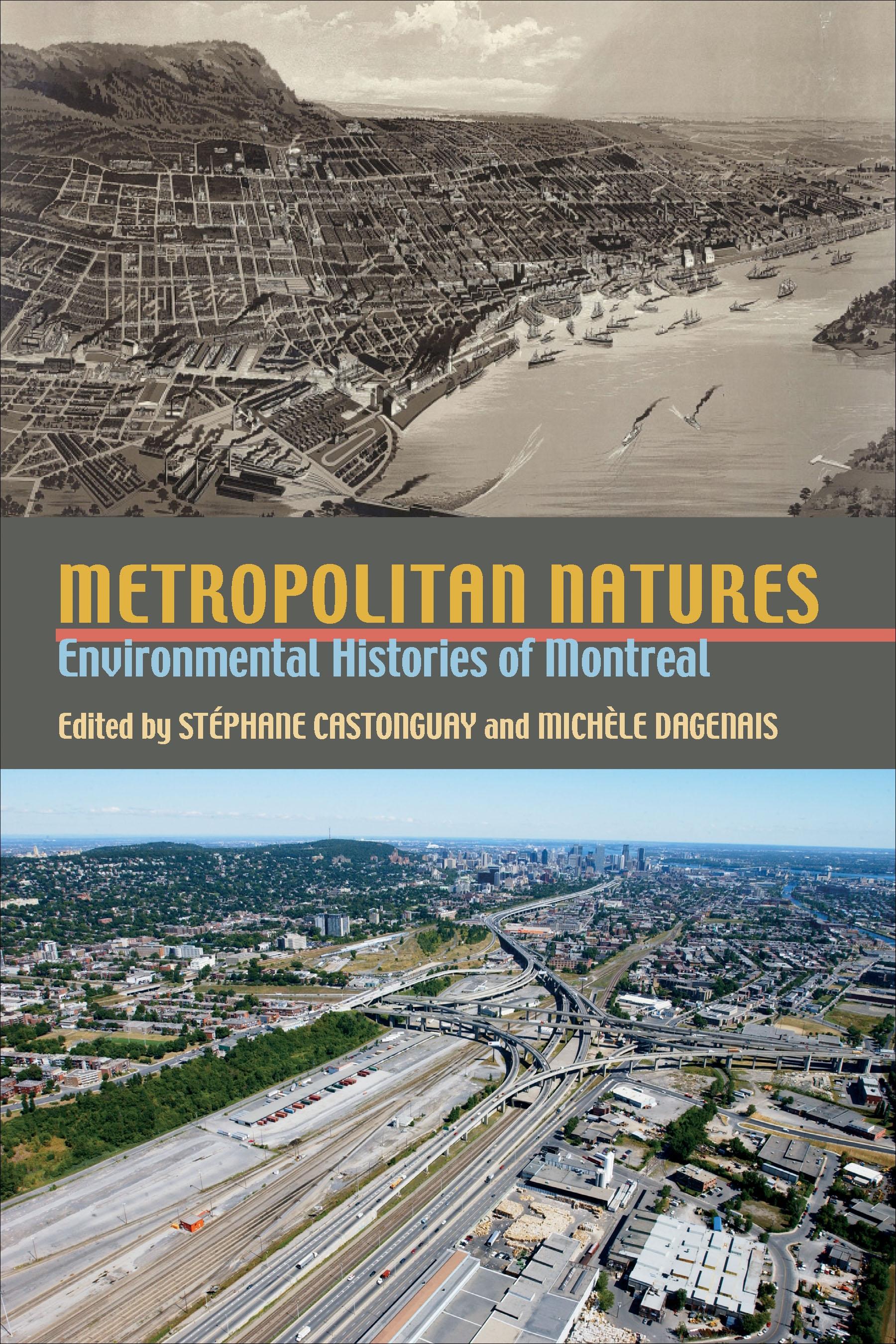
One of the oldest metropolitan areas in North America, Montreal has evolved from a remote fur-trading post in New France into an international center for services and technology. A city and an island located at the confluence of the Ottawa and St. Lawrence Rivers, it is uniquely situated to serve as an international port while also providing rail access to the Canadian interior. The historic capital of the Province of Canada, once Canada's foremost metropolis, Montreal has a multifaceted cultural heritage drawn from European and North American influences. Thanks to its rich past, the city offers an ideal setting for the study of an evolving urban environment.
Metropolitan Natures presents original histories of the diverse environments that constitute Montreal and it region. It explores the agricultural and industrial transformation of the metropolitan area, the interaction of city and hinterland, and the interplay of humans and nature. The fourteen chapters cover a wide range of issues, from landscape representations during the colonial era to urban encroachments on the Kahnawake Mohawk reservation on the south shore of the island, from the 1918-1920 Spanish flu epidemic and its ensuing human environmental modifications to the urban sprawl characteristic of North America during the postwar period.
Situations that politicize the environment are discussed as well, including the economic and class dynamics of flood relief, highways built to facilitate recreational access for the middle class, power-generating facilities that invade pristine rural areas, and the elitist environmental hegemony of fox hunting. Additional chapters examine human attempts to control the urban environment through street planning, waterway construction, water supply, and sewerage.
Metropolitan Natures presents original histories of the diverse environments that constitute Montreal and it region. It explores the agricultural and industrial transformation of the metropolitan area, the interaction of city and hinterland, and the interplay of humans and nature. The fourteen chapters cover a wide range of issues, from landscape representations during the colonial era to urban encroachments on the Kahnawake Mohawk reservation on the south shore of the island, from the 1918-1920 Spanish flu epidemic and its ensuing human environmental modifications to the urban sprawl characteristic of North America during the postwar period.
Situations that politicize the environment are discussed as well, including the economic and class dynamics of flood relief, highways built to facilitate recreational access for the middle class, power-generating facilities that invade pristine rural areas, and the elitist environmental hegemony of fox hunting. Additional chapters examine human attempts to control the urban environment through street planning, waterway construction, water supply, and sewerage.
Kategoria: Arkitektur & Stadsplanering
e-ISBN: 9780822977711
Maksa helposti kortilla, Klarnalla, Apple Paylla tai Google Paylla. Etkö ole tyytyväinen? Sinulla on aina 14 päivän palautusoikeus. Lue lisää ehdoistamme. Jos sinulla on kysyttävää, lähetä meille sähköpostia osoitteeseen hello@memmo.org.
Memmo tekee opiskelusta helpompaa – missä päin maailmaa ikinä oletkin. Meillä yhdistät kurssikirjat ja fiksut opiskelutyökalut yhteen paikkaan: tiivistelmät, visat, podcastit ja muistikortit. Ja sitten Ted, opiskelukaverisi, joka vastaa kaikkeen, mitä ikinä mietitkin. Yli 50 000 opiskelijaa opiskelee jo täällä – rakennettu auttamaan sinua oppimaan nopeammin ja stressaamaan vähemmän.
Saatat pitää myös näistä
Osta kirja0