
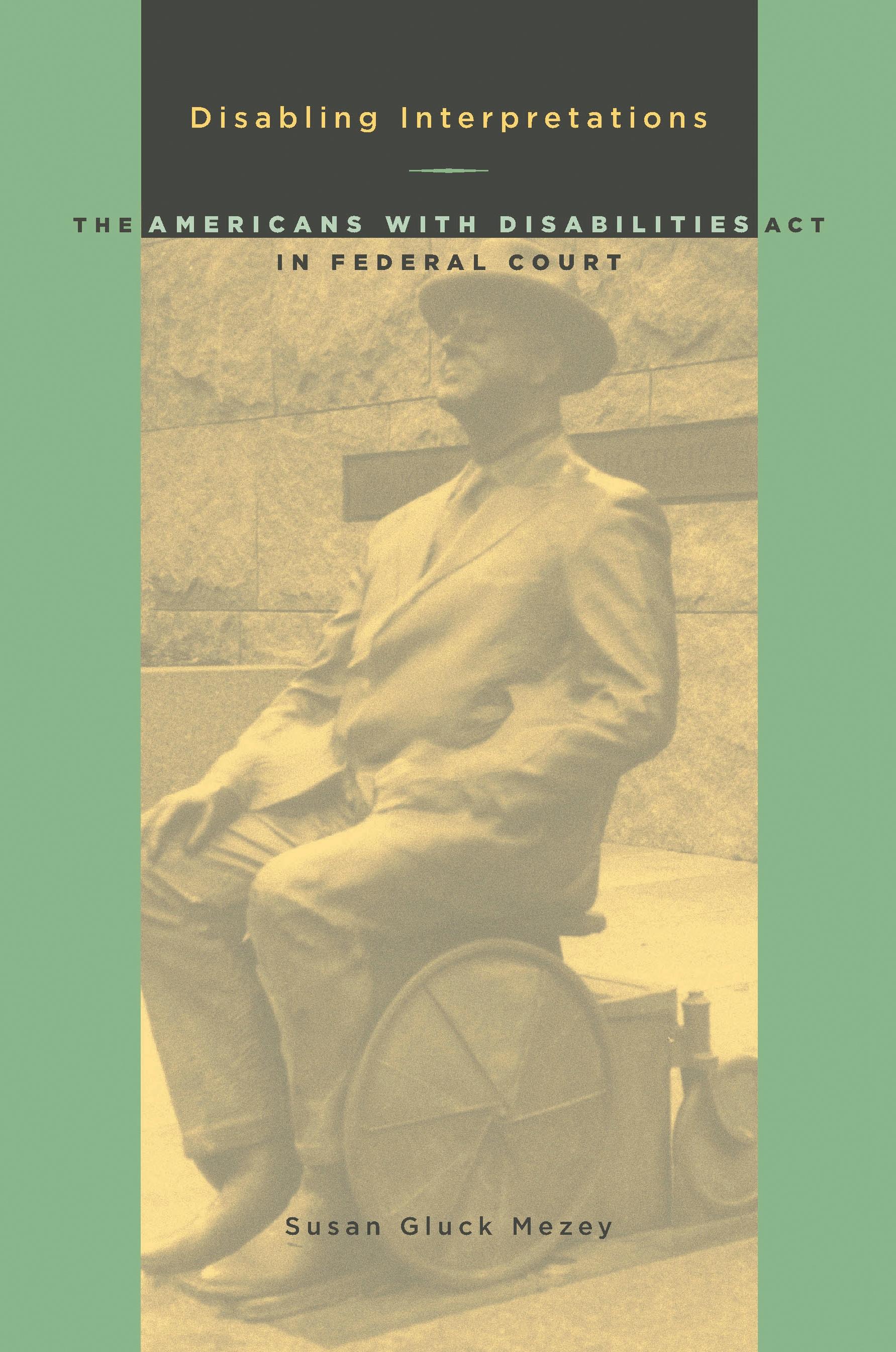
The Americans with Disabilities Act (ADA) of 1990 was intended to send a clear message to society that discrimination on the basis of disability is unacceptable. As with most civil rights laws, the courts were given primary responsibility for implementing disability rights policy.Mezey argues that the act has not fulfilled its potential primarily because of the judiciary's "disabling interpretations" in adjudicating ADA claims. In the decade of litigation following the enactment of the ADA, judicial interpretation of the law has largely constricted the parameters of disability rights and excluded large numbers of claimants from the reach of the law. The Supreme Court has not interpreted the act broadly, as was intended by Congress, and this method of decision making was for the most part mirrored by the courts below. The high court's rulings to expand state sovereign immunity and insulate states from liability in damage suits has also caused claimants to become enmeshed in litigation and has encouraged defendants to challenge other laws affecting disability rights. Despite the law's strong civil rights rhetoric, disability rights remain an imperfectly realized goal.
Kategoria: Juridik
e-ISBN: 9780822972792
Maksa helposti kortilla, Klarnalla, Apple Paylla tai Google Paylla. Etkö ole tyytyväinen? Sinulla on aina 14 päivän palautusoikeus. Lue lisää ehdoistamme. Jos sinulla on kysyttävää, lähetä meille sähköpostia osoitteeseen hello@memmo.org.
Memmo tekee opiskelusta helpompaa – missä päin maailmaa ikinä oletkin. Meillä yhdistät kurssikirjat ja fiksut opiskelutyökalut yhteen paikkaan: tiivistelmät, visat, podcastit ja muistikortit. Ja sitten Ted, opiskelukaverisi, joka vastaa kaikkeen, mitä ikinä mietitkin. Yli 50 000 opiskelijaa opiskelee jo täällä – rakennettu auttamaan sinua oppimaan nopeammin ja stressaamaan vähemmän.
Saatat pitää myös näistä
Osta kirja0