
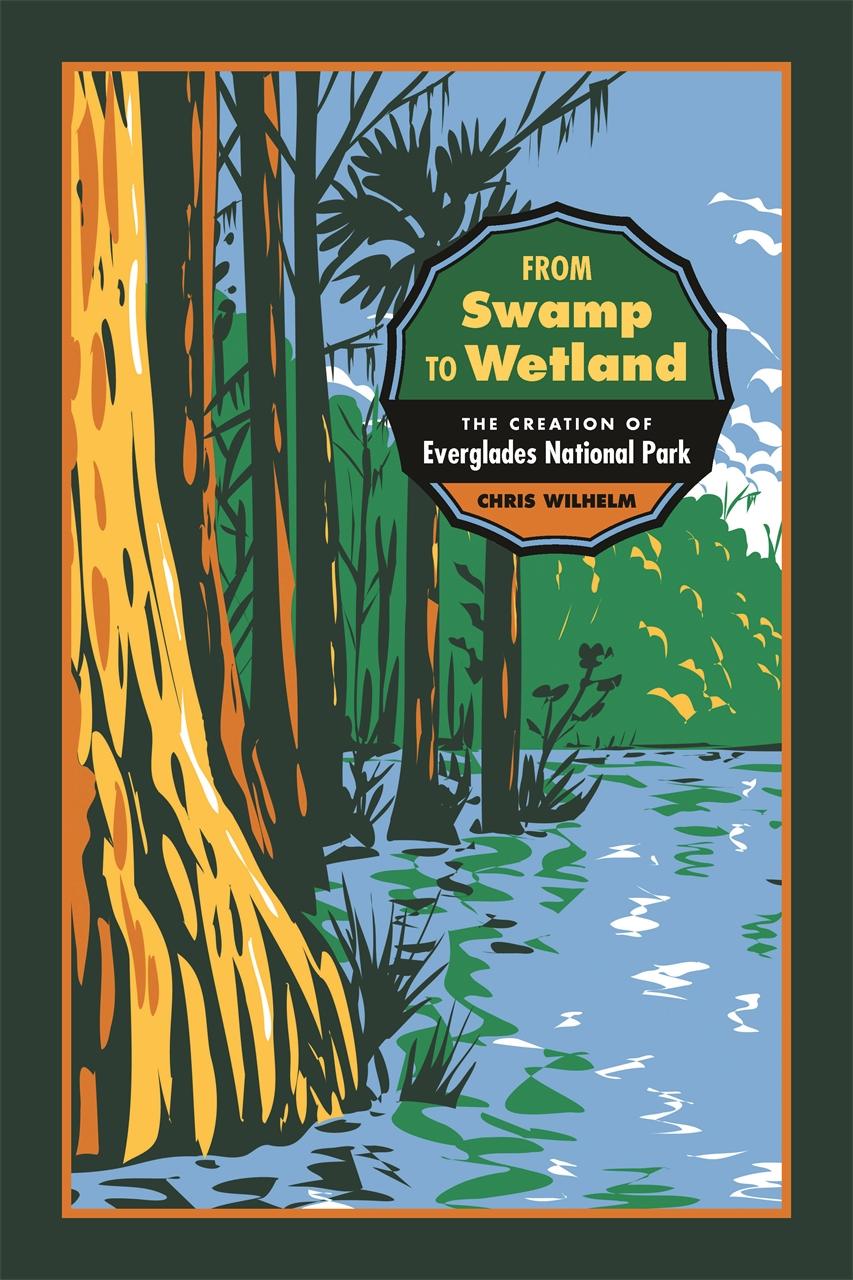
This book chronicles the creation of Everglades National Park, the largest subtropical wilderness in the United States. This effort, which spanned 1928 to 1958, was of central importance to the later emergence of modern environmentalism. Prior to the park’s creation, the Everglades was seen as a reviled and useless swamp, unfit for typical recreational or development projects. The region’s unusual makeup also made it an unlikely candidate to become a national park, as it had none of the sweeping scenic vistas or geological monuments found in other nationally protected areas.
Park advocates drew on new ideas concerning the value of biota and ecology, the importance of wilderness, and the need to protect habitats, marine ecosystems, and plant life to redefine the Everglades. Using these ideas, the Everglades began to be recognized as an ecologically valuable and fragile wetland—and thus a region in need of protective status.
While these new ideas foreshadowed the later emergence of modern environmentalism, tourism and the economic desires of Florida’s business and political elites also impacted the park’s future. These groups saw the Everglades’ unique biology and ecology as a foundation on which to build a tourism empire. They connected the Everglades to Florida’s modernization and commercialization, hoping the park would help facilitate the state’s transformation into the Sunshine State. Political conservatives welcomed federal power into Florida so long as it brought economic growth.
Yet, even after the park’s creation, conservative landowners successfully fought to limit the park and saw it as a threat to their own economic freedoms. Today, a series of levees on the park’s eastern border marks the line between urban and protected areas, but development into these areas threatens the park system. Rising sea levels caused by global warming are another threat to the future of the park. The battle to save the swamp’s biodiversity continues, and Everglades Park stands at the center of ongoing restoration efforts.
Maksa helposti kortilla, Klarnalla, Apple Paylla tai Google Paylla. Etkö ole tyytyväinen? Sinulla on aina 14 päivän palautusoikeus. Lue lisää ehdoistamme. Jos sinulla on kysyttävää, lähetä meille sähköpostia osoitteeseen hello@memmo.org.
Memmo tekee opiskelusta helpompaa – missä päin maailmaa ikinä oletkin. Meillä yhdistät kurssikirjat ja fiksut opiskelutyökalut yhteen paikkaan: tiivistelmät, visat, podcastit ja muistikortit. Ja sitten Ted, opiskelukaverisi, joka vastaa kaikkeen, mitä ikinä mietitkin. Yli 50 000 opiskelijaa opiskelee jo täällä – rakennettu auttamaan sinua oppimaan nopeammin ja stressaamaan vähemmän.