
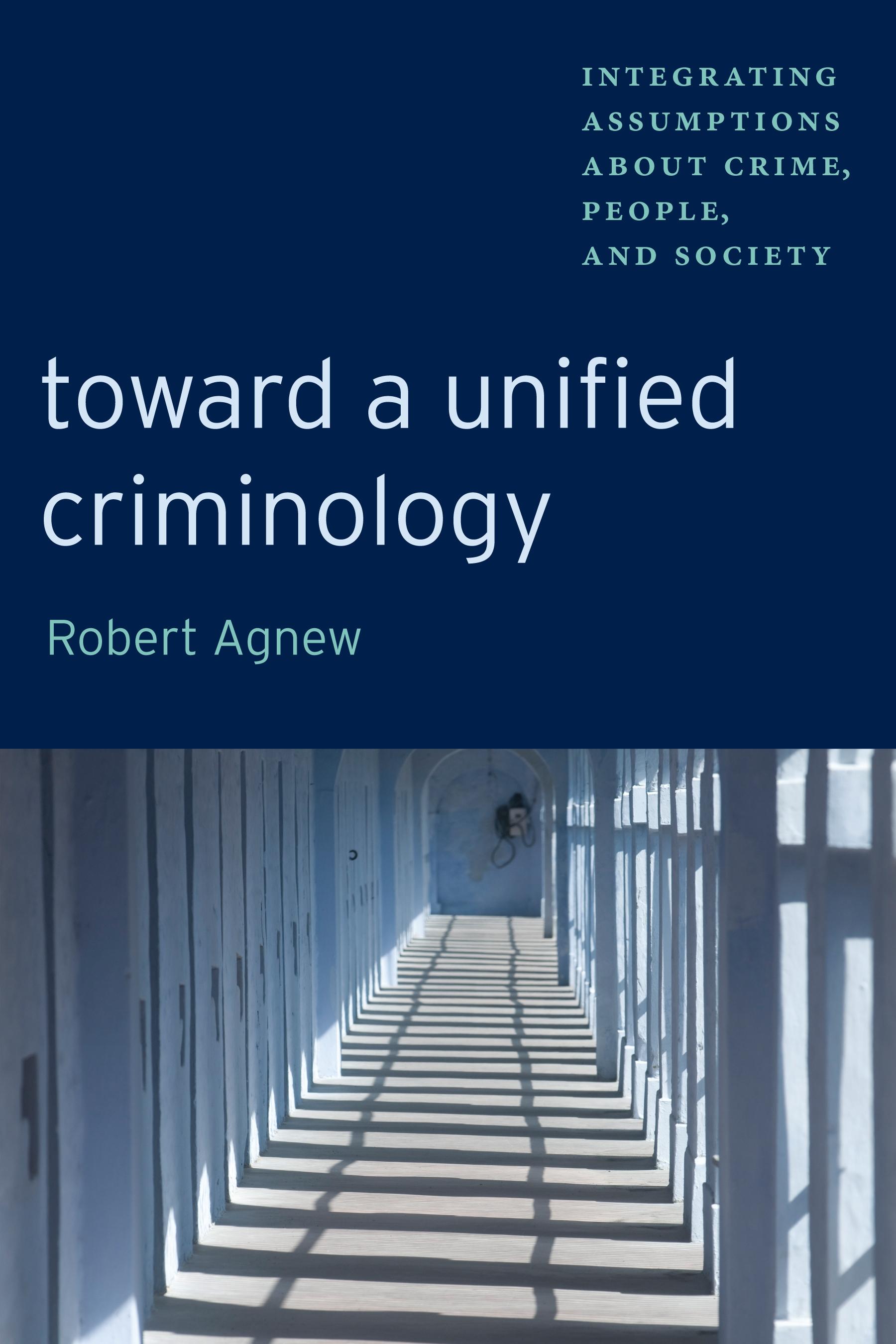
Why do people commit crimes? How do we control crime? The theories that criminologists use to answer these questions are built on a number of underlying assumptions, including those about the nature of crime, free will, human nature, and society. These assumptions have a fundamental impact on criminology: they largely determine what criminologists study, the causes they examine, the control strategies they recommend, and how they test their theories and evaluate crime-control strategies.
In Toward a Unified Criminology, noted criminologist Robert Agnew provides a critical examination of these assumptions, drawing on a range of research and perspectives to argue that these assumptions are too restrictive, unduly limiting the types of "crime" that are explored, the causes that are considered, and the methods of data collection and analysis that are employed. As such, they undermine our ability to explain and control crime. Agnew then proposes an alternative set of assumptions, drawing heavily on both mainstream and critical theories of criminology, with the goal of laying the foundation for a unified criminology that is better able to explain a broader range of crimes.
Maksa helposti kortilla, Klarnalla, Apple Paylla tai Google Paylla. Etkö ole tyytyväinen? Sinulla on aina 14 päivän palautusoikeus. Lue lisää ehdoistamme. Jos sinulla on kysyttävää, lähetä meille sähköpostia osoitteeseen hello@memmo.org.
Memmo tekee opiskelusta helpompaa – missä päin maailmaa ikinä oletkin. Meillä yhdistät kurssikirjat ja fiksut opiskelutyökalut yhteen paikkaan: tiivistelmät, visat, podcastit ja muistikortit. Ja sitten Ted, opiskelukaverisi, joka vastaa kaikkeen, mitä ikinä mietitkin. Yli 50 000 opiskelijaa opiskelee jo täällä – rakennettu auttamaan sinua oppimaan nopeammin ja stressaamaan vähemmän.