
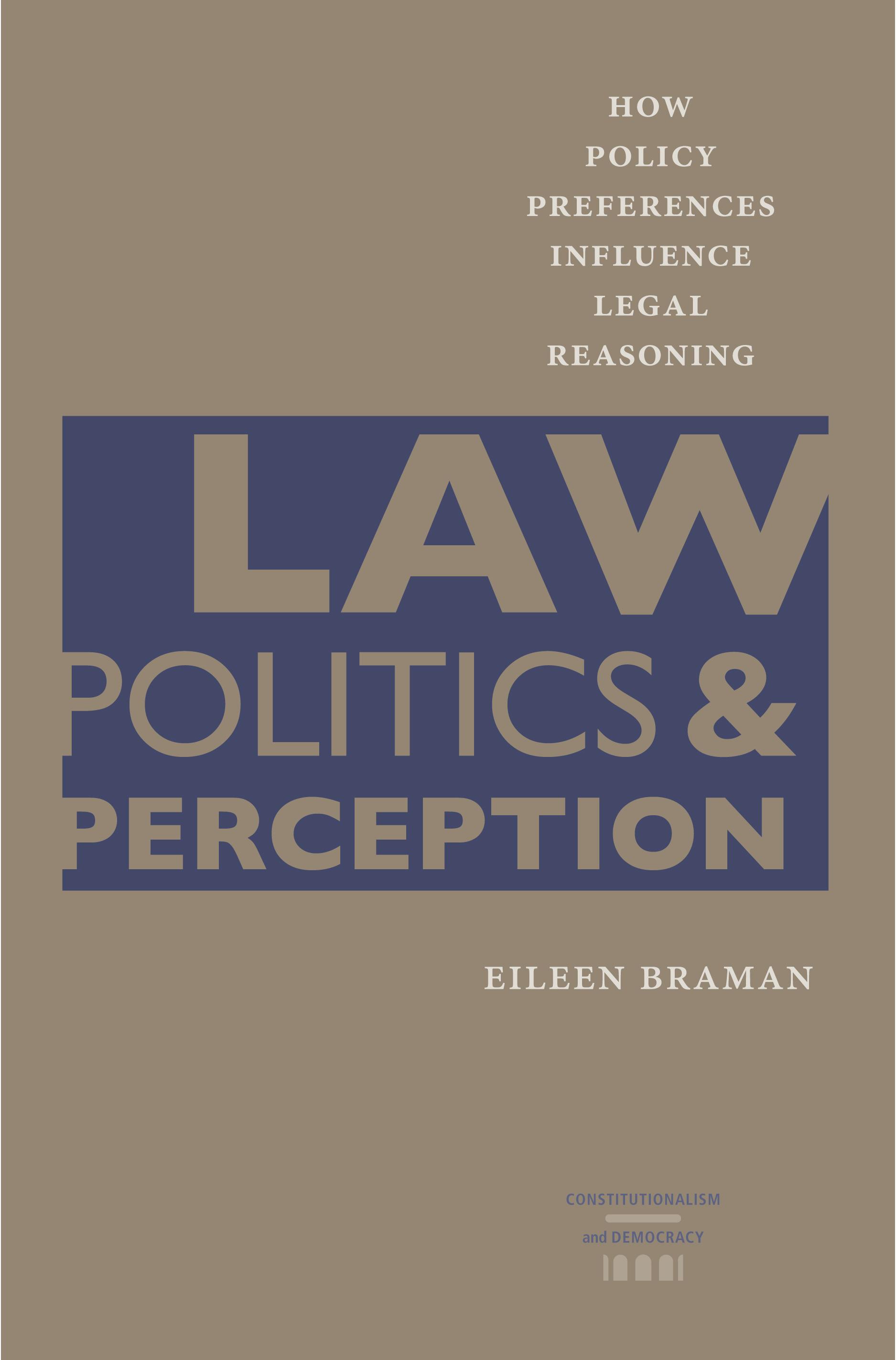
Are judges' decisions more likely to be based on personal inclinations or legal authority? The answer, Eileen Braman argues, is both. Law, Politics, and Perception brings cognitive psychology to bear on the question of the relative importance of norms of legal reasoning versus decision markers' policy preferences in legal decision-making. While Braman acknowledges that decision makers' attitudes—or, more precisely, their preference for policy outcomes—can play a significant role in judicial decisions, she also believes that decision-makers' belief that they must abide by accepted rules of legal analysis significantly limits the role of preferences in their judgements. To reconcile these competing factors, Braman posits that judges engage in "motivated reasoning," a biased process in which decision-makers are unconsciously predisposed to find legal authority that is consistent with their own preferences more convincing than those that go against them. But Braman also provides evidence that the scope of motivated reasoning is limited. Objective case facts and accepted norms of legal reasoning can often inhibit decision makers' ability to reach conclusions consistent with their preferences.
Maksa helposti kortilla, Klarnalla, Apple Paylla tai Google Paylla. Etkö ole tyytyväinen? Sinulla on aina 14 päivän palautusoikeus. Lue lisää ehdoistamme. Jos sinulla on kysyttävää, lähetä meille sähköpostia osoitteeseen hello@memmo.org.
Memmo tekee opiskelusta helpompaa – missä päin maailmaa ikinä oletkin. Meillä yhdistät kurssikirjat ja fiksut opiskelutyökalut yhteen paikkaan: tiivistelmät, visat, podcastit ja muistikortit. Ja sitten Ted, opiskelukaverisi, joka vastaa kaikkeen, mitä ikinä mietitkin. Yli 50 000 opiskelijaa opiskelee jo täällä – rakennettu auttamaan sinua oppimaan nopeammin ja stressaamaan vähemmän.