
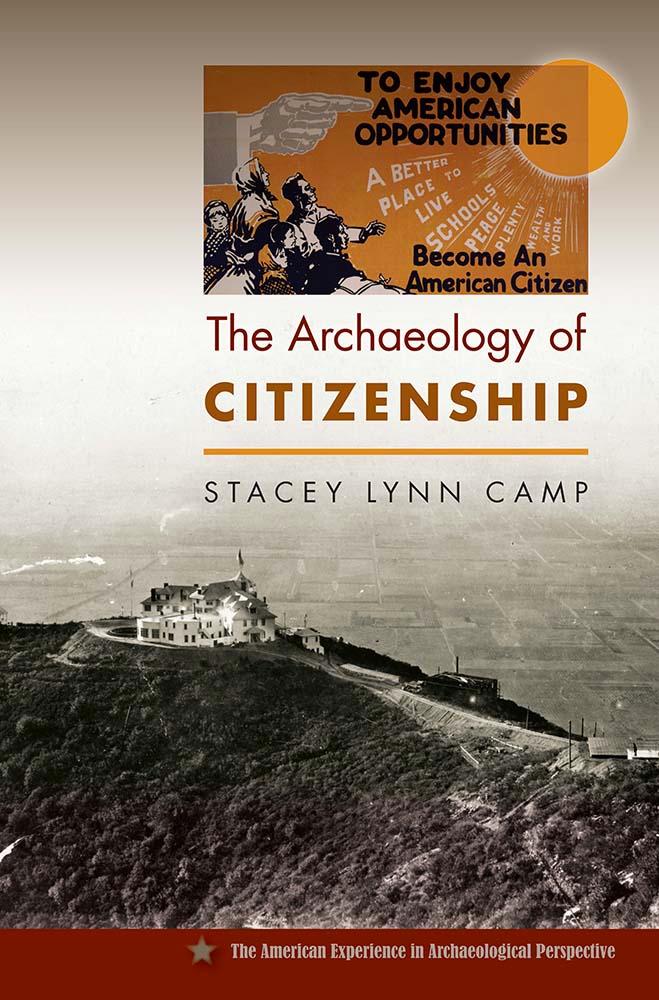
Since the founding of the United States, the rights to citizenship have been carefully crafted and policed by the Europeans who originally settled and founded the country. Immigrants have been extended and denied citizenship in various legal and cultural ways.
While the subject of citizenship has often been examined from a sociological, historical, or legal perspective, historical archaeologists have yet to fully explore the material aspects of these social boundaries. The Archaeology of Citizenship uses the material record to explore what it means to be an American.
Using a late-nineteenth-century California resort as a case study, Stacey Camp discusses how the parameters of citizenship and national belonging have been defined and redefined since Europeans arrived on the continent. In a unique and powerful contribution to the field of historical archaeology, Camp uses the remnants of material culture to reveal how those in power sought to mold the composition of the United States and how those on the margins of American society carved out their own definitions of citizenship.
Maksa helposti kortilla, Klarnalla, Apple Paylla tai Google Paylla. Etkö ole tyytyväinen? Sinulla on aina 14 päivän palautusoikeus. Lue lisää ehdoistamme. Jos sinulla on kysyttävää, lähetä meille sähköpostia osoitteeseen hello@memmo.org.
Memmo tekee opiskelusta helpompaa – missä päin maailmaa ikinä oletkin. Meillä yhdistät kurssikirjat ja fiksut opiskelutyökalut yhteen paikkaan: tiivistelmät, visat, podcastit ja muistikortit. Ja sitten Ted, opiskelukaverisi, joka vastaa kaikkeen, mitä ikinä mietitkin. Yli 50 000 opiskelijaa opiskelee jo täällä – rakennettu auttamaan sinua oppimaan nopeammin ja stressaamaan vähemmän.
Saatat pitää myös näistä
Osta kirja0