
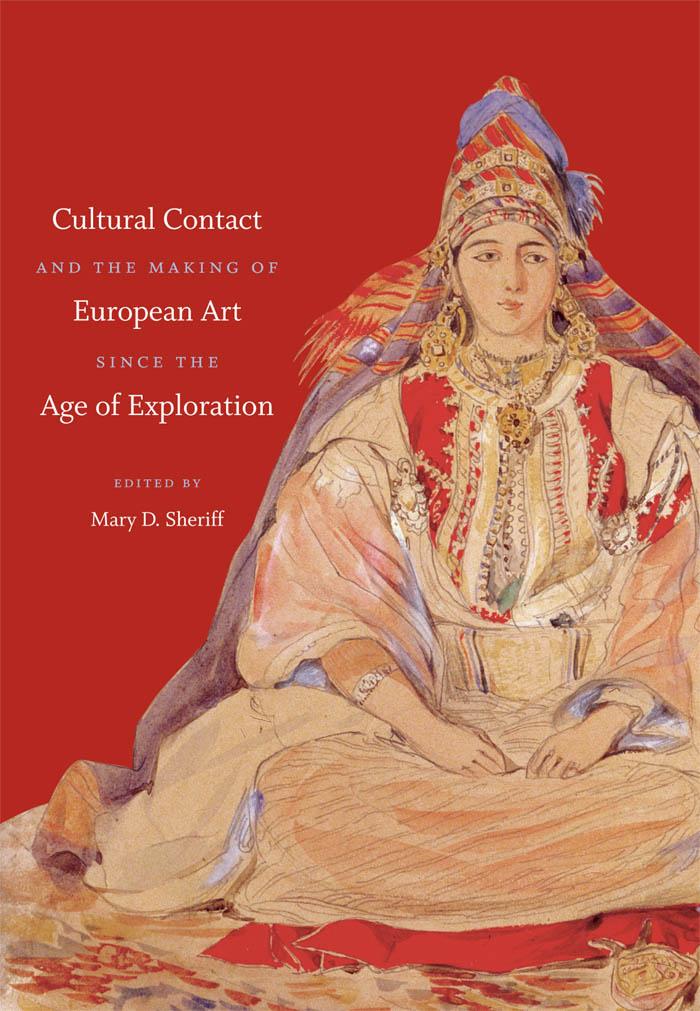
Art historians have long been accustomed to thinking about art and artists in terms of national traditions. This volume takes a different approach, suggesting instead that a history of art based on national divisions often obscures the processes of cultural appropriation and global exchange that shaped the visual arts of Europe in fundamental ways between 1492 and the early twentieth century.
Essays here analyze distinct zones of contact — between various European states, between Asia and Europe, or between Europe and so-called primitive cultures in Africa, the Americas, and the South Pacific — focusing mainly but not exclusively on painting, drawing, or the decorative arts. Each case foregrounds the centrality of international borrowings or colonial appropriations and counters conceptions of European art as a “pure” tradition uninfluenced by the artistic forms of other cultures. The contributors analyze the social, cultural, commercial, and political conditions of cultural contact — including tourism, colonialism, religious pilgrimage, trade missions, and scientific voyages — that enabled these exchanges well before the modern age of globalization.
Contributors:
Claire Farago, University of Colorado at Boulder
Elisabeth A. Fraser, University of South Florida
Julie Hochstrasser, University of Iowa
Christopher Johns, Vanderbilt University
Carol Mavor, University of North Carolina at Chapel Hill
Mary D. Sheriff, University of North Carolina at Chapel Hill
Lyneise E. Williams, University of North Carolina at Chapel Hill
Essays here analyze distinct zones of contact — between various European states, between Asia and Europe, or between Europe and so-called primitive cultures in Africa, the Americas, and the South Pacific — focusing mainly but not exclusively on painting, drawing, or the decorative arts. Each case foregrounds the centrality of international borrowings or colonial appropriations and counters conceptions of European art as a “pure” tradition uninfluenced by the artistic forms of other cultures. The contributors analyze the social, cultural, commercial, and political conditions of cultural contact — including tourism, colonialism, religious pilgrimage, trade missions, and scientific voyages — that enabled these exchanges well before the modern age of globalization.
Contributors:
Claire Farago, University of Colorado at Boulder
Elisabeth A. Fraser, University of South Florida
Julie Hochstrasser, University of Iowa
Christopher Johns, Vanderbilt University
Carol Mavor, University of North Carolina at Chapel Hill
Mary D. Sheriff, University of North Carolina at Chapel Hill
Lyneise E. Williams, University of North Carolina at Chapel Hill
Maksa helposti kortilla, Klarnalla, Apple Paylla tai Google Paylla. Etkö ole tyytyväinen? Sinulla on aina 14 päivän palautusoikeus. Lue lisää ehdoistamme. Jos sinulla on kysyttävää, lähetä meille sähköpostia osoitteeseen hello@memmo.org.
Memmo tekee opiskelusta helpompaa – missä päin maailmaa ikinä oletkin. Meillä yhdistät kurssikirjat ja fiksut opiskelutyökalut yhteen paikkaan: tiivistelmät, visat, podcastit ja muistikortit. Ja sitten Ted, opiskelukaverisi, joka vastaa kaikkeen, mitä ikinä mietitkin. Yli 50 000 opiskelijaa opiskelee jo täällä – rakennettu auttamaan sinua oppimaan nopeammin ja stressaamaan vähemmän.
Saatat pitää myös näistä
Osta kirja0