
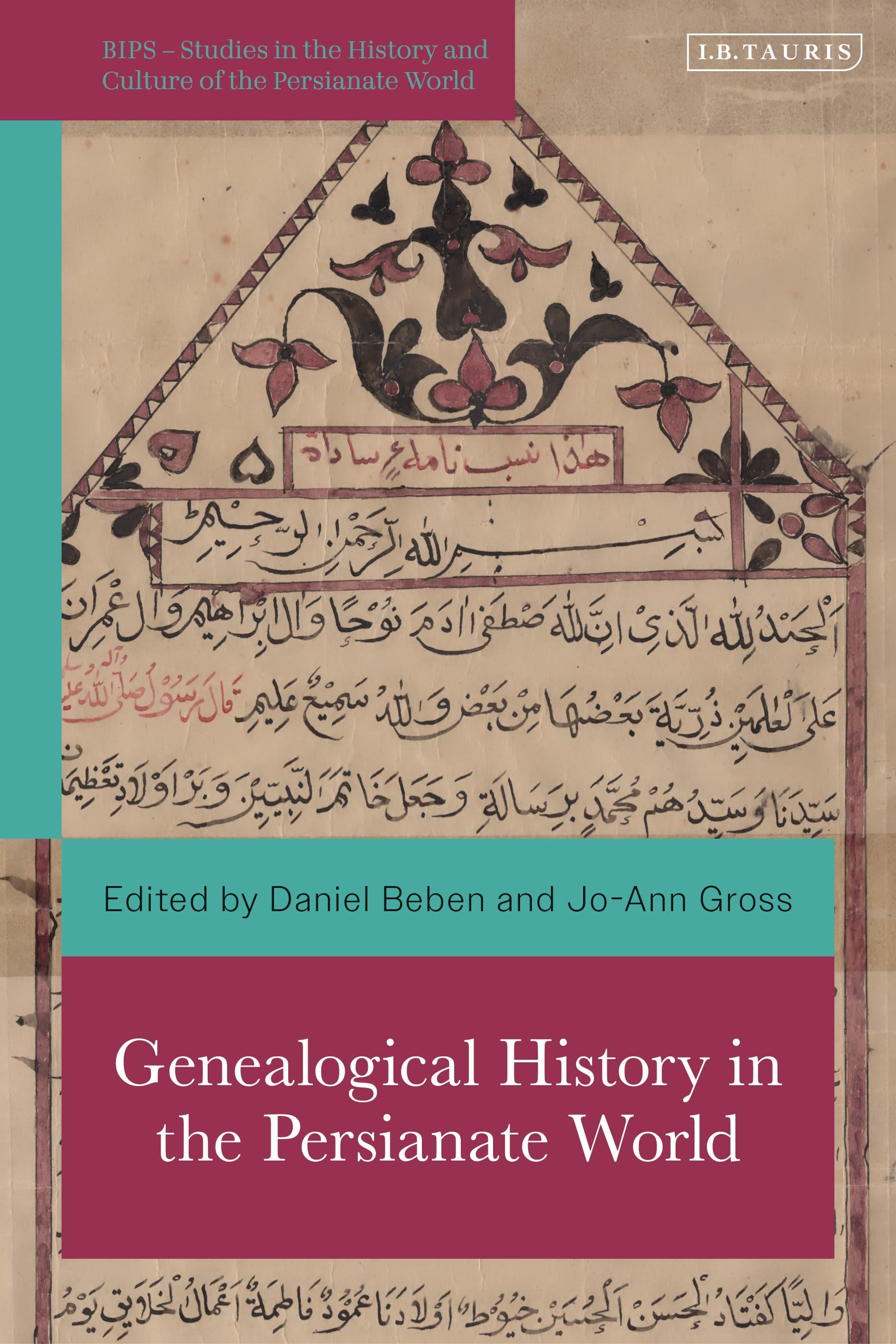
Scholarship on the Muslim world has recently begun to pay increased attention to non-literary genres of documentation as sources for historical research.
Genealogical writings are one form of such documentation that has demonstrated significant potential for addressing a wide range of research concerns, particularly for topics that receive little attention in historical chronicles and other state-centered narrative sources. However, while genealogical documentation has received some attention in scholarship on the Arab world, it remains mostly unstudied in scholarship on Persianate societies. The chapters in this book offer reflections on theoretical and methodological issues concerning the study of genealogical documentation, combined with case studies based primarily on previously unpublished, unstudied source materials. The topics explored span the full breadth of the Persianate world, from Anatolia to the Ferghana Valley in Central Asia to the Gujarat region of India, utilizing sources dating from the fourteenth to the twentieth century. The book will be of significant interest to scholars and students of Islamic history and the Persianate ecumene as well as readers in other fields interested in comparative research demonstrating the use of genealogical documentation as historical sources.
Genealogical writings are one form of such documentation that has demonstrated significant potential for addressing a wide range of research concerns, particularly for topics that receive little attention in historical chronicles and other state-centered narrative sources. However, while genealogical documentation has received some attention in scholarship on the Arab world, it remains mostly unstudied in scholarship on Persianate societies. The chapters in this book offer reflections on theoretical and methodological issues concerning the study of genealogical documentation, combined with case studies based primarily on previously unpublished, unstudied source materials. The topics explored span the full breadth of the Persianate world, from Anatolia to the Ferghana Valley in Central Asia to the Gujarat region of India, utilizing sources dating from the fourteenth to the twentieth century. The book will be of significant interest to scholars and students of Islamic history and the Persianate ecumene as well as readers in other fields interested in comparative research demonstrating the use of genealogical documentation as historical sources.
Maksa helposti kortilla, Klarnalla, Apple Paylla tai Google Paylla. Etkö ole tyytyväinen? Sinulla on aina 14 päivän palautusoikeus. Lue lisää ehdoistamme. Jos sinulla on kysyttävää, lähetä meille sähköpostia osoitteeseen hello@memmo.org.
Memmo tekee opiskelusta helpompaa – missä päin maailmaa ikinä oletkin. Meillä yhdistät kurssikirjat ja fiksut opiskelutyökalut yhteen paikkaan: tiivistelmät, visat, podcastit ja muistikortit. Ja sitten Ted, opiskelukaverisi, joka vastaa kaikkeen, mitä ikinä mietitkin. Yli 50 000 opiskelijaa opiskelee jo täällä – rakennettu auttamaan sinua oppimaan nopeammin ja stressaamaan vähemmän.