
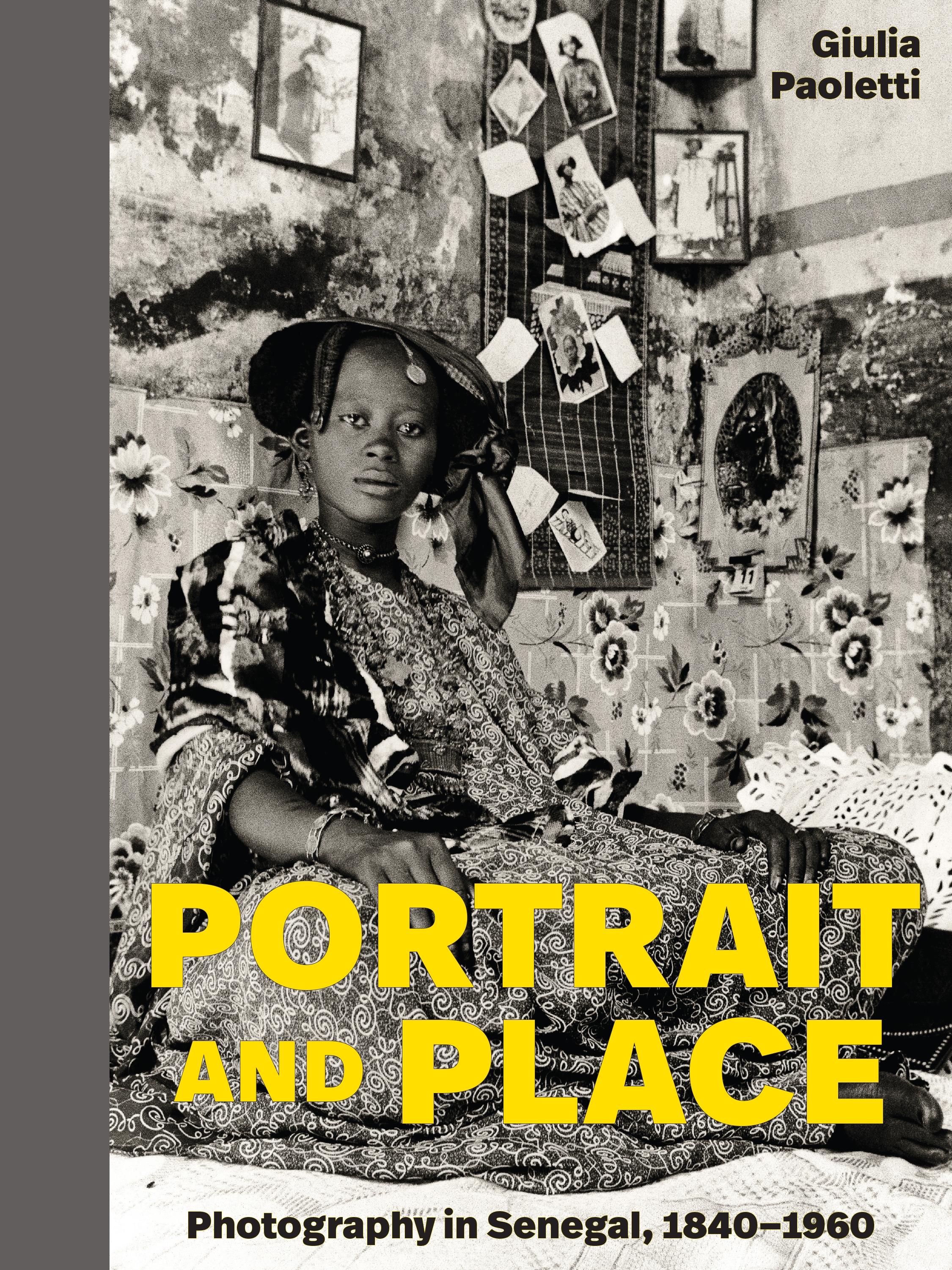
A richly illustrated history of photography in one of the epicenters of African modernity
When the daguerreotype first arrived in sub-Saharan Africa in the early nineteenth century, local kingdoms still held power in Senegal and the French presence was limited to trading outposts along the coast. The pioneers of photography in Senegal worked within, across, and beyond the borders of colonial empire, expanding the medium’s possibilities and contributing to a global visual language. Portrait and Place explores these unique encounters, providing an in-depth and nuanced look at the images made at the intersection of Black Atlantic, Islamic, and African cultures.
Giulia Paoletti takes readers on a visual journey from the 1840s, when the oldest-surviving daguerreotype from West Africa was made, to the 1960s, when photography became the most popular medium as Senegal achieved its independence. She discusses some of Africa’s most celebrated modernists, such as Mama Casset, and also offers insights into lesser-known photographers like Oumar Ka and once-anonymous figures such as Macky Kane. Paoletti examines both professional and amateur artists in genres ranging from portraiture to landscape and across media such as glass painting and lithography.
Featuring a wealth of breathtaking images published here for the first time, Portrait and Place brings to life the important histories of photography on the African continent.
Maksa helposti kortilla, Klarnalla, Apple Paylla tai Google Paylla. Etkö ole tyytyväinen? Sinulla on aina 14 päivän palautusoikeus. Lue lisää ehdoistamme. Jos sinulla on kysyttävää, lähetä meille sähköpostia osoitteeseen hello@memmo.org.
Memmo tekee opiskelusta helpompaa – missä päin maailmaa ikinä oletkin. Meillä yhdistät kurssikirjat ja fiksut opiskelutyökalut yhteen paikkaan: tiivistelmät, visat, podcastit ja muistikortit. Ja sitten Ted, opiskelukaverisi, joka vastaa kaikkeen, mitä ikinä mietitkin. Yli 50 000 opiskelijaa opiskelee jo täällä – rakennettu auttamaan sinua oppimaan nopeammin ja stressaamaan vähemmän.