
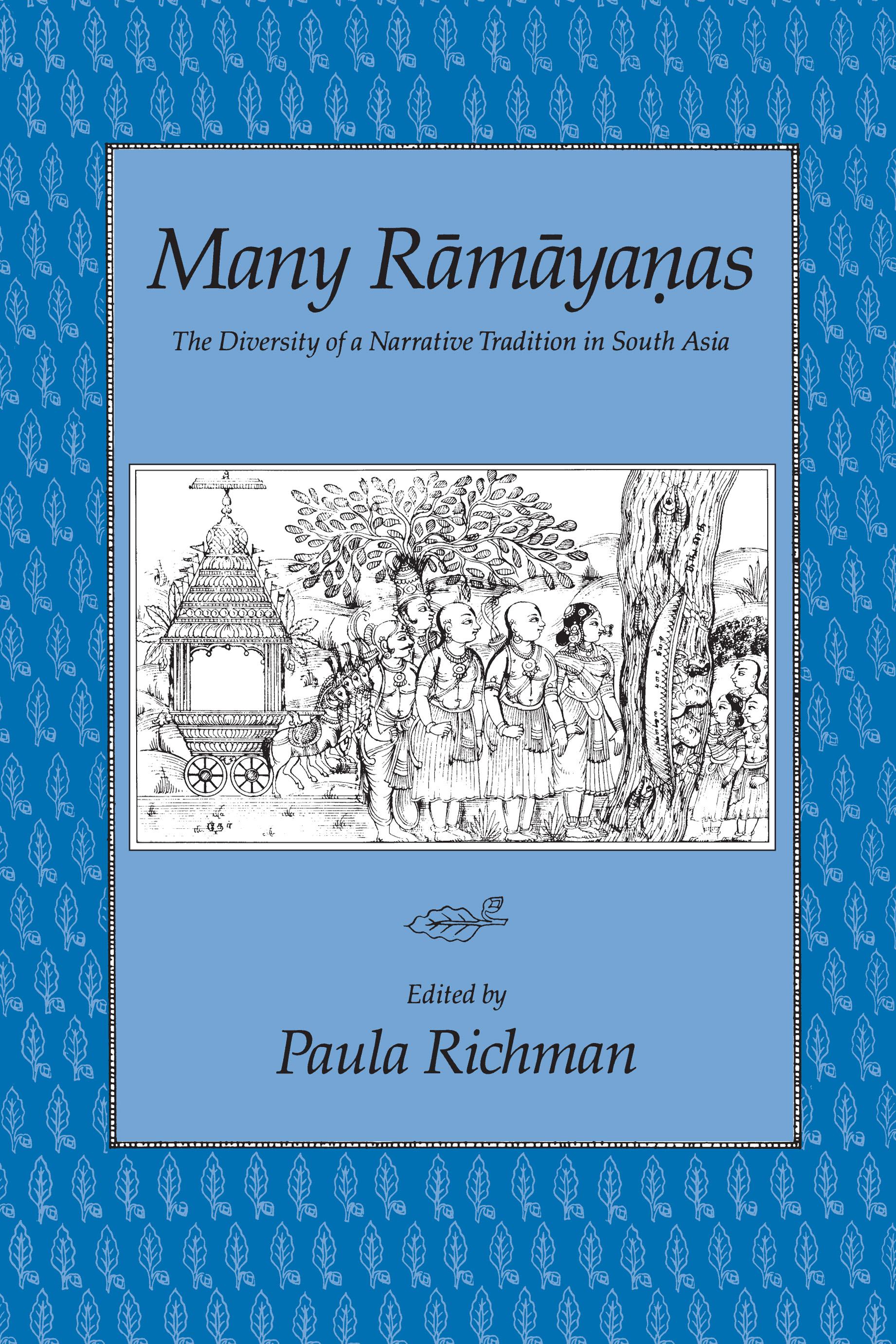
Throughout Indian history, many authors and performers have produced, and many patrons have supported, diverse tellings of the story of the exiled prince Rama, who rescues his abducted wife by battling the demon king who has imprisoned her. The contributors to this volume focus on these "many" Ramayanas.
While most scholars continue to rely on Valmiki's Sanskrit Ramayana as the authoritative version of the tale, the contributors to this volume do not. Their essays demonstrate the multivocal nature of the Ramayana by highlighting its variations according to historical period, political context, regional literary tradition, religious affiliation, intended audience, and genre. Socially marginal groups in Indian society—Telugu women, for example, or Untouchables from Madhya Pradesh—have recast the Rama story to reflect their own views of the world, while in other hands the epic has become the basis for teachings about spiritual liberation or the demand for political separatism. Historians of religion, scholars of South Asia, folklorists, cultural anthropologists—all will find here refreshing perspectives on this tale.
Throughout Indian history, many authors and performers have produced, and many patrons have supported, diverse tellings of the story of the exiled prince Rama, who rescues his abducted wife by battling the demon king who has imprisoned her. The contributo
While most scholars continue to rely on Valmiki's Sanskrit Ramayana as the authoritative version of the tale, the contributors to this volume do not. Their essays demonstrate the multivocal nature of the Ramayana by highlighting its variations according to historical period, political context, regional literary tradition, religious affiliation, intended audience, and genre. Socially marginal groups in Indian society—Telugu women, for example, or Untouchables from Madhya Pradesh—have recast the Rama story to reflect their own views of the world, while in other hands the epic has become the basis for teachings about spiritual liberation or the demand for political separatism. Historians of religion, scholars of South Asia, folklorists, cultural anthropologists—all will find here refreshing perspectives on this tale.
Throughout Indian history, many authors and performers have produced, and many patrons have supported, diverse tellings of the story of the exiled prince Rama, who rescues his abducted wife by battling the demon king who has imprisoned her. The contributo
Maksa helposti kortilla, Klarnalla, Apple Paylla tai Google Paylla. Etkö ole tyytyväinen? Sinulla on aina 14 päivän palautusoikeus. Lue lisää ehdoistamme. Jos sinulla on kysyttävää, lähetä meille sähköpostia osoitteeseen hello@memmo.org.
Memmo tekee opiskelusta helpompaa – missä päin maailmaa ikinä oletkin. Meillä yhdistät kurssikirjat ja fiksut opiskelutyökalut yhteen paikkaan: tiivistelmät, visat, podcastit ja muistikortit. Ja sitten Ted, opiskelukaverisi, joka vastaa kaikkeen, mitä ikinä mietitkin. Yli 50 000 opiskelijaa opiskelee jo täällä – rakennettu auttamaan sinua oppimaan nopeammin ja stressaamaan vähemmän.
Saatat pitää myös näistä
Osta kirja0