
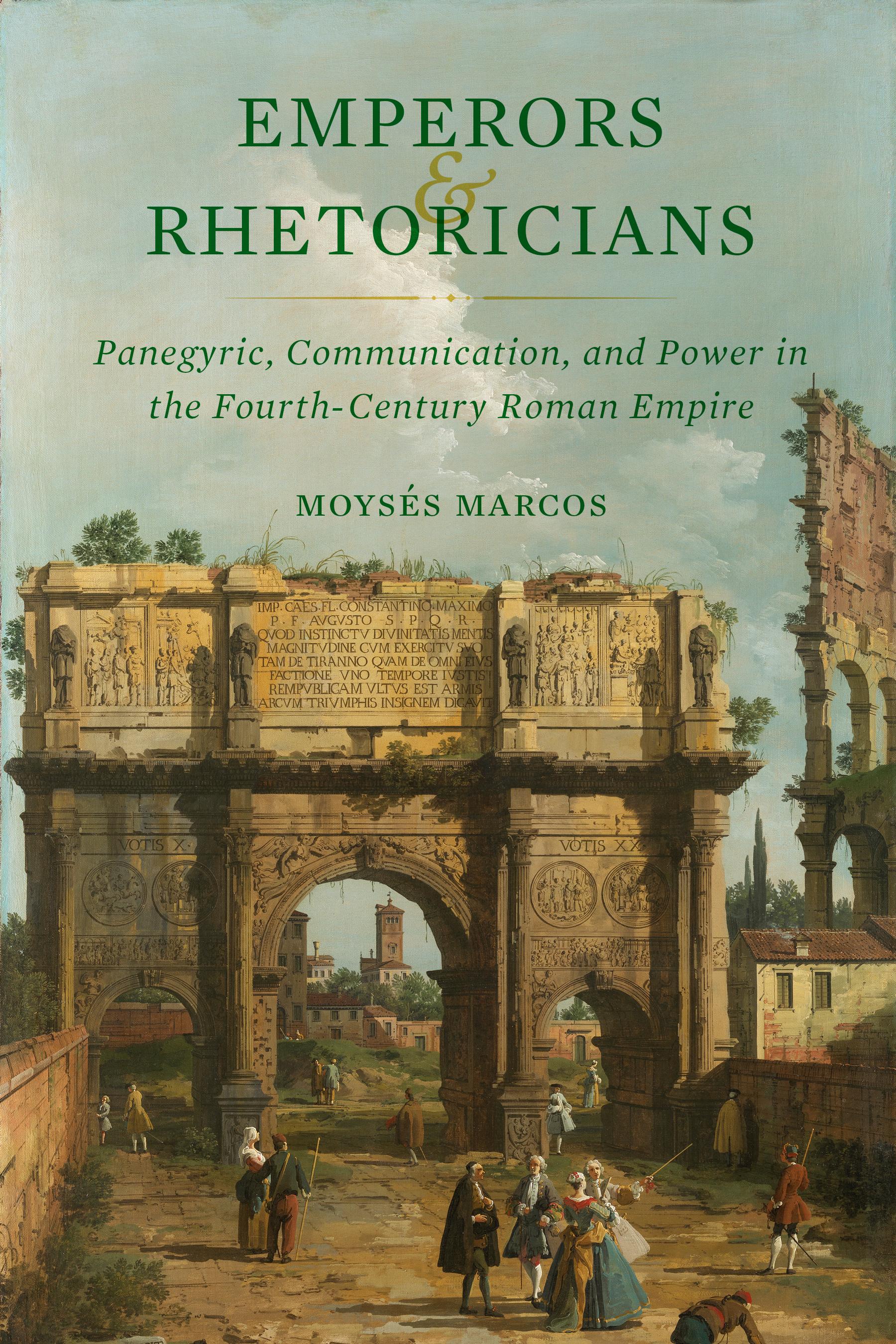
Panegyric, the art of publicly praising prominent political figures, occupied an important place in the Roman Empire throughout late antiquity. Orators were skilled political actors who manipulated the conventions of praise giving, taking great license with what they chose to present (or omit). Their ancient speeches are rare windows into the world of panegyrists, emperors, and their audiences. In Emperors and Rhetoricians, Moysés Marcos offers an original, comprehensive look at all panegyrics to and by Julian, who in 355/56 CE promoted himself as a learned caesar by producing his own panegyric on his cousin and Augustan benefactor, Constantius II. During key stages in his public career and throughout the time he held imperial power, Julian experimented with and utilized panegyric as both political communication and political opportunity. Marcos expertly mines this vast body of work to uncover a startlingly new picture of Julian the Apostate, explore anew the arc of his career in imperial office, and model new ways to interpret and understand imperial speeches of praise.
Maksa helposti kortilla, Klarnalla, Apple Paylla tai Google Paylla. Etkö ole tyytyväinen? Sinulla on aina 14 päivän palautusoikeus. Lue lisää ehdoistamme. Jos sinulla on kysyttävää, lähetä meille sähköpostia osoitteeseen hello@memmo.org.
Memmo tekee opiskelusta helpompaa – missä päin maailmaa ikinä oletkin. Meillä yhdistät kurssikirjat ja fiksut opiskelutyökalut yhteen paikkaan: tiivistelmät, visat, podcastit ja muistikortit. Ja sitten Ted, opiskelukaverisi, joka vastaa kaikkeen, mitä ikinä mietitkin. Yli 50 000 opiskelijaa opiskelee jo täällä – rakennettu auttamaan sinua oppimaan nopeammin ja stressaamaan vähemmän.
Saatat pitää myös näistä
Osta kirja0