
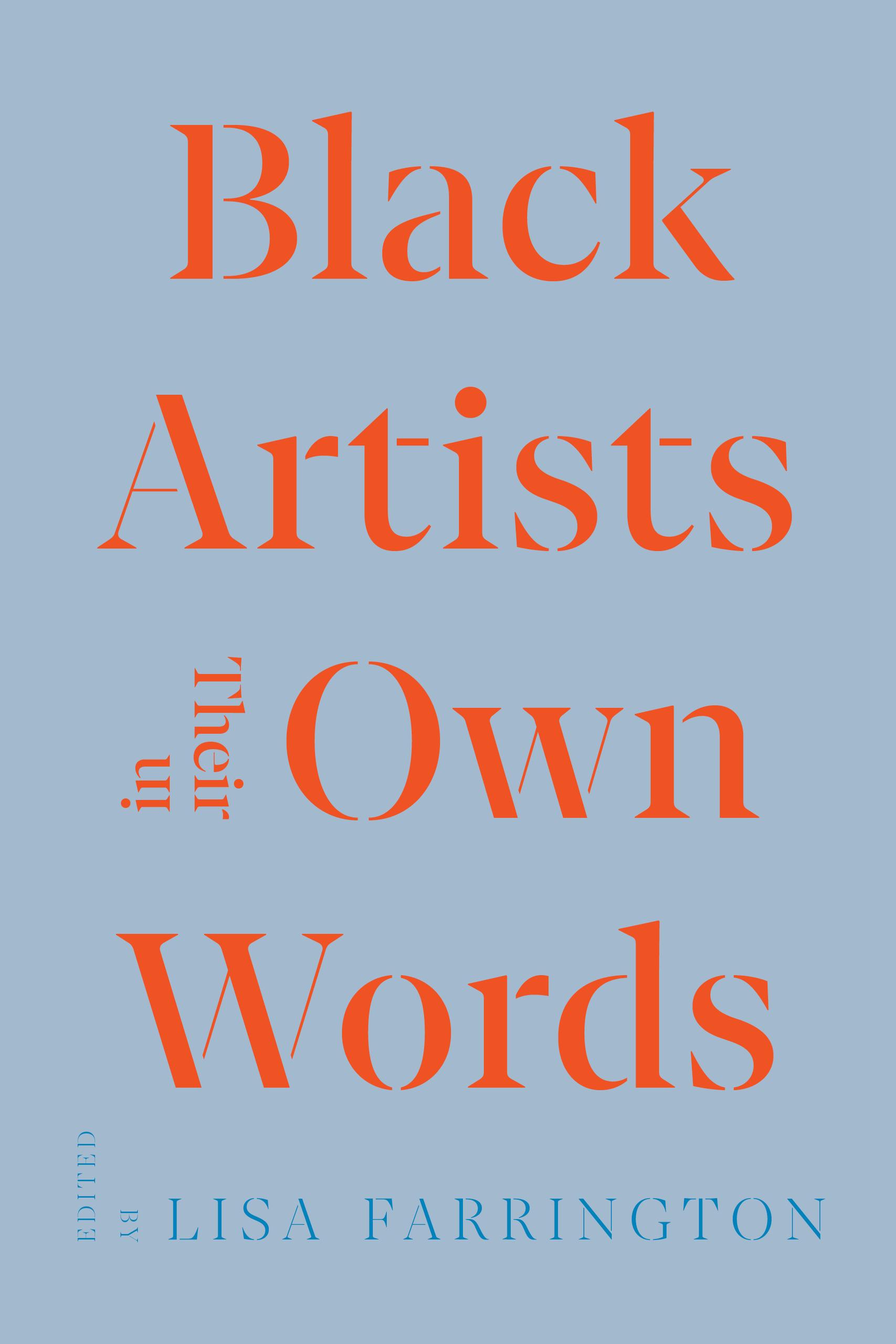
"A keen and insightful window into a rich artistic legacy."—Publishers Weekly
The first book to center Black artists' voices on Black aesthetics, revealing a century of evolving relationships to race, identity, and art.
What is Black art? No one has thought harder about that question than Black artists, yet their perspectives have been largely ignored. Instead, their stories have been told by intellectuals like W. E. B. Du Bois and Alain Locke, who defined "a school" of Black art in the early twentieth century. For the first time, Black Artists in Their Own Words offers an insightful corrective.
Esteemed art historian Lisa Farrington gathers writing spanning a century across the United States, the Caribbean, and the African continent—including from renowned artists Henry Tanner, Nancy Elizabeth Prophet, Romare Bearden, Wifredo Lam, Renee Cox, and many more—that reveals both evolutions and equivocations. Many artists, especially during the civil rights era, have embraced Black aesthetics as a source of empowerment. Others prefer to be artists first and Black second, while some have rejected racial identification entirely. Here, Black artists reclaim their work from reductive critical narratives, sharing the motivations underlying their struggles to create in a white-dominated art world.
The first book to center Black artists' voices on Black aesthetics, revealing a century of evolving relationships to race, identity, and art.
What is Black art? No one has thought harder about that question than Black artists, yet their perspectives have been largely ignored. Instead, their stories have been told by intellectuals like W. E. B. Du Bois and Alain Locke, who defined "a school" of Black art in the early twentieth century. For the first time, Black Artists in Their Own Words offers an insightful corrective.
Esteemed art historian Lisa Farrington gathers writing spanning a century across the United States, the Caribbean, and the African continent—including from renowned artists Henry Tanner, Nancy Elizabeth Prophet, Romare Bearden, Wifredo Lam, Renee Cox, and many more—that reveals both evolutions and equivocations. Many artists, especially during the civil rights era, have embraced Black aesthetics as a source of empowerment. Others prefer to be artists first and Black second, while some have rejected racial identification entirely. Here, Black artists reclaim their work from reductive critical narratives, sharing the motivations underlying their struggles to create in a white-dominated art world.
Maksa helposti kortilla, Klarnalla, Apple Paylla tai Google Paylla. Etkö ole tyytyväinen? Sinulla on aina 14 päivän palautusoikeus. Lue lisää ehdoistamme. Jos sinulla on kysyttävää, lähetä meille sähköpostia osoitteeseen hello@memmo.org.
Memmo tekee opiskelusta helpompaa – missä päin maailmaa ikinä oletkin. Meillä yhdistät kurssikirjat ja fiksut opiskelutyökalut yhteen paikkaan: tiivistelmät, visat, podcastit ja muistikortit. Ja sitten Ted, opiskelukaverisi, joka vastaa kaikkeen, mitä ikinä mietitkin. Yli 50 000 opiskelijaa opiskelee jo täällä – rakennettu auttamaan sinua oppimaan nopeammin ja stressaamaan vähemmän.
Saatat pitää myös näistä
Osta kirja0