
A free open access book is available upon publication. Learn more at www.luminosoa.org.
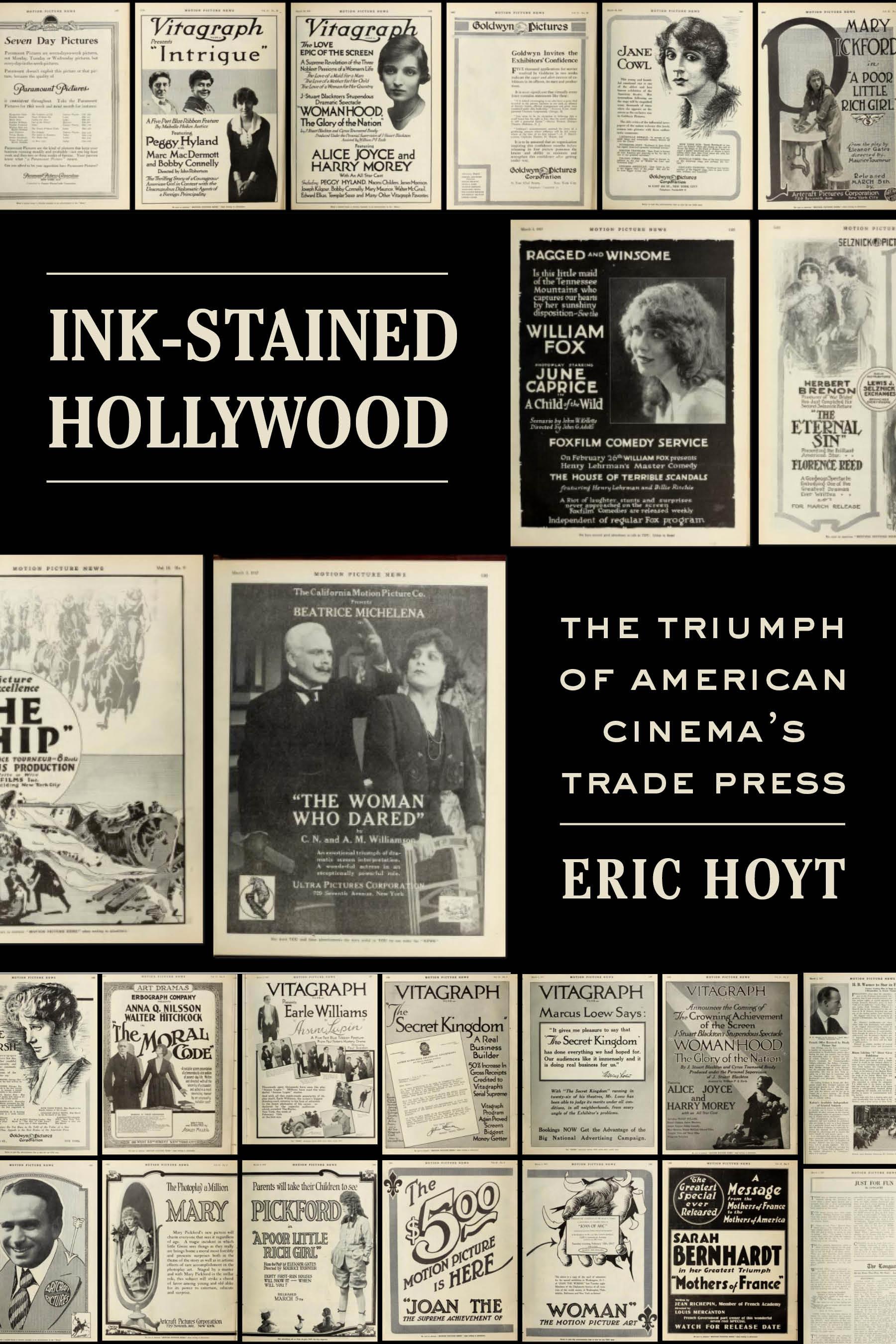
For the first half of the twentieth century, no American industry boasted a more motley and prolific trade press than the movie business—a cutthroat landscape that set the stage for battle by ink. In 1930, Martin Quigley, publisher of Exhibitors Herald, conspired with Hollywood studios to eliminate all competing trade papers, yet this attempt and each one thereafter collapsed. Exploring the communities of exhibitors and creative workers that constituted key subscribers, Ink-Stained Hollywood tells the story of how a heterogeneous trade press triumphed by appealing to the foundational aspects of industry culture—taste, vanity, partisanship, and exclusivity. In captivating detail, Eric Hoyt chronicles the histories of well-known trade papers (Variety, Motion Picture Herald) alongside important yet forgotten publications (Film Spectator, Film Mercury, and Camera!), and challenges the canon of film periodicals, offering new interpretative frameworks for understanding print journalism’s relationship with the motion picture industry and its continued impact on creative industries today.
For the first half of the twentieth century, no American industry boasted a more motley and prolific trade press than the movie business—a cutthroat landscape that set the stage for battle by ink. In 1930, Martin Quigley, publisher of Exhibitors Herald, conspired with Hollywood studios to eliminate all competing trade papers, yet this attempt and each one thereafter collapsed. Exploring the communities of exhibitors and creative workers that constituted key subscribers, Ink-Stained Hollywood tells the story of how a heterogeneous trade press triumphed by appealing to the foundational aspects of industry culture—taste, vanity, partisanship, and exclusivity. In captivating detail, Eric Hoyt chronicles the histories of well-known trade papers (Variety, Motion Picture Herald) alongside important yet forgotten publications (Film Spectator, Film Mercury, and Camera!), and challenges the canon of film periodicals, offering new interpretative frameworks for understanding print journalism’s relationship with the motion picture industry and its continued impact on creative industries today.
Maksa helposti kortilla, Klarnalla, Apple Paylla tai Google Paylla. Etkö ole tyytyväinen? Sinulla on aina 14 päivän palautusoikeus. Lue lisää ehdoistamme. Jos sinulla on kysyttävää, lähetä meille sähköpostia osoitteeseen hello@memmo.org.
Memmo tekee opiskelusta helpompaa – missä päin maailmaa ikinä oletkin. Meillä yhdistät kurssikirjat ja fiksut opiskelutyökalut yhteen paikkaan: tiivistelmät, visat, podcastit ja muistikortit. Ja sitten Ted, opiskelukaverisi, joka vastaa kaikkeen, mitä ikinä mietitkin. Yli 50 000 opiskelijaa opiskelee jo täällä – rakennettu auttamaan sinua oppimaan nopeammin ja stressaamaan vähemmän.
Saatat pitää myös näistä
Osta kirja0