
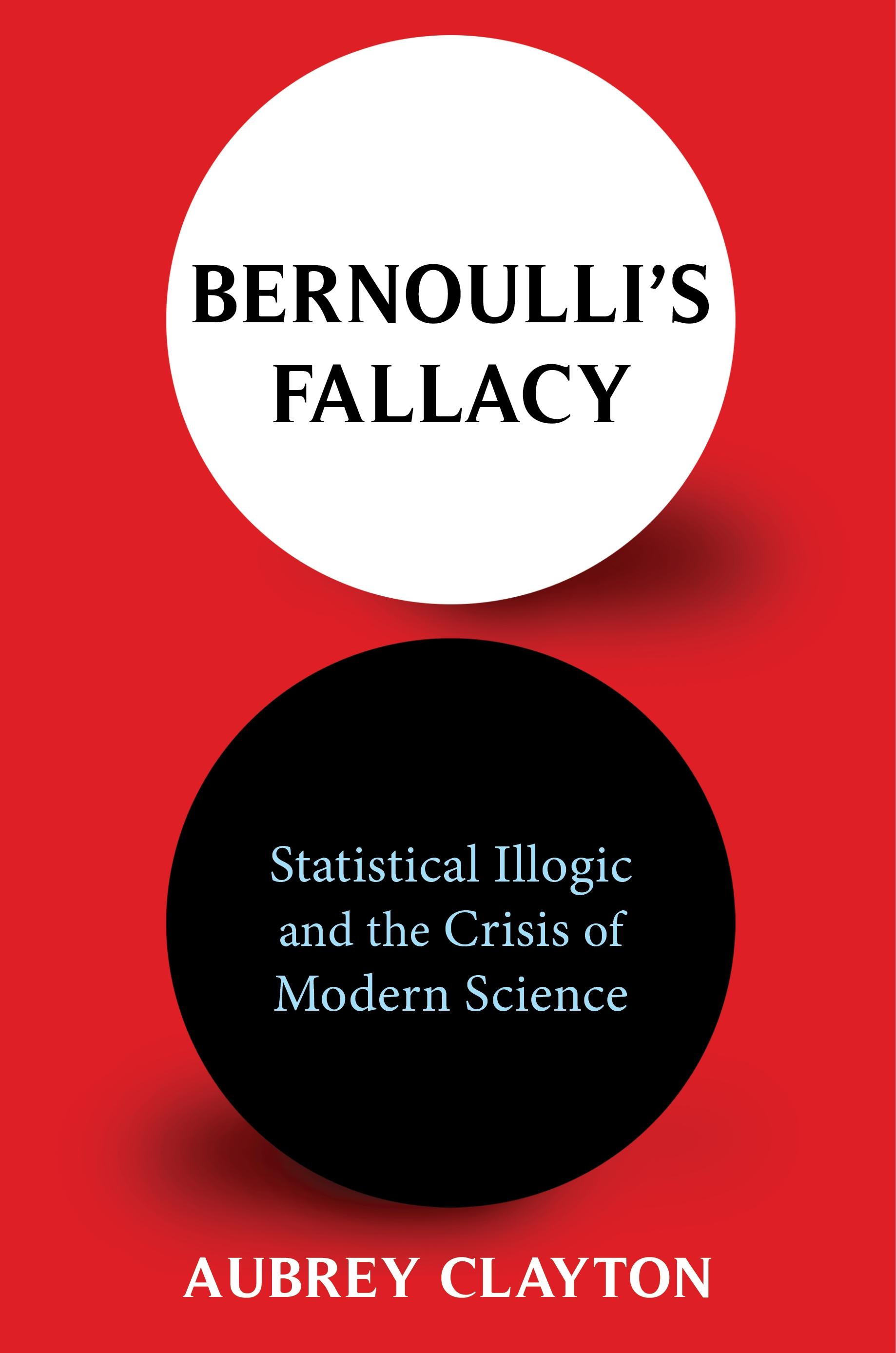
There is a logical flaw in the statistical methods used across experimental science. This fault is not a minor academic quibble: it underlies a reproducibility crisis now threatening entire disciplines. In an increasingly statistics-reliant society, this same deeply rooted error shapes decisions in medicine, law, and public policy with profound consequences. The foundation of the problem is a misunderstanding of probability and its role in making inferences from observations.
Aubrey Clayton traces the history of how statistics went astray, beginning with the groundbreaking work of the seventeenth-century mathematician Jacob Bernoulli and winding through gambling, astronomy, and genetics. Clayton recounts the feuds among rival schools of statistics, exploring the surprisingly human problems that gave rise to the discipline and the all-too-human shortcomings that derailed it. He highlights how influential nineteenth- and twentieth-century figures developed a statistical methodology they claimed was purely objective in order to silence critics of their political agendas, including eugenics.
Clayton provides a clear account of the mathematics and logic of probability, conveying complex concepts accessibly for readers interested in the statistical methods that frame our understanding of the world. He contends that we need to take a Bayesian approach—that is, to incorporate prior knowledge when reasoning with incomplete information—in order to resolve the crisis. Ranging across math, philosophy, and culture, Bernoulli’s Fallacy explains why something has gone wrong with how we use data—and how to fix it.
Maksa helposti kortilla, Klarnalla, Apple Paylla tai Google Paylla. Etkö ole tyytyväinen? Sinulla on aina 14 päivän palautusoikeus. Lue lisää ehdoistamme. Jos sinulla on kysyttävää, lähetä meille sähköpostia osoitteeseen hello@memmo.org.
Memmo tekee opiskelusta helpompaa – missä päin maailmaa ikinä oletkin. Meillä yhdistät kurssikirjat ja fiksut opiskelutyökalut yhteen paikkaan: tiivistelmät, visat, podcastit ja muistikortit. Ja sitten Ted, opiskelukaverisi, joka vastaa kaikkeen, mitä ikinä mietitkin. Yli 50 000 opiskelijaa opiskelee jo täällä – rakennettu auttamaan sinua oppimaan nopeammin ja stressaamaan vähemmän.