
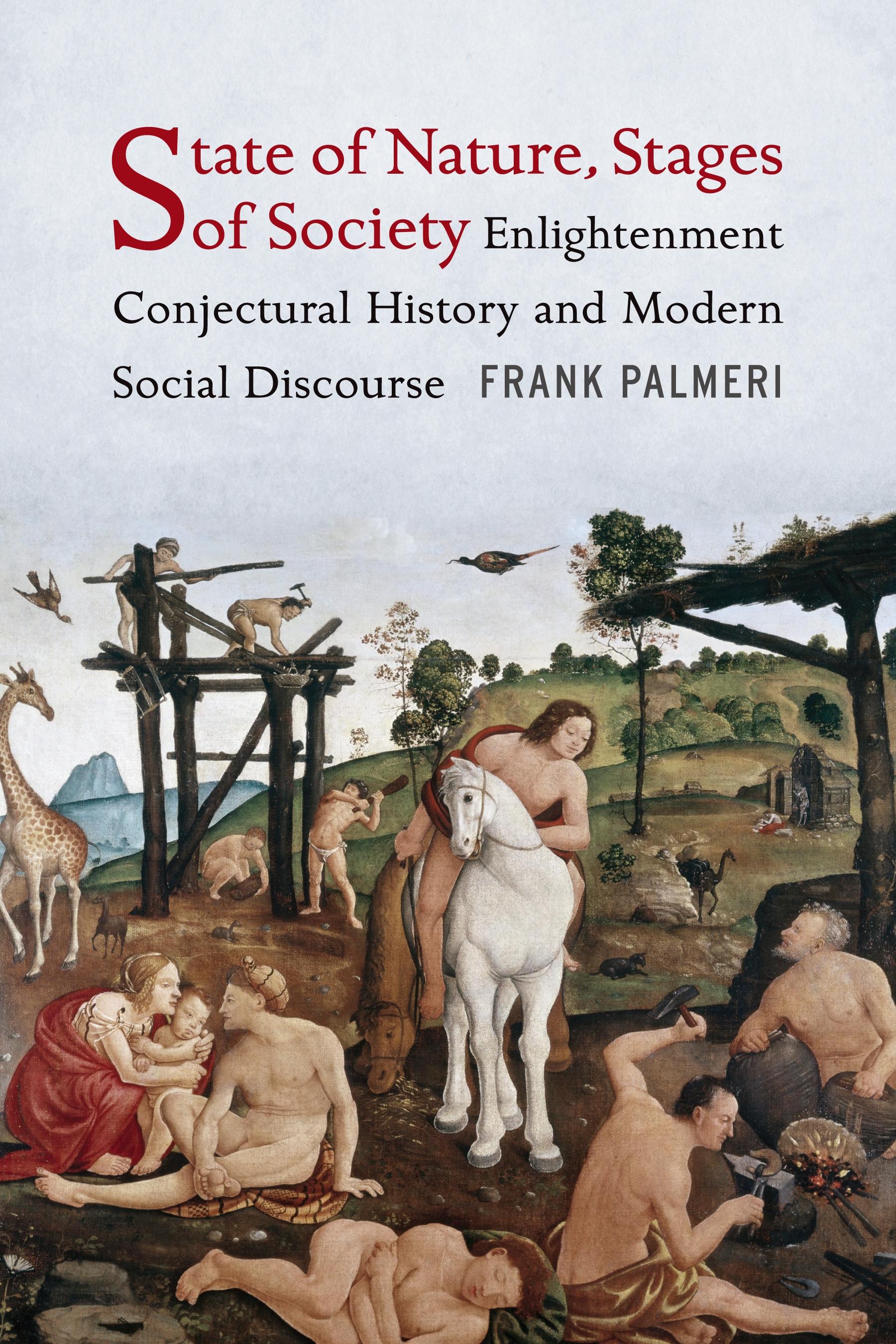
Frank Palmeri sees the conjectural histories of Rousseau, Hume, Herder, and other Enlightenment philosophers as a template for the development of the social sciences in the nineteenth and early twentieth centuries. Without documents or memorials, these thinkers, he argues, employed conjecture to formulate a naturalistic account of society's commercial and secular progression.
Palmeri finds evidence of speculative frameworks in the political economy of Malthus, Martineau, Mill, and Marx. He traces the influence of speculative thought in the development of anthropology and ethnography in the 1860s, the foundational sociology of Comte and Spencer, and the sociology of religion pioneered by Weber, Durkheim, and Freud. Conjectural histories reveal a surprising ambivalence toward progress, modernity, and secularization among leading thinkers of the time, an attitude that affected texts as varied as Darwin's Descent of Man, Nietzsche's Genealogy of Morality, and the novels of Walter Scott, George Eliot, and H.G. Wells. Establishing the critical value of conjectural thinking in the study of modern forms of knowledge, Palmeri concludes his investigation with its return in the work of Foucault and in recent histories on early religion, political organization, and material life.
Maksa helposti kortilla, Klarnalla, Apple Paylla tai Google Paylla. Etkö ole tyytyväinen? Sinulla on aina 14 päivän palautusoikeus. Lue lisää ehdoistamme. Jos sinulla on kysyttävää, lähetä meille sähköpostia osoitteeseen hello@memmo.org.
Memmo tekee opiskelusta helpompaa – missä päin maailmaa ikinä oletkin. Meillä yhdistät kurssikirjat ja fiksut opiskelutyökalut yhteen paikkaan: tiivistelmät, visat, podcastit ja muistikortit. Ja sitten Ted, opiskelukaverisi, joka vastaa kaikkeen, mitä ikinä mietitkin. Yli 50 000 opiskelijaa opiskelee jo täällä – rakennettu auttamaan sinua oppimaan nopeammin ja stressaamaan vähemmän.