
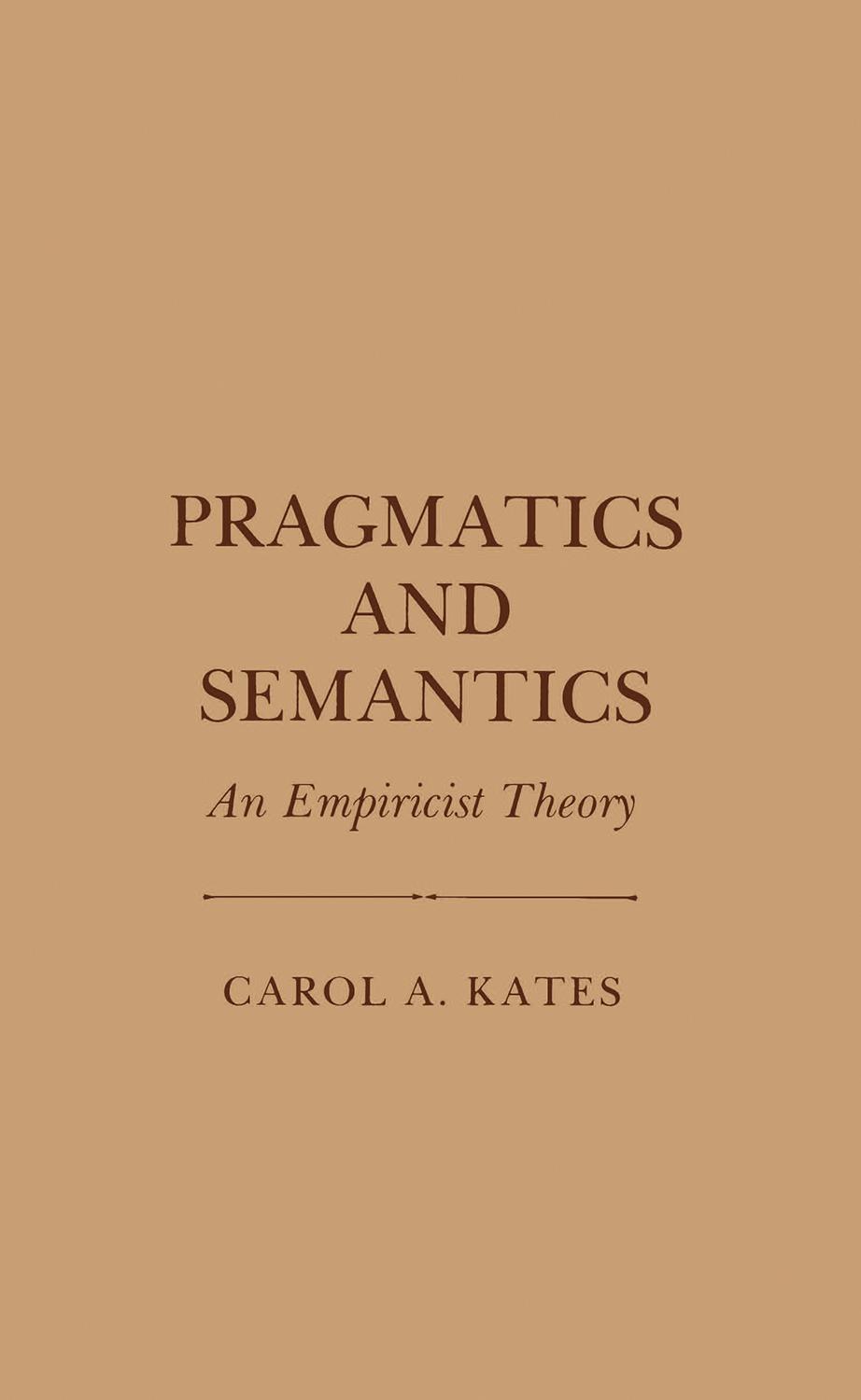
What is the nature of communicative competence? Carol Kates addresses this crucial linguistic question, examining and finally rejecting the rationalistic theory proposed by Noam Chomsky and elaborated by Jerrold J. Katz, among others. She sets forth three reasons why the rationalistic model shoudl be rejected: (1) it has not been supported by empirical tests; (2) it cannot accommodate the pragmatic relation between speaker and sign; and (3) the theory of universal grammar carries with it unacceptable metaphysical implications unless it is interpreted in light of empiricism. Kates proposes an empiricist model in place of the rationalistic theory—a model that, in her view, is more consistent with recent findings in linguistics and psycholinguistics.
In attempting to clarify the nature of utterance meaning, Kates develops theoretical perspectives on phenomenological empiricism and produces an account of reference and intentionality directly relevant to empiricaly based theories of speaking and understanding.
Among the major topics addressed in the book are transformational-generative and universal grammer, cognitive theories of language acquisition, pragmatic structure, predication and topic-comment structure, and empiricism and the philosophical problem of universals.
An innovative and probing work, Pragmatics and Semantics will be welcomed by philosophers, linguists, and psycholinguists.
Paga fácilmente con tarjeta, Klarna, Apple Pay o Google Pay. ¿No estás contento? Siempre tienes 14 días de garantía de devolución. Lee más en nuestros términos. Si tienes preguntas, escríbenos a hello@memmo.org.
Memmo hace que estudiar sea más fácil, estés donde estés. Aquí tienes tus libros de texto y herramientas de estudio inteligentes en un solo lugar: resúmenes, quizzes, podcasts y flashcards. Y también a Ted, tu compañero de estudio que responde a todo lo que te preguntes. Más de 50 000 estudiantes ya estudian aquí. Está hecho para que aprendas más rápido y te estreses menos.