
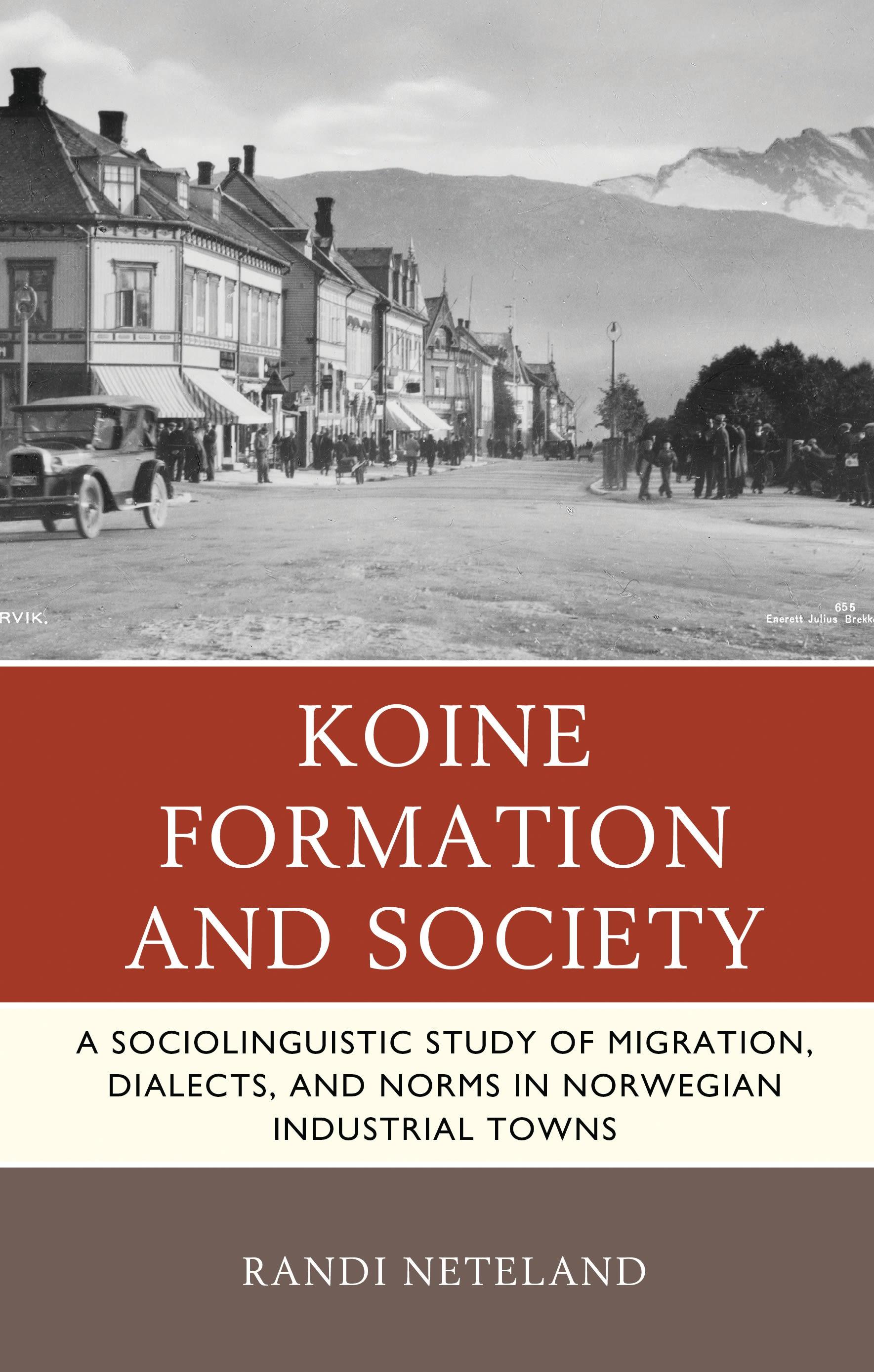
Massive in-migration to a new town leads to socio-cultural and linguistic contact and—inevitably--change. Which linguistic features are preferred in the new dialect? Why do these features prevail? And how does language use in the wider society influence the local process? Randi Neteland explores local and national conditions of koine formation in Koine Formation and Society, using three Norwegian industrial town dialects as main examples. The koine formation is characterized by a complex interplay between social and linguistic factors, such as in-migration rate, migrants’ social characteristics, housing conditions, social class distinctions, in-migrants’ dialect background, and linguistic distinctions among the varieties in contact. However, Neteland contextualizes the industrial towns within the larger society from which the in-migrants originate, and these case studies reveal to what extent the language use and norms for language use operating in the wider speech community can also influence the outcome of the koine formation. In Koine Formation and Society, Neteland explores how the social and linguistic factors work together and discusses determining factors and constraints on the local and national level.
Paga fácilmente con tarjeta, Klarna, Apple Pay o Google Pay. ¿No estás contento? Siempre tienes 14 días de garantía de devolución. Lee más en nuestros términos. Si tienes preguntas, escríbenos a hello@memmo.org.
Memmo hace que estudiar sea más fácil, estés donde estés. Aquí tienes tus libros de texto y herramientas de estudio inteligentes en un solo lugar: resúmenes, quizzes, podcasts y flashcards. Y también a Ted, tu compañero de estudio que responde a todo lo que te preguntes. Más de 50 000 estudiantes ya estudian aquí. Está hecho para que aprendas más rápido y te estreses menos.