
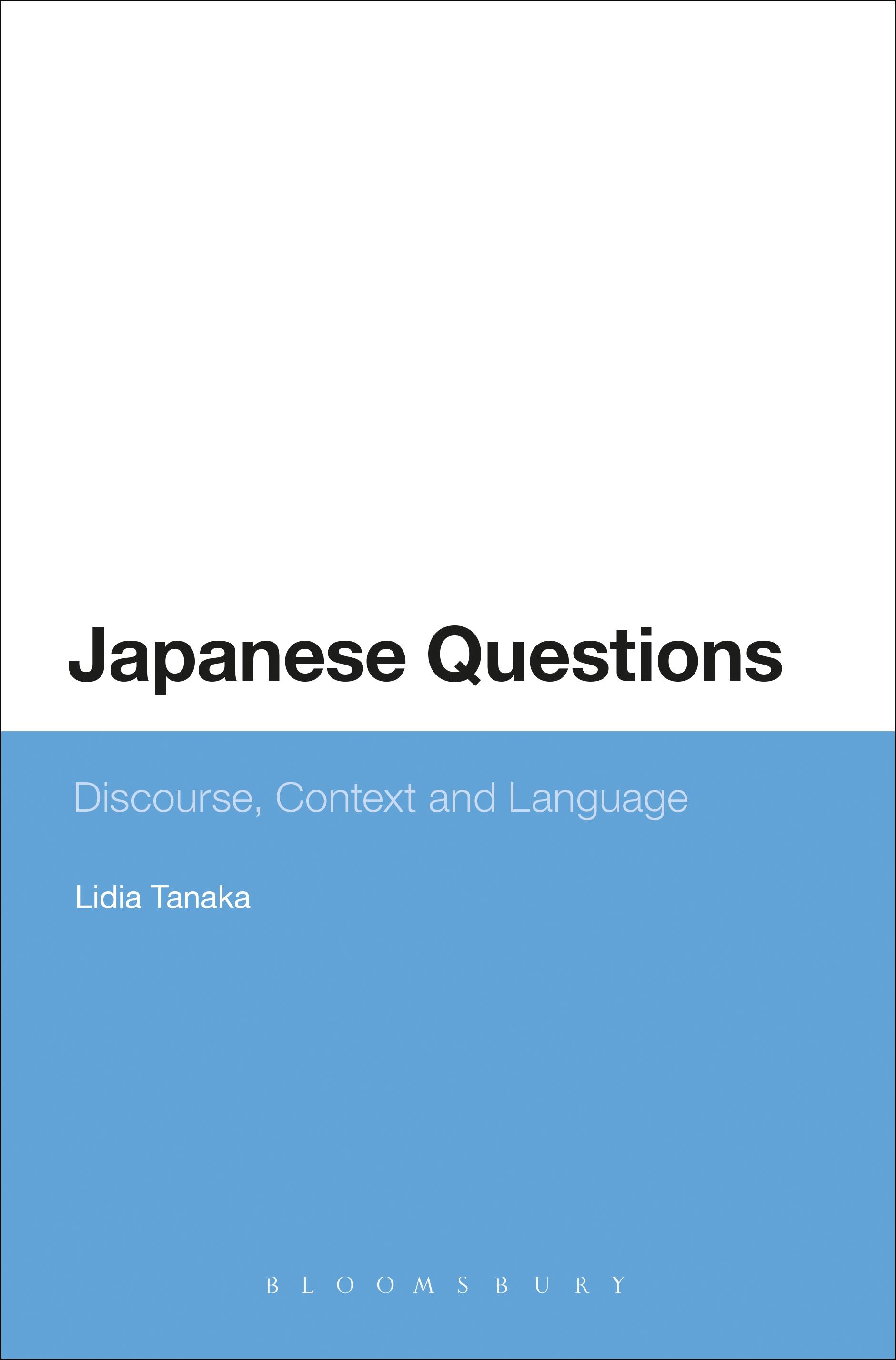
Questions and interrogatives in Japanese discourse have attracted considerable interest from grammarians, but the communicative aspect has received little attention. This book fills this gap. Through detailed analyses of formal and informal interactions, this book demonstrates that the inherent multi-functional and polysemous aspect of language can also be observed in the use of questions. What emerges is a sense of the considerable variety of question forms and also an understanding of how questions are used to perform a wide range of social actions.
The importance of context is stressed throughout the book; both in guiding the speakers' choices of question types and in helping to create the particular stance that characterizes those interactions.
The data used in this book shows that speakers prefer questions that are not canonical. When speakers do use canonical questions, these are overwhelmingly accompanied by some mollifiers. This phenomenon suggests that in Japanese communication the illocutionary force of canonical questions is too strong. To soften the interaction, speakers tend to use other types of interrogative forms such as statements with rising intonation or, at least, to leave questions grammatically unfinished.
The findings in this book contribute to the understanding of how Japanese speakers use questions in different communicative interactions and provide new evidence of the gap between prescriptive grammar and actual communication.
The importance of context is stressed throughout the book; both in guiding the speakers' choices of question types and in helping to create the particular stance that characterizes those interactions.
The data used in this book shows that speakers prefer questions that are not canonical. When speakers do use canonical questions, these are overwhelmingly accompanied by some mollifiers. This phenomenon suggests that in Japanese communication the illocutionary force of canonical questions is too strong. To soften the interaction, speakers tend to use other types of interrogative forms such as statements with rising intonation or, at least, to leave questions grammatically unfinished.
The findings in this book contribute to the understanding of how Japanese speakers use questions in different communicative interactions and provide new evidence of the gap between prescriptive grammar and actual communication.
Paga fácilmente con tarjeta, Klarna, Apple Pay o Google Pay. ¿No estás contento? Siempre tienes 14 días de garantía de devolución. Lee más en nuestros términos. Si tienes preguntas, escríbenos a hello@memmo.org.
Memmo hace que estudiar sea más fácil, estés donde estés. Aquí tienes tus libros de texto y herramientas de estudio inteligentes en un solo lugar: resúmenes, quizzes, podcasts y flashcards. Y también a Ted, tu compañero de estudio que responde a todo lo que te preguntes. Más de 50 000 estudiantes ya estudian aquí. Está hecho para que aprendas más rápido y te estreses menos.