
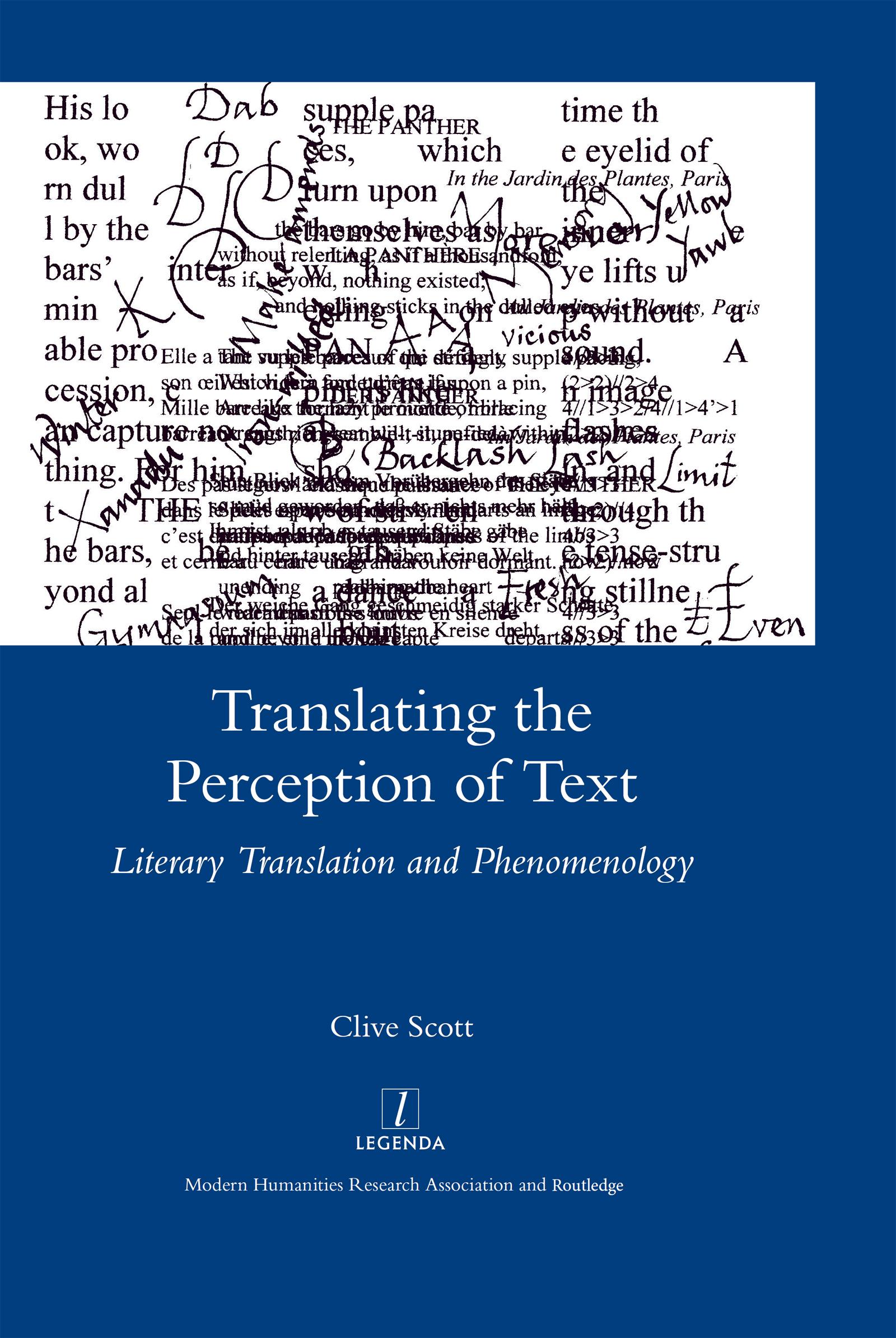
Translation often proceeds as if languages already existed, as if the task of the translator were to make an appropriate selection from available resources. Clive Scott challenges this tacit assumption. If the translator is to do justice to himself/herself as a reader, if the translator is to become the creative writer of his/her reading, then the language of translation must be equal to the translators perceptual experience of, and bodily responses to, source texts. Each renewal of perceptual and physiological contact with a text involves a renewal of the ways we think language and use our expressive faculties (listening, speaking, writing). Phenomenology and particularly the phenomenology of Merleau-Ponty underpins this new approach to translation. The task of the translator is tirelessly to develop new translational languages, ever to move beyond the bilingual into the multilingual, and always to remember that language is as much an active instrument of perception as an object of perception. Clive Scott is Professor Emeritus of European Literature at the University of East Anglia, and a Fellow of the British Academy.
Paga fácilmente con tarjeta, Klarna, Apple Pay o Google Pay. ¿No estás contento? Siempre tienes 14 días de garantía de devolución. Lee más en nuestros términos. Si tienes preguntas, escríbenos a hello@memmo.org.
Memmo hace que estudiar sea más fácil, estés donde estés. Aquí tienes tus libros de texto y herramientas de estudio inteligentes en un solo lugar: resúmenes, quizzes, podcasts y flashcards. Y también a Ted, tu compañero de estudio que responde a todo lo que te preguntes. Más de 50 000 estudiantes ya estudian aquí. Está hecho para que aprendas más rápido y te estreses menos.
También te podría gustar
Comprar el libro0