
WINNER Alice Davis Hitchcock Book Award 2025, Society of Architectural Historians
WINNER Historians of British Art Book Award 2025 for Exemplary Scholarship on the Period between 1800-1960
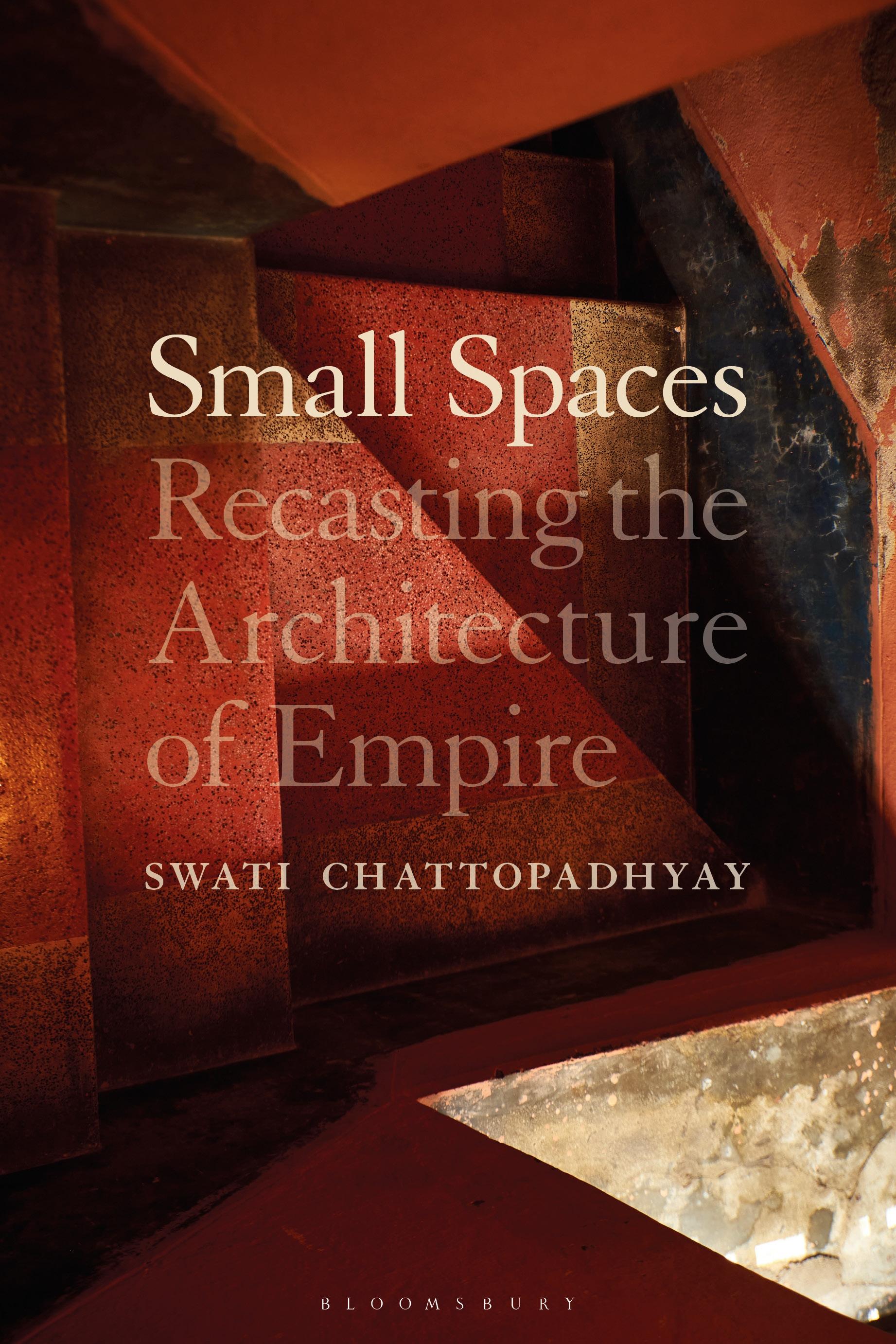
Small Spaces recasts the history of the British empire by focusing on the small spaces that made the empire possible. It takes as its subject a series of small architectural spaces, objects, and landscapes and uses them to narrate the untold stories of the marginalized people-the servants, women, children, subalterns, and racialized minorities-who held up the infrastructure of empire. In so doing it opens up an important new approach to architectural history: an invitation to shift our attention from the large to the small scale.
Taking the British empire in India as its primary focus, this book presents eighteen short, readable chapters to explore an array of overlooked places and spaces. From cook rooms and slave quarters to outhouses, go-downs, and medicine cupboards, each chapter reveals how and why these kinds of minor spaces are so important to understanding colonialism. With the focus of history so often on the large scale - global trade networks, vast regions, and architectures of power and domination - Small Spaces shows instead how we need to rethink this aura of magnitude so that our reading is not beholden such imperialist optics.
With chapters which can be read separately as individual accounts of objects, spaces, and buildings, and introductions showing how this critical methodology can challenge the methods and theories of urban and architectural history, Small Spaces is a must-read for anyone wishing to decolonize disciplinary practices in the field of architectural, urban, and colonial history. Altogether, it provides a paradigm-breaking account of how to 'unlearn empire', whether in British India or elsewhere.
WINNER Historians of British Art Book Award 2025 for Exemplary Scholarship on the Period between 1800-1960
Small Spaces recasts the history of the British empire by focusing on the small spaces that made the empire possible. It takes as its subject a series of small architectural spaces, objects, and landscapes and uses them to narrate the untold stories of the marginalized people-the servants, women, children, subalterns, and racialized minorities-who held up the infrastructure of empire. In so doing it opens up an important new approach to architectural history: an invitation to shift our attention from the large to the small scale.
Taking the British empire in India as its primary focus, this book presents eighteen short, readable chapters to explore an array of overlooked places and spaces. From cook rooms and slave quarters to outhouses, go-downs, and medicine cupboards, each chapter reveals how and why these kinds of minor spaces are so important to understanding colonialism. With the focus of history so often on the large scale - global trade networks, vast regions, and architectures of power and domination - Small Spaces shows instead how we need to rethink this aura of magnitude so that our reading is not beholden such imperialist optics.
With chapters which can be read separately as individual accounts of objects, spaces, and buildings, and introductions showing how this critical methodology can challenge the methods and theories of urban and architectural history, Small Spaces is a must-read for anyone wishing to decolonize disciplinary practices in the field of architectural, urban, and colonial history. Altogether, it provides a paradigm-breaking account of how to 'unlearn empire', whether in British India or elsewhere.
Paga fácilmente con tarjeta, Klarna, Apple Pay o Google Pay. ¿No estás contento? Siempre tienes 14 días de garantía de devolución. Lee más en nuestros términos. Si tienes preguntas, escríbenos a hello@memmo.org.
Memmo hace que estudiar sea más fácil, estés donde estés. Aquí tienes tus libros de texto y herramientas de estudio inteligentes en un solo lugar: resúmenes, quizzes, podcasts y flashcards. Y también a Ted, tu compañero de estudio que responde a todo lo que te preguntes. Más de 50 000 estudiantes ya estudian aquí. Está hecho para que aprendas más rápido y te estreses menos.