
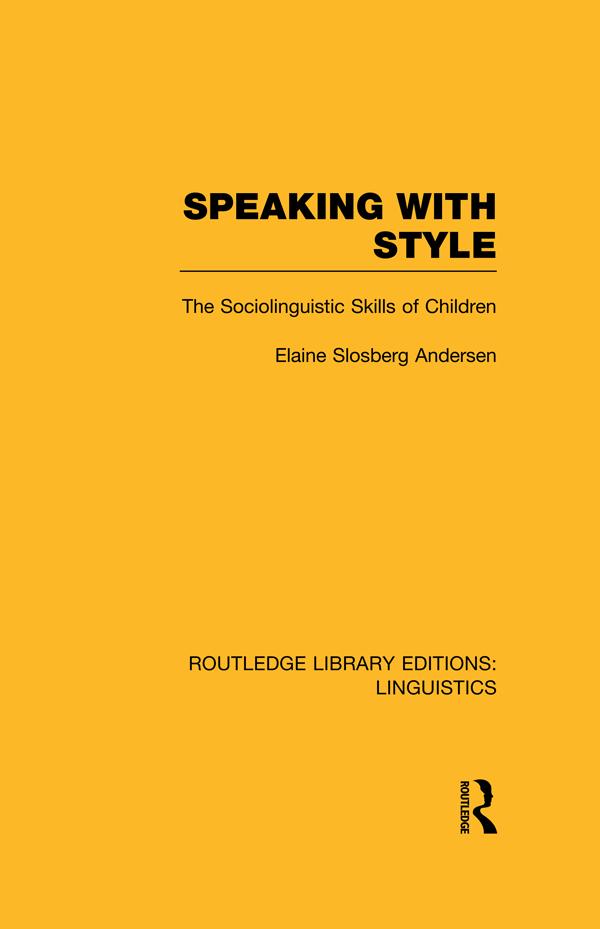
In acquiring communicative competence, children must learn to speak not only grammatically but also appropriately. Although rules for appropriate language use may vary from culture to culture, they are usually sensitive across languages to many of the same factors, including the context and the topic of the discourse, and the sex, age, familiarity and relative status of the speaker and the listener. There is available detailed evidence of the ways in which adults consistently modify their speech to foreigners, of phonological, syntactic, and lexical markings of language in professional settings, and of differences in men’s and women’s speech that are tied to their roles in society.
This book examines young children’s knowledge of the sociolinguistic rules that govern appropriate language use, exploring (i) the repertoire of registers (ie speech varieties) that young children possess; (ii) the linguistic devices that they use to mark distinct registers; (iii) the way their skill in using these registers develops.
Paga fácilmente con tarjeta, Klarna, Apple Pay o Google Pay. ¿No estás contento? Siempre tienes 14 días de garantía de devolución. Lee más en nuestros términos. Si tienes preguntas, escríbenos a hello@memmo.org.
Memmo hace que estudiar sea más fácil, estés donde estés. Aquí tienes tus libros de texto y herramientas de estudio inteligentes en un solo lugar: resúmenes, quizzes, podcasts y flashcards. Y también a Ted, tu compañero de estudio que responde a todo lo que te preguntes. Más de 50 000 estudiantes ya estudian aquí. Está hecho para que aprendas más rápido y te estreses menos.