
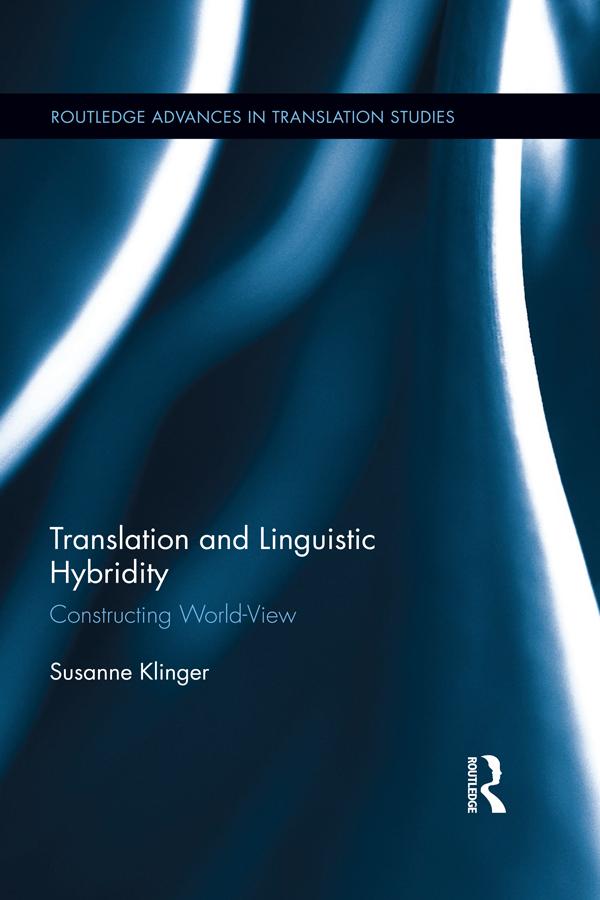
This volume outlines a new approach to the study of linguistic hybridity and its translation in cross-cultural writing. By building on concepts from narratology, cognitive poetics, stylistics, and film studies, it explores how linguistic hybridity contributes to the reader’s construction of the textual agents’ world-view and how it can be exploited in order to encourage the reader to empathise with one world-view rather than another and, consequently, how translation shifts in linguistic hybridity can affect the world-view that the reader constructs.
Linguistic hybridity is a hallmark of cross-cultural texts such as postcolonial, migrant and travel writing as source and target language come into contact not only during the process of writing these texts, but also often in the (fictional or non-fictional) story-world. Hence, translation is frequently not only the medium, but also the object of representation. By focussing on the relation between medium and object of representation, the book complements existing research that so far has neglected this aspect. The book thus not only contributes to current scholarly debates – within and beyond the discipline of translation studies – concerned with cross-cultural writing and linguistic hybridity, but also adds to the growing body of translation studies research concerned with questions of voice and point of view.
Paga fácilmente con tarjeta, Klarna, Apple Pay o Google Pay. ¿No estás contento? Siempre tienes 14 días de garantía de devolución. Lee más en nuestros términos. Si tienes preguntas, escríbenos a hello@memmo.org.
Memmo hace que estudiar sea más fácil, estés donde estés. Aquí tienes tus libros de texto y herramientas de estudio inteligentes en un solo lugar: resúmenes, quizzes, podcasts y flashcards. Y también a Ted, tu compañero de estudio que responde a todo lo que te preguntes. Más de 50 000 estudiantes ya estudian aquí. Está hecho para que aprendas más rápido y te estreses menos.