
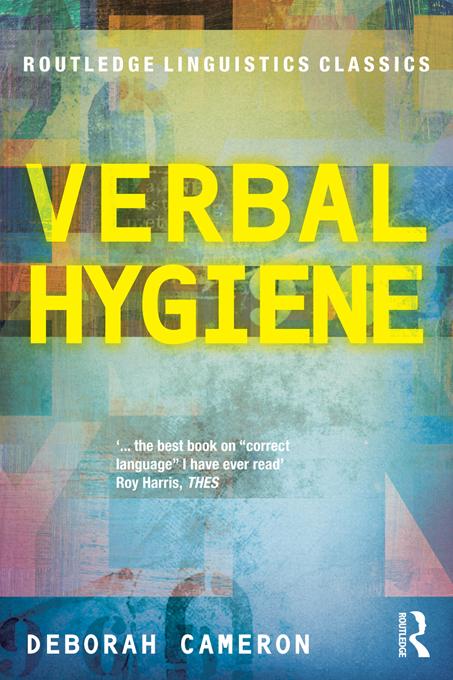
In Verbal Hygiene, Deborah Cameron takes a serious look at popular attitudes towards language and examines the practices by which people attempt to regulate its use. Instead of dismissing the practice of ‘verbal hygiene’, as a misguided and pernicious exercise, she argues that popular discourse about language values – good and bad, right and wrong – serves an important function for those engaged in it. A series of case studies deal with specific examples of verbal hygiene: the regulation of ‘style’ by editors, the teaching of English grammar in schools, the movements for and against so-called ‘politically correct’ language and the advice given to women on how they can speak more effectively.
This Routledge Linguistics Classic includes a new foreword which looks at how the issues covered in the case studies have developed over time and a new afterword which discusses new concerns which have emerged in the last 15 years, from the regimentation of language in the workplace to panics about immigration and terrorism, which are expressed in linguistic terms.
Addressed to linguists, to professional language-users of all kinds, and to anyone interested in language and culture, Verbal Hygiene calls for legitimate concerns about language and value to be discussed, by experts and lay-speakers alike, in a rational and critical spirit.
Paga fácilmente con tarjeta, Klarna, Apple Pay o Google Pay. ¿No estás contento? Siempre tienes 14 días de garantía de devolución. Lee más en nuestros términos. Si tienes preguntas, escríbenos a hello@memmo.org.
Memmo hace que estudiar sea más fácil, estés donde estés. Aquí tienes tus libros de texto y herramientas de estudio inteligentes en un solo lugar: resúmenes, quizzes, podcasts y flashcards. Y también a Ted, tu compañero de estudio que responde a todo lo que te preguntes. Más de 50 000 estudiantes ya estudian aquí. Está hecho para que aprendas más rápido y te estreses menos.