
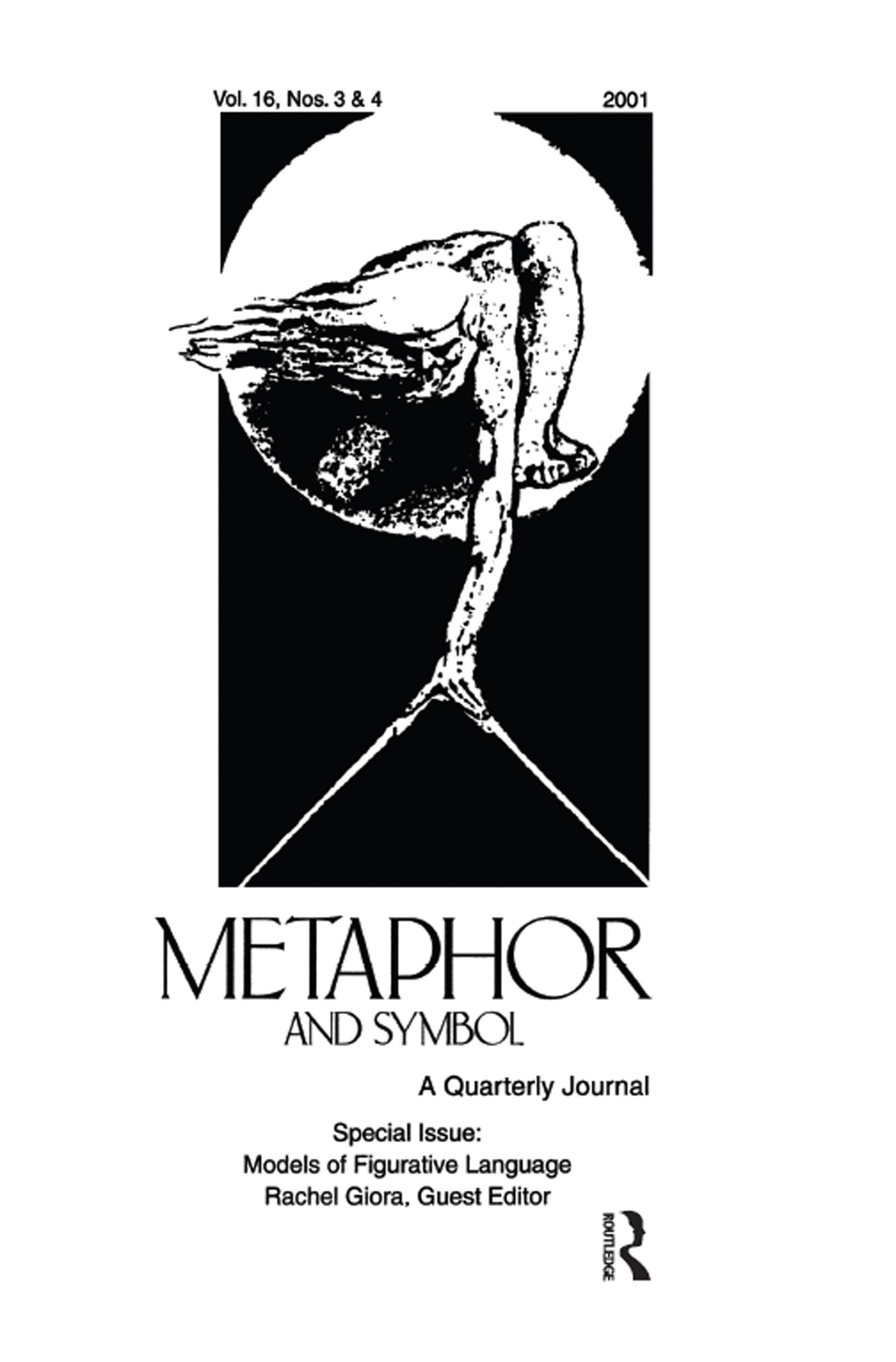
First published in 2001. Volume 16, Numbers 3&4. This special issue is an attempt to record the state of the art of psycholinguistics research into figurative language. There are quite a number of models addressing distinct issues and aiming to solve different problems—the mark of a maturing field. Indeed, not one theory is tailored to solve all the problems. Rather, each model, while aiming at generality, also recognizes its limitation. Despite specializing in different topics, most of the theories presented here have some things in common. For one, most of them dispense with the literal/ nonliteral divide, proposing, instead, models that are capable of handling literal as well as figurative language. Some models focus on the role primary meanings play in comprehension, others shed light on context effects, and some models seem to encompass both in terms of the accumulating effects of constraints (whether linguistic or contextual).
Paga fácilmente con tarjeta, Klarna, Apple Pay o Google Pay. ¿No estás contento? Siempre tienes 14 días de garantía de devolución. Lee más en nuestros términos. Si tienes preguntas, escríbenos a hello@memmo.org.
Memmo hace que estudiar sea más fácil, estés donde estés. Aquí tienes tus libros de texto y herramientas de estudio inteligentes en un solo lugar: resúmenes, quizzes, podcasts y flashcards. Y también a Ted, tu compañero de estudio que responde a todo lo que te preguntes. Más de 50 000 estudiantes ya estudian aquí. Está hecho para que aprendas más rápido y te estreses menos.
También te podría gustar
Comprar el libro0