
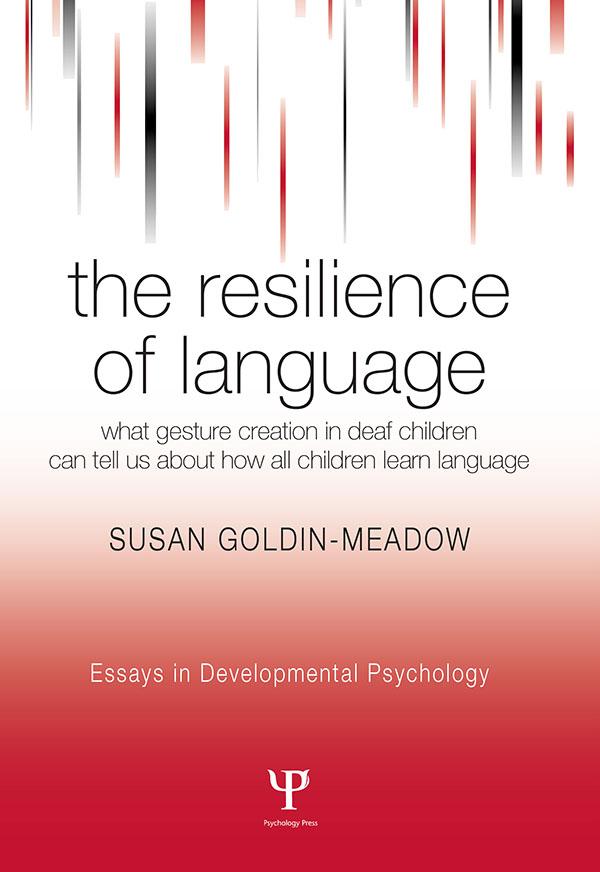
Imagine a child who has never seen or heard any language at all. Would such a child be able to invent a language on her own? Despite what one might guess, the children described in this book make it clear that the answer to this question is 'yes'. The children are congenitally deaf and cannot learn the spoken language that surrounds them. In addition, they have not yet been exposed to sign language, either by their hearing parents or their oral schools. Nevertheless, the children use their hands to communicate - they gesture - and those gestures take on many of the forms and functions of language. The properties of language that we find in the deaf children's gestures are just those properties that do not need to be handed down from generation to generation, but can be reinvented by a child de novo - the resilient properties of language. This book suggests that all children, deaf or hearing, come to language-learning ready to develop precisely these language properties. In this way, studies of gesture creation in deaf children can show us the way that children themselves have a large hand in shaping how language is learned.
Paga fácilmente con tarjeta, Klarna, Apple Pay o Google Pay. ¿No estás contento? Siempre tienes 14 días de garantía de devolución. Lee más en nuestros términos. Si tienes preguntas, escríbenos a hello@memmo.org.
Memmo hace que estudiar sea más fácil, estés donde estés. Aquí tienes tus libros de texto y herramientas de estudio inteligentes en un solo lugar: resúmenes, quizzes, podcasts y flashcards. Y también a Ted, tu compañero de estudio que responde a todo lo que te preguntes. Más de 50 000 estudiantes ya estudian aquí. Está hecho para que aprendas más rápido y te estreses menos.