
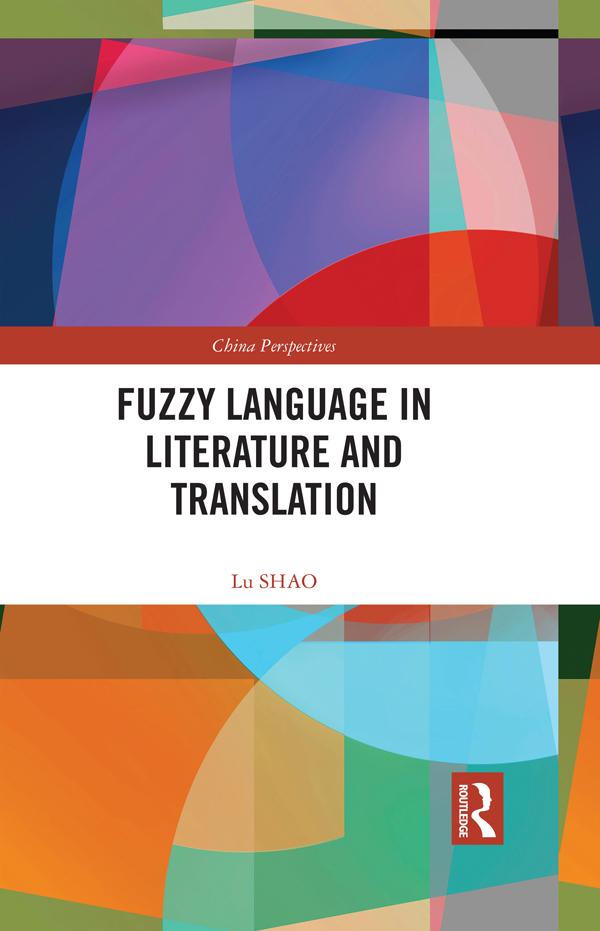
Bringing a fuzzy logic-based approach into translation studies and drawing on the theory of information entropy, this book discusses the translation of fuzzy language in literary works and advances a new method of measuring text fuzziness between translation and source text.
Based on illustrative examples from the popular novel The Da Vinci Code and its two translated Chinese versions, the study demonstrates the fuzziness measuring method through an algorithmic process. More specifically, information entropy is applied to measure the uncertainty associated with readers’ understanding of the original and its corresponding target texts. The underlying hypothesis is that the probability distribution in which readers will understand identified fuzzy discourse is measurable. By further explicating the validity of the hypothesis, it seeks to solve translational “fuzzy” problems in the translation process and offers an alternative, novel approach to the study of “fuzzy” literary texts and their translation. Hopefully, the argument of the book that the intrinsic uncertainty of fuzzy language can be evaluated through Shannon’s information entropy will open up a new avenue to the quantitative description of the fuzziness of language and translation.
This book will be of interest to scholars and students in translation studies, applied linguistics, and literary criticism.
Paga fácilmente con tarjeta, Klarna, Apple Pay o Google Pay. ¿No estás contento? Siempre tienes 14 días de garantía de devolución. Lee más en nuestros términos. Si tienes preguntas, escríbenos a hello@memmo.org.
Memmo hace que estudiar sea más fácil, estés donde estés. Aquí tienes tus libros de texto y herramientas de estudio inteligentes en un solo lugar: resúmenes, quizzes, podcasts y flashcards. Y también a Ted, tu compañero de estudio que responde a todo lo que te preguntes. Más de 50 000 estudiantes ya estudian aquí. Está hecho para que aprendas más rápido y te estreses menos.