
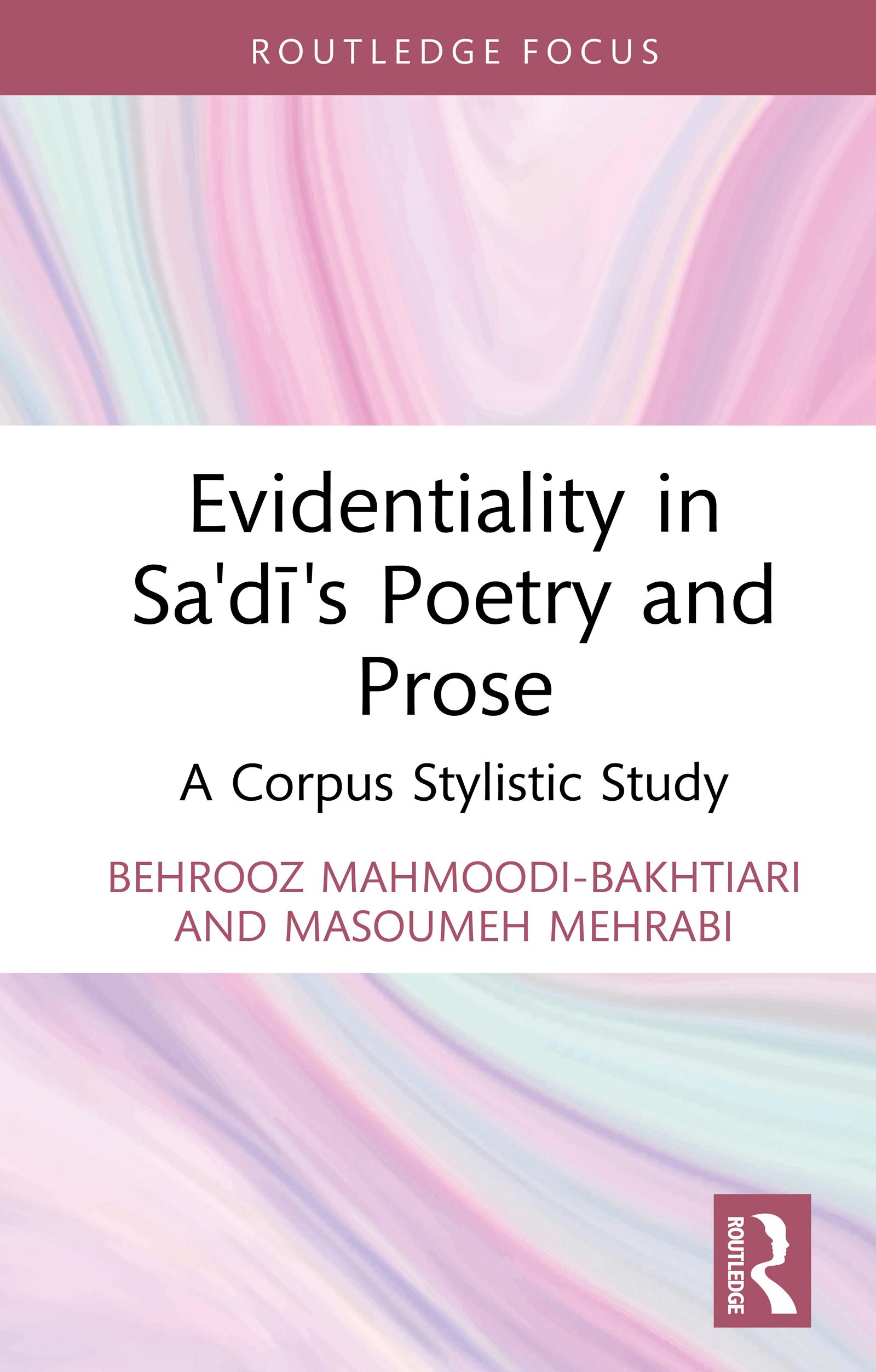
This study is the first to introduce evidentiality to the stylistic analysis of literary works, specifically that of the great Persian writer Sa'dī, focusing on how he used linguistic means to illustrate a real or ideational world.
The authors begin by introducing the concept of evidentiality; its definition, its coding in Persian, the rationale behind evidentiality analysis, and semantic-pragmatic functions of evidentiality. The book highlights how evidentiality can be accounted for as a stylistic device to reveal the validity of a narration, as well as the author’s commitment and contribution to it. Three of Sa'dī’s major works are analyzed – Būstān, Golestān and Sonnets – using Krippendoff's frequency approach. It is argued that Sa'dī deployed an array of evidentials in his work, from direct visual evidentials in Golestān and Sonnets to heard and quoted evidentials in Būstān. To illustrate this, the book includes translations of Sa'dī’s poetry and prose. In addition, the authors consider historical and contemporary manifestations of the Persian narrative style, as well as exploring the cultural concerns of the Persian speech community.
The book will appeal to general linguists, practitioners of pragmatics and stylistics, literary critics, and those interested in contrastive analysis of literature and cultural studies.
Paga fácilmente con tarjeta, Klarna, Apple Pay o Google Pay. ¿No estás contento? Siempre tienes 14 días de garantía de devolución. Lee más en nuestros términos. Si tienes preguntas, escríbenos a hello@memmo.org.
Memmo hace que estudiar sea más fácil, estés donde estés. Aquí tienes tus libros de texto y herramientas de estudio inteligentes en un solo lugar: resúmenes, quizzes, podcasts y flashcards. Y también a Ted, tu compañero de estudio que responde a todo lo que te preguntes. Más de 50 000 estudiantes ya estudian aquí. Está hecho para que aprendas más rápido y te estreses menos.