
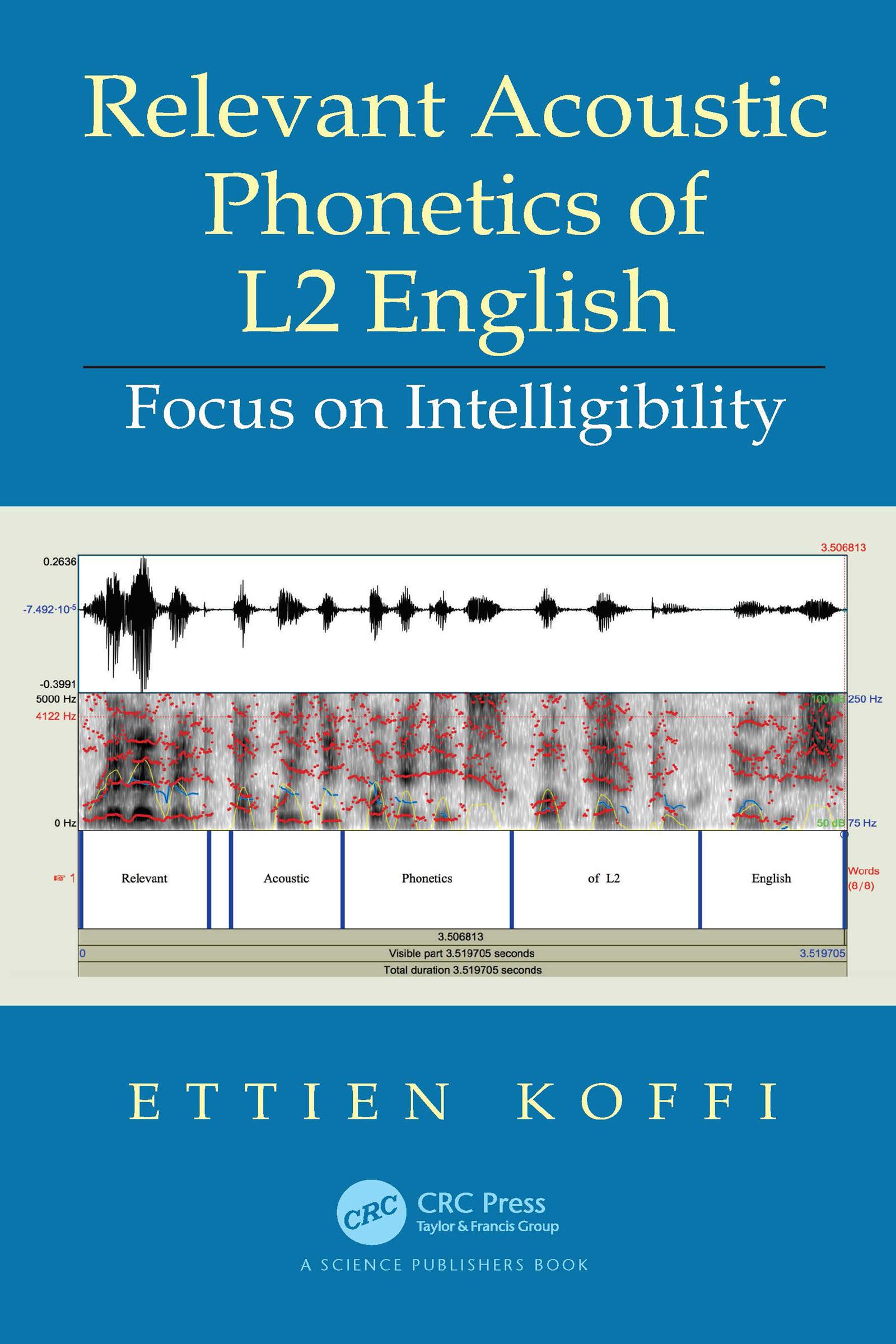
Intelligibility is the ultimate goal of human communication. However, measuring it objectively remained elusive until the 1940s when physicist Harvey Fletcher pioneered a psychoacoustic methodology for doing so. Another physicist, von Bekesy, demonstrated clinically that Fletcher’s theory of Critical Bands was anchored in anatomical and auditory reality. Fletcher’s and Bekesy’s approach to intelligibility has revolutionized contemporary understanding of the processes involved in encoding and decoding speech signals. Their insights are applied in this book to account for the intelligibility of the pronunciation of 67 non-native speakers from the following language backgrounds –10 Arabic, 10 Japanese, 10 Korean, 10 Mandarin, 11 Serbian and Croatian "the Slavic Group," 6 Somali, and 10 Spanish speakers who read the Speech Accent Archive elicitation paragraph. Their pronunciation is analyzed instrumentally and compared and contrasted with that of 10 native speakers of General American English (GAE) who read the same paragraph. The data-driven intelligibility analyses proposed in this book help answer the following questions:
- Can L2 speakers of English whose native language lacks a segment/segments or a suprasegment/ suprasegments manage to produce it/them intelligibly?
- If they cannot, what segments or suprasegments do they use to substitute for it/them?
- Do the compensatory strategies used interfere with intelligibility?
The findings reported in this book are based on nearly 12,000 measured speech tokens produced by all the participants. This includes some 2,000 vowels, more than 500 stop consonants, over 3,000 fricatives, nearly 1,200 nasals, about 1,500 approximants, a over 1,200 syllables onsets, as many as 800 syllable codas, more than 1,600 measurement of F0/pitch, and duration measurements of no fewer than 539 disyllabic words. These measurements are in keeping with Baken and Orlikoff (2000:3) and in accordance with widely accepted Just Noticeable Difference thresholds, and relative functional load calculations provided by Catforda (1987).
Paga fácilmente con tarjeta, Klarna, Apple Pay o Google Pay. ¿No estás contento? Siempre tienes 14 días de garantía de devolución. Lee más en nuestros términos. Si tienes preguntas, escríbenos a hello@memmo.org.
Memmo hace que estudiar sea más fácil, estés donde estés. Aquí tienes tus libros de texto y herramientas de estudio inteligentes en un solo lugar: resúmenes, quizzes, podcasts y flashcards. Y también a Ted, tu compañero de estudio que responde a todo lo que te preguntes. Más de 50 000 estudiantes ya estudian aquí. Está hecho para que aprendas más rápido y te estreses menos.