
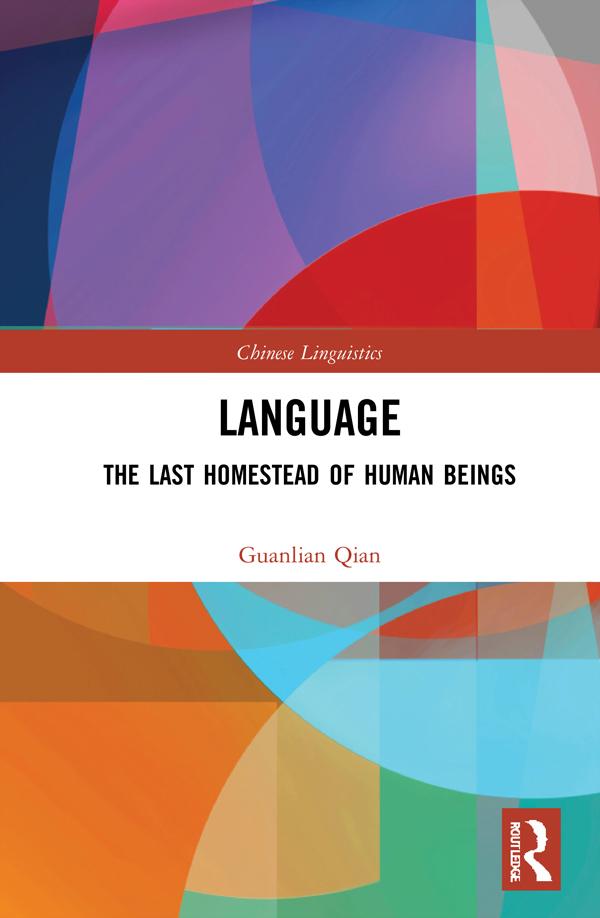
Heidegger characterizes the relationship between language and Being as "language is the house of Being", negating the idea that language is merely a tool ready to be used at hand.
Drawing on this idea, as well as ideas from anthropology, pragmatics, and folklore studies, the author argues that "language is the last homestead of human beings", meaning that mankind lives within language, has to live within language, and lives in formulaic speech events. The author takes Western classic works on the philosophy of language and his own insights of language use, rooted in traditional Chinese culture, in order to develop his own localized theory. In this title, the author explores the philosophical aspect of man’s survival by presenting day-to-day exchange routines such as weddings and fortune-telling dialogues in the Chinese context.
Awarded the first prize for Academic Excellence in Philosophy and Social Sciences in Guangdong Province, and second prize in the second Xu Guozhang Award for Foreign Language Studies, this is a must-read for researchers interested in philosophy of language and pragmatics.
Paga fácilmente con tarjeta, Klarna, Apple Pay o Google Pay. ¿No estás contento? Siempre tienes 14 días de garantía de devolución. Lee más en nuestros términos. Si tienes preguntas, escríbenos a hello@memmo.org.
Memmo hace que estudiar sea más fácil, estés donde estés. Aquí tienes tus libros de texto y herramientas de estudio inteligentes en un solo lugar: resúmenes, quizzes, podcasts y flashcards. Y también a Ted, tu compañero de estudio que responde a todo lo que te preguntes. Más de 50 000 estudiantes ya estudian aquí. Está hecho para que aprendas más rápido y te estreses menos.