
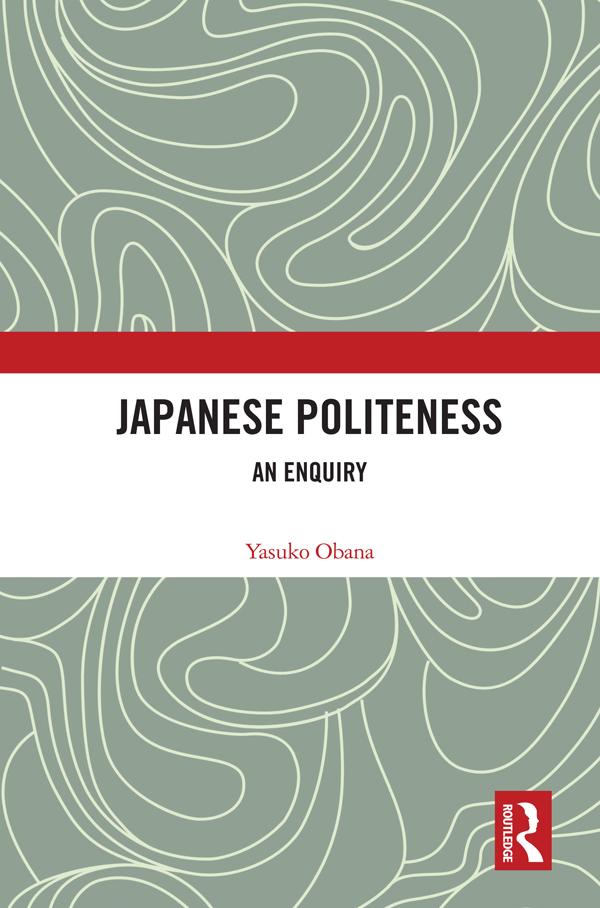
Although the Japanese language is one of the most quoted examples in politeness research, extant publications focus on particular areas of politeness, and very few of them enquire into the varied aspects of Japanese politeness. In this book, Yasuko Obana provides an integrated account of what signifies Japanese politeness.
By examining how far previous assumptions can apply to Japanese, Obana exposes a variety of characteristics of Japanese politeness. By taking a diachronic approach, she probes into what constitutes politeness, extracts key elements of the term ‘polite’ in Japanese, and demonstrates how modern honorifics’ apparent diverse, divergent uses and effects can be integrated into a systematic matrix. Furthermore, by quoting traditional Japanese language scholars’ (kokugo gakusha) studies, Obana brings different views into the open. She also carves out politeness strategies in Japanese that have not been adequately explored to date, and which often conform to the way in which honorifi cs behave because they refl ect social indexicality.
This book is a good reference for scholars in pragmatics, particularly for those who are working on politeness. It is useful for Japanese language teachers who want to know how to teach Japanese politeness to non-native learners. Postgraduate students of Japanese or pragmatics may also find this book useful for self-study.
Paga fácilmente con tarjeta, Klarna, Apple Pay o Google Pay. ¿No estás contento? Siempre tienes 14 días de garantía de devolución. Lee más en nuestros términos. Si tienes preguntas, escríbenos a hello@memmo.org.
Memmo hace que estudiar sea más fácil, estés donde estés. Aquí tienes tus libros de texto y herramientas de estudio inteligentes en un solo lugar: resúmenes, quizzes, podcasts y flashcards. Y también a Ted, tu compañero de estudio que responde a todo lo que te preguntes. Más de 50 000 estudiantes ya estudian aquí. Está hecho para que aprendas más rápido y te estreses menos.