
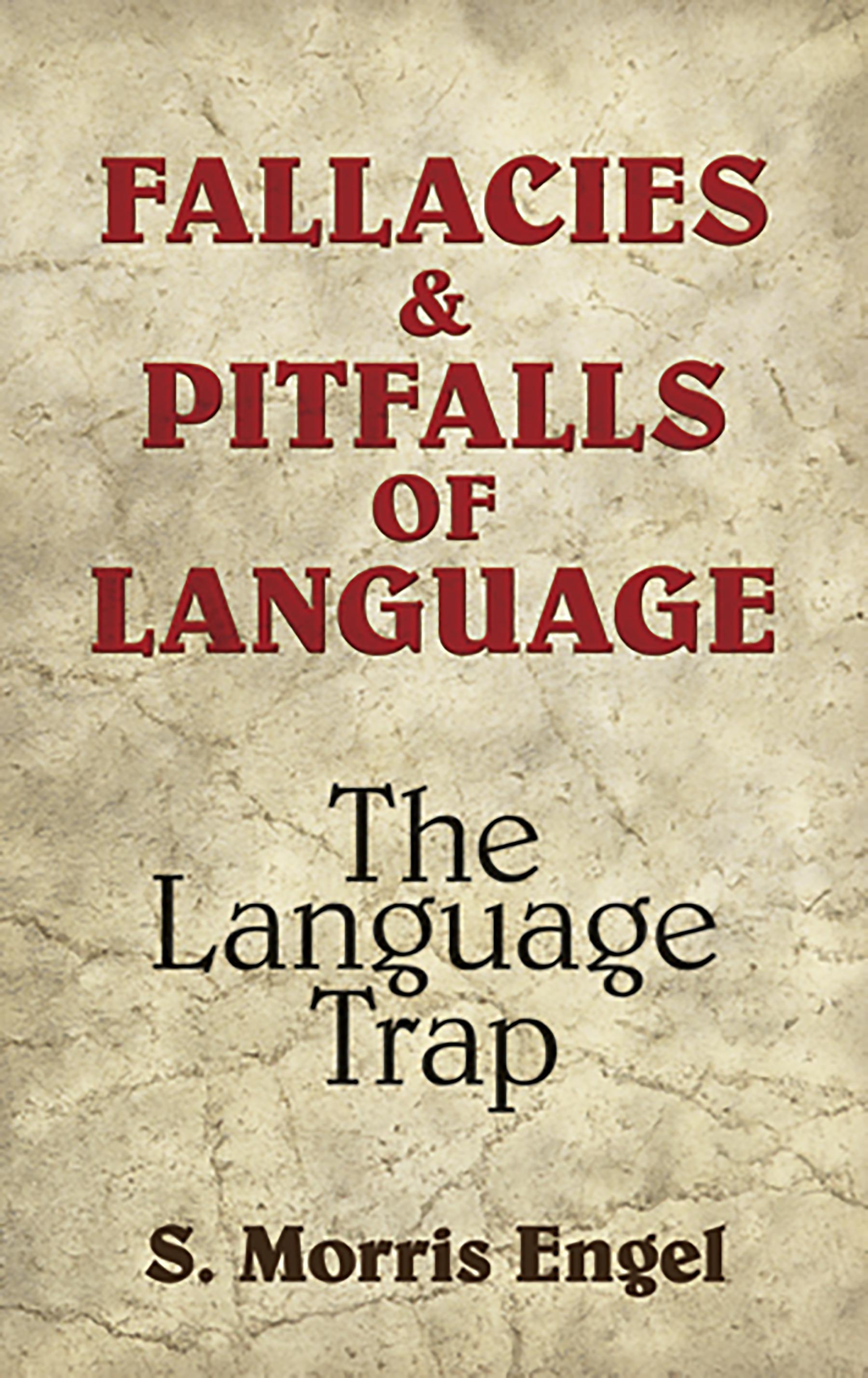
As S. Morris Engel alerts us in this eye-opening book, we risk falling into potentially harmful language traps every moment. Not just the occasional malapropism or grammatical faux pas, but a more sinister kind — distortions of meaning that would persuade us to believe something that may not be true.
Sometimes these language traps are set for us deliberately by politicians, advertisers, journalists, lawyers or other professional persuaders. Sometimes they are set inadvertently by our friends, our loved ones — even ourselves. This work explains how and why these fallacies work, and how we may suffer the consequences when they do.
Day after day we listen to government newspeak (our troops are called "peace-keeping forces"), exaggerated advertising claims from "leading authorities," twisted logic and misleading propaganda. We are treated to more and more euphemisms (slums are called "substandard housing"; dogcatchers, "animal welfare officers"). We encounter innumerable ambiguities ("I wish you all the good fortune you deserve") — and indulge in a few ourselves. The author wittily explores this verbal minefield, and tells us how to spot a language trap and how to avoid falling in.
The book is not only a useful manual of verbal self-defense, it's an engrossing study of the nature of language and the subtle ways in which it operates. It will intrigue anyone interested in words, language, and the dynamics of modern culture.
Sometimes these language traps are set for us deliberately by politicians, advertisers, journalists, lawyers or other professional persuaders. Sometimes they are set inadvertently by our friends, our loved ones — even ourselves. This work explains how and why these fallacies work, and how we may suffer the consequences when they do.
Day after day we listen to government newspeak (our troops are called "peace-keeping forces"), exaggerated advertising claims from "leading authorities," twisted logic and misleading propaganda. We are treated to more and more euphemisms (slums are called "substandard housing"; dogcatchers, "animal welfare officers"). We encounter innumerable ambiguities ("I wish you all the good fortune you deserve") — and indulge in a few ourselves. The author wittily explores this verbal minefield, and tells us how to spot a language trap and how to avoid falling in.
The book is not only a useful manual of verbal self-defense, it's an engrossing study of the nature of language and the subtle ways in which it operates. It will intrigue anyone interested in words, language, and the dynamics of modern culture.
Paga fácilmente con tarjeta, Klarna, Apple Pay o Google Pay. ¿No estás contento? Siempre tienes 14 días de garantía de devolución. Lee más en nuestros términos. Si tienes preguntas, escríbenos a hello@memmo.org.
Memmo hace que estudiar sea más fácil, estés donde estés. Aquí tienes tus libros de texto y herramientas de estudio inteligentes en un solo lugar: resúmenes, quizzes, podcasts y flashcards. Y también a Ted, tu compañero de estudio que responde a todo lo que te preguntes. Más de 50 000 estudiantes ya estudian aquí. Está hecho para que aprendas más rápido y te estreses menos.
También te podría gustar
Comprar el libro0