
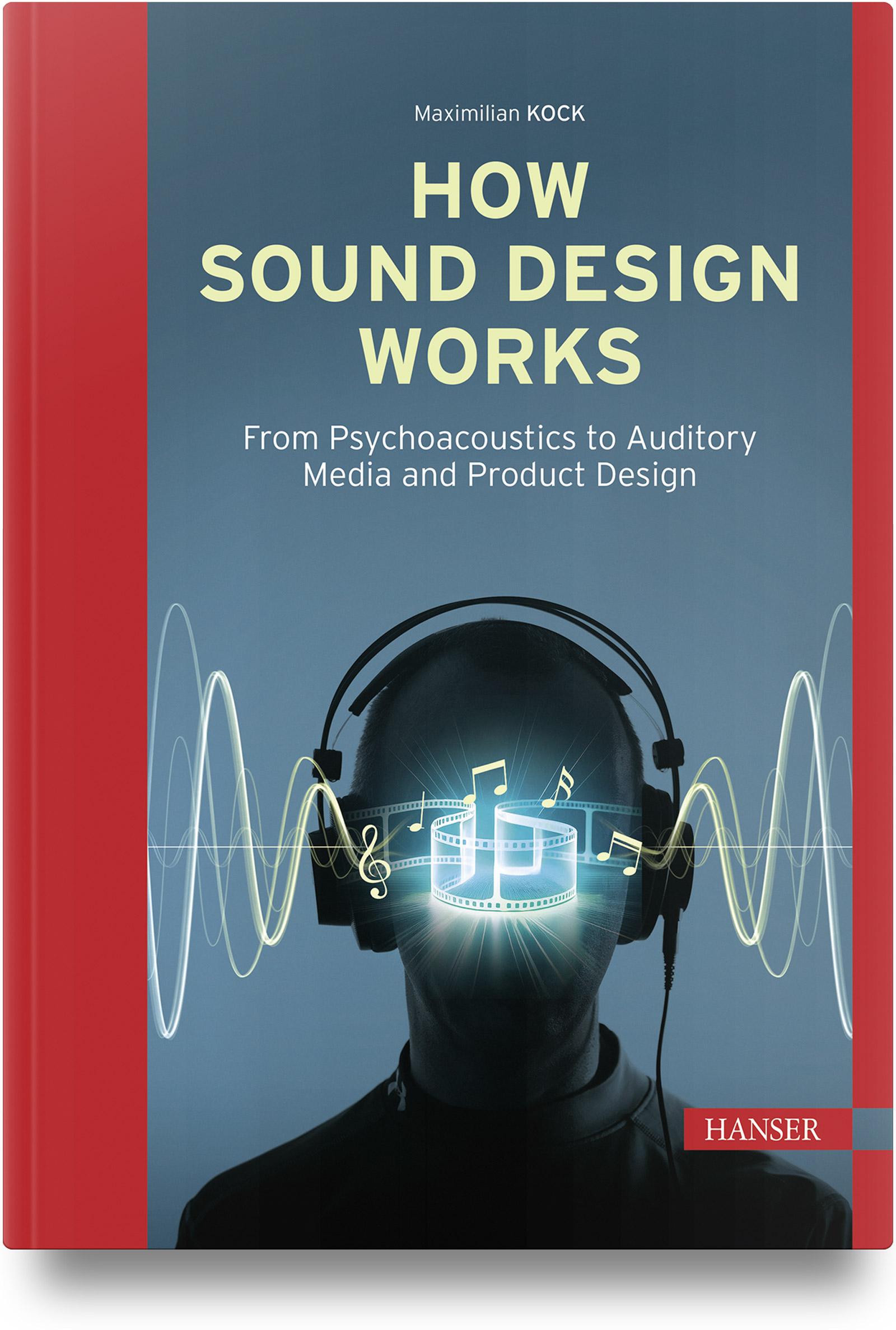
This concise reference book helps readers understand and implement sound design not merely as a technical aspect of production, but as an opportunity for innovative audio design for video. It is grounded in findings from psychoacoustic research: How do people hear, and what role do their personal listening history and individual listening preferences play in this process?
Sound design for moving images is a domain of practitioners in which knowledge is primarily passed down orally. Consequently, there are very few studies in the literature addressing the question of why the audio channel is perceived by audiences as adequate to the visual channel and as effective in its immersive impact.
What fundamental considerations must be taken into account in auditory design? Why do we experience some audiovisual works as more immersive and more poerful in their effect than others?
In a listening test, 240 participants were each played a video through headphones in stereo in one of four versions (two different films, each combined with one of four audio types). The results of this study confirm the practical insight of many professional sound designers: that the sound track, in terms of its immersive effect, constitutes a distinct, highly specialized medium of communication.
Pay easily by card, Klarna, Apple Pay or Google Pay. Not happy? You always have a 14-day money-back guarantee. Read more in our terms. If you have any questions, email us at hello@memmo.org.
Memmo makes studying easier – wherever you are in the world. We bring your course books and smart study tools together in one place: summaries, quizzes, podcasts and flashcards. Plus Ted, your study buddy who answers anything you wonder. Over 50,000 students already study here – built to help you learn faster and stress less.