
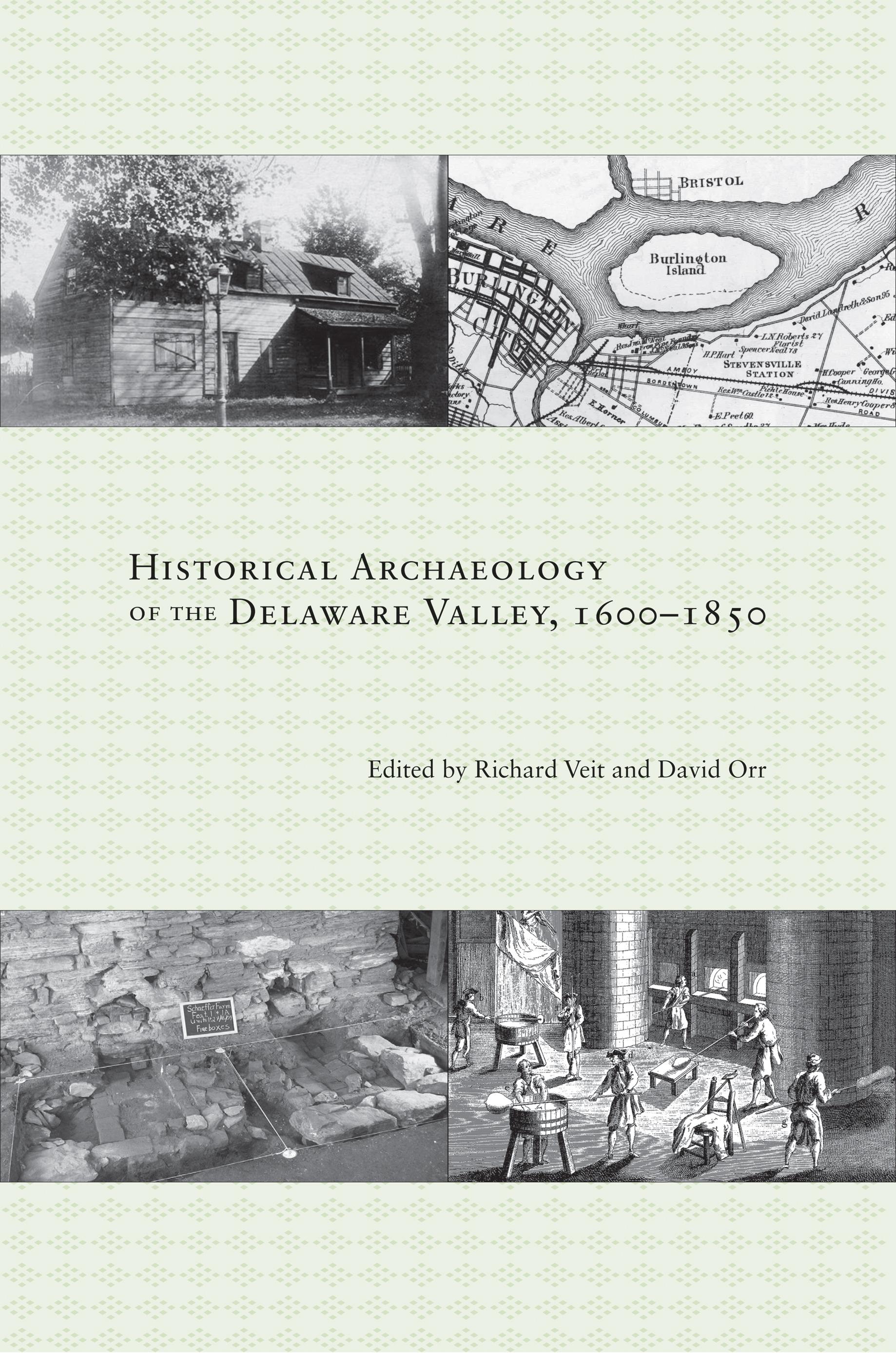
The Delaware Valley is a distinct region situated within the Middle Atlantic states, encompassing portions of Delaware, Pennsylvania, New Jersey, and Maryland. With its cultural epicenter of Philadelphia, its surrounding bays and ports within Maryland and Delaware, and its conglomerate population of European settlers, Native Americans, and enslaved Africans, the Delaware Valley was one of the great cultural hearths of early America. The region felt the full brunt of the American Revolution, briefly served as the national capital in the post-Revolutionary period, and sheltered burgeoning industries amidst the growing pains of a young nation. Yet, despite these distinctions, the Delaware Valley has received less scholarly treatment than its colonial equals in New England and the Chesapeake region.
In Historical Archaeology of the Delaware Valley, 1600–1850, Richard Veit and David Orr bring together fifteen essays that represent the wide range of cultures, experiences, and industries that make this region distinctly American in its diversity. From historic-period American Indians living in a rapidly changing world to an archaeological portrait of Benjamin Franklin, from an eighteenth-century shipwreck to the archaeology of Quakerism, this volume highlights the vast array of research being conducted throughout the region. Many of these sites discussed are the locations of ongoing excavations, and archaeologists and historians alike continue to debate the region’s multifaceted identity.
The archaeological stories found within Historical Archeology of the Delaware Valley, 1600–1850 reflect the amalgamated heritage that many American regions experienced, though the Delaware Valley certainly exemplifies a richer experience than most: it even boasts the palatial home of a king (Joseph Bonaparte, elder brother of Napoleon and former King of Naples and Spain). This work, thoroughly based on careful archaeological examination, tells the stories of earlier generations in the Delaware Valley and makes the case that New England and the Chesapeake are not the only cultural centers of colonial America.
Pay easily by card, Klarna, Apple Pay or Google Pay. Not happy? You always have a 14-day money-back guarantee. Read more in our terms. If you have any questions, email us at hello@memmo.org.
Memmo makes studying easier – wherever you are in the world. We bring your course books and smart study tools together in one place: summaries, quizzes, podcasts and flashcards. Plus Ted, your study buddy who answers anything you wonder. Over 75,000 students already study here – built to help you learn faster and stress less.