
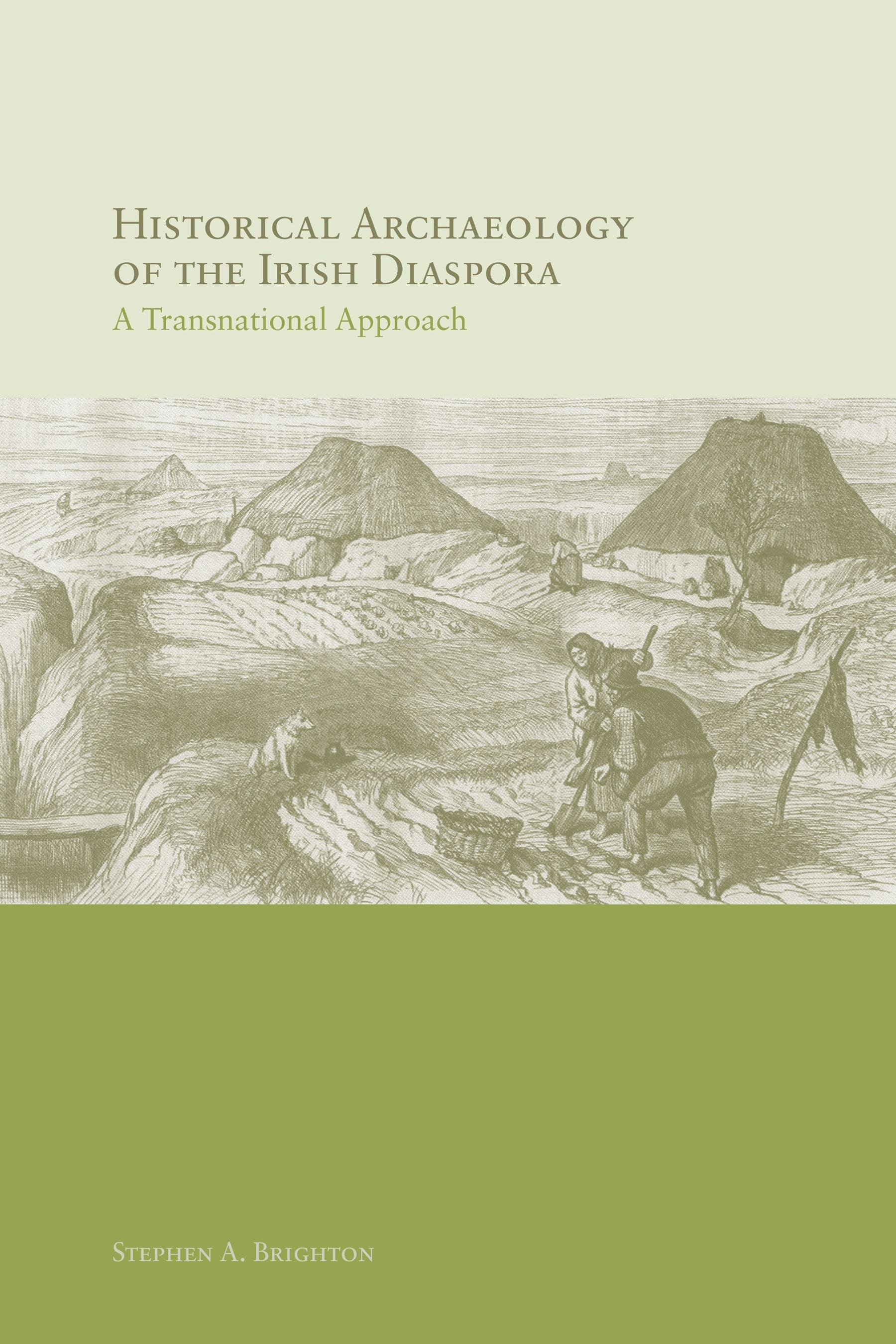
Anthropologist Brighton (Maryland) offers a historical archaeological investigation of the diaspora of Ireland, reflecting the migration of Irish immigrants to the US during a turbulent period in Irish history from the mid-1840s to the 1850s. Brighton’s work is the first to offer a study through an archaeological lens connecting Irish communities spanning two continents and covering four sites: two in Ireland, specifically, in County Roscommon, and two in the US, the Five Points section of Manhattan, New York, as well as the historically Irish community in Paterson, New Jersey. There have been some recent diasporic studies on Irish migrations of the 19th century, such as Catherine Nash’s Of Irish Descent: Origin Stories, Genealogy, and the Politics of Belonging (2008). However, Brighton’s technique is inspired from transnational investigations of the African diaspora to the Atlantic world. This volume can serve as an excellent research tool for students of Ireland as well as diasporic archaeology. Summing Up: Highly recommended. All students of archaeology of the modern world.”—B. C. Ryan, Syracuse University, Choice
Between 1845 and 1852, a watershed event in Ireland’s history—the Great Hunger—forced more than one million starved and dispossessed people, most of them poor tenant farmers, to leave their native country for the shores of the United States. Further weakened by the arduous voyage across the Atlantic Ocean, many sought refuge in the harbor cities in which they landed. Not surprisingly, Irish immigrants counted as one quarter of New York City’s population during the 1850s.
In Historical Archaeology of the Irish Diaspora, Stephen A. Brighton places Irish and Irish American material culture within a broad historical context, including the waves of immigration that preceded the Famine and the development of the Irish American communities that followed it. He meticulously details the archaeological research connected with excavations at two pre-Famine sites in County Roscommon, Ireland, and with several immigrant tenements located in the Five Points, Manhattan, and the Dublin section of nearby Paterson, New Jersey. Using this transnational approach to link artifacts and ceramics found in rural Ireland with those discovered in sites in the urban, northeastern United States, Brighton also employs contemporary diaspora studies to illustrate how various factions sustained a distinct homeland connection even as the Irish were first alienated from, and then gradually incorporated into, American society.
With more than forty million Americans claiming Irish ancestry, fully understanding Ireland’s traumatic history and its impact on the growth of the United States remains a vital task for researchers on both sides of the Atlantic. Brighton’s study of lived experience follows a fascinating historical path that will aid scholars in a variety of disciplines.
Pay easily by card, Klarna, Apple Pay or Google Pay. Not happy? You always have a 14-day money-back guarantee. Read more in our terms. If you have any questions, email us at hello@memmo.org.
Memmo makes studying easier – wherever you are in the world. We bring your course books and smart study tools together in one place: summaries, quizzes, podcasts and flashcards. Plus Ted, your study buddy who answers anything you wonder. Over 75,000 students already study here – built to help you learn faster and stress less.