
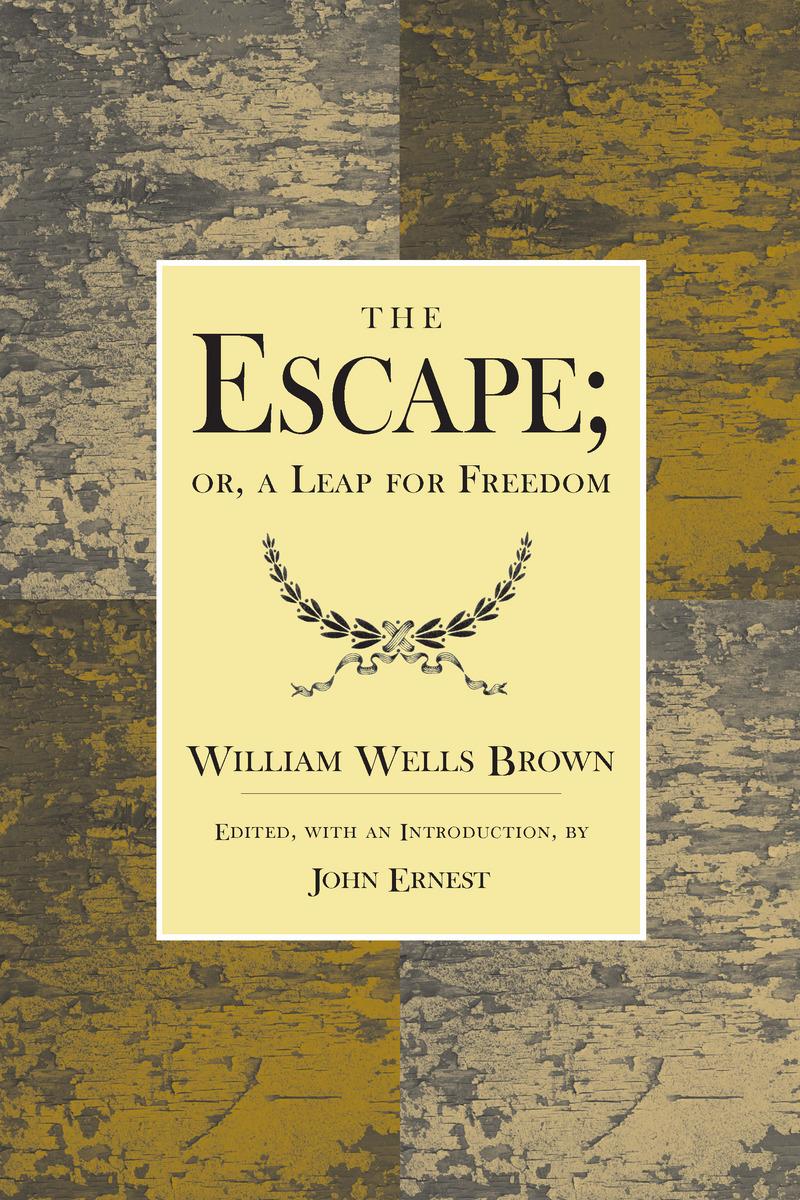
A well-known nineteenth-century abolitionist and former slave, William Wells Brown was a prolific writer and lecturer who captivated audiences with readings of his drama The Escape; or, a Leap for Freedom (1858). The first published play by an African American writer, The Escape explored the complexities of American culture at a time when tensions between North and South were about to explode into the Civil War. This new volume presents the first-edition text of Brown’s play and features an extensive introduction that establishes the work’s continuing significance.
The Escape centers on the attempted sexual violation of a slave and involves many characters of mixed race, through which Brown commented on such themes as moral decay, white racism, and black self-determination. Rich in action and faithful in dialect, it raises issues relating not only to race but also to gender by including concepts of black and white masculinity and the culture of southern white and enslaved women. It portrays a world in which slavery provided a convenient means of distinguishing between the white North and the white South, allowing northerners to express moral sentiments without recognizing or addressing the racial prejudice pervasive among whites in both regions.
John Ernest’s introductory essay balances the play’s historical and literary contexts, including information on Brown and his career, as well as on slavery, abolitionism, and sectional politics. It also discusses the legends and realities of the Underground Railroad, examines the role of antebellum performance art—including blackface minstrelsy and stage versions of Uncle Tom’s Cabin—in the construction of race and national identity, and provides an introduction to theories of identity as performance.
A century and a half after its initial appearance, The Escape remains essential reading for students of African American literature. Ernest’s keen analysis of this classic play will enrich readers’ appreciation of both the drama itself and the era in which it appeared.
Pay easily by card, Klarna, Apple Pay or Google Pay. Not happy? You always have a 14-day money-back guarantee. Read more in our terms. If you have any questions, email us at hello@memmo.org.
Memmo makes studying easier – wherever you are in the world. We bring your course books and smart study tools together in one place: summaries, quizzes, podcasts and flashcards. Plus Ted, your study buddy who answers anything you wonder. Over 75,000 students already study here – built to help you learn faster and stress less.