
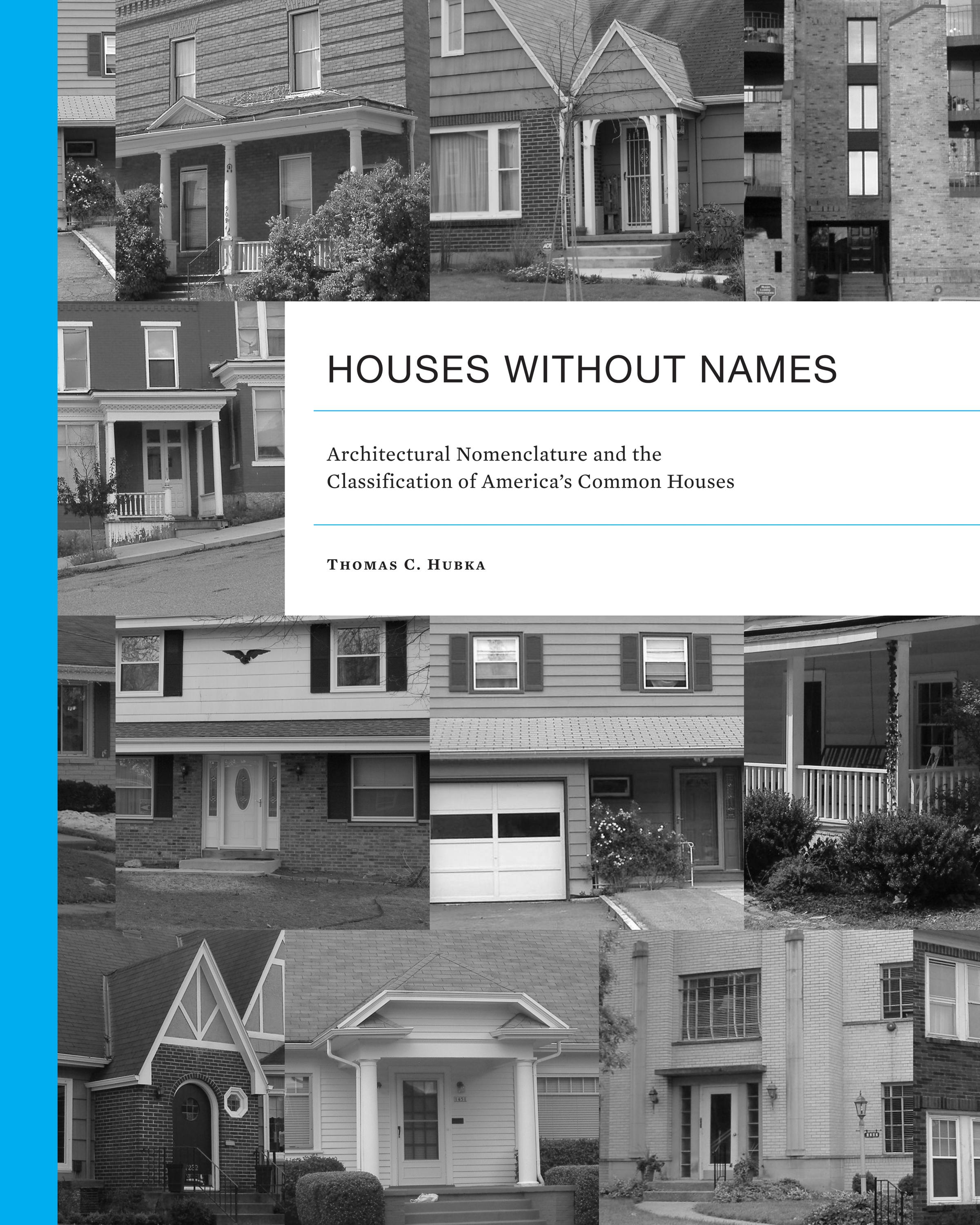
In countless neighborhoods across America, the streets are lined with houses representing no established architectural style. Many of the 80 million homes in the United States today have only loose-fitting, general names like ranch, duplex, bungalow, and flat. Most, however, cannot even be identified by these common names, much less by an architectural type such as Colonial, Italianate, or Queen Anne. The few regionally recognized vernacular terms— shotgun, Cape (Cod), three-decker, and the like—remain exceptions rather than the rule. In this innovative, copiously illustrated guide, Thomas C. Hubka considers why most ordinary, working-class houses lack an adequate identifying nomenclature and proposes new ways to name and classify these anonymous structures, shedding a fresh light on their role in the development of American domestic culture and its housing landscape.
Popular, developer-built, tract, speculative, everyday—whatever they are called, these common homes constitute the largest portion of American housing in all regions and historic periods. Without classification, these dwellings tend to be left out of histories of American building, neglected in preservation surveys and plans, and ignored when it comes to considering their impact on American culture. Current methods of interpreting common houses need not be replaced, Hubka shows, but only modified to include a broader, more complete spectrum of common dwellings. As Hubka explains, by applying an order of census and a floor-plan analysis, scholars can adequately characterize the actual homes in which most Americans live, particularly in recent times after the widespread growth of suburban homes.
Based on years of field observations, measured drawings, and surveys of regional house types, this handbook provides a working vocabulary for the study and appreciation of America’s common houses and will prove useful to preservationists, academics, and architects, as well as owners and residents of America’s most ubiquitous residences.
Pay easily by card, Klarna, Apple Pay or Google Pay. Not happy? You always have a 14-day money-back guarantee. Read more in our terms. If you have any questions, email us at hello@memmo.org.
Memmo makes studying easier – wherever you are in the world. We bring your course books and smart study tools together in one place: summaries, quizzes, podcasts and flashcards. Plus Ted, your study buddy who answers anything you wonder. Over 75,000 students already study here – built to help you learn faster and stress less.