
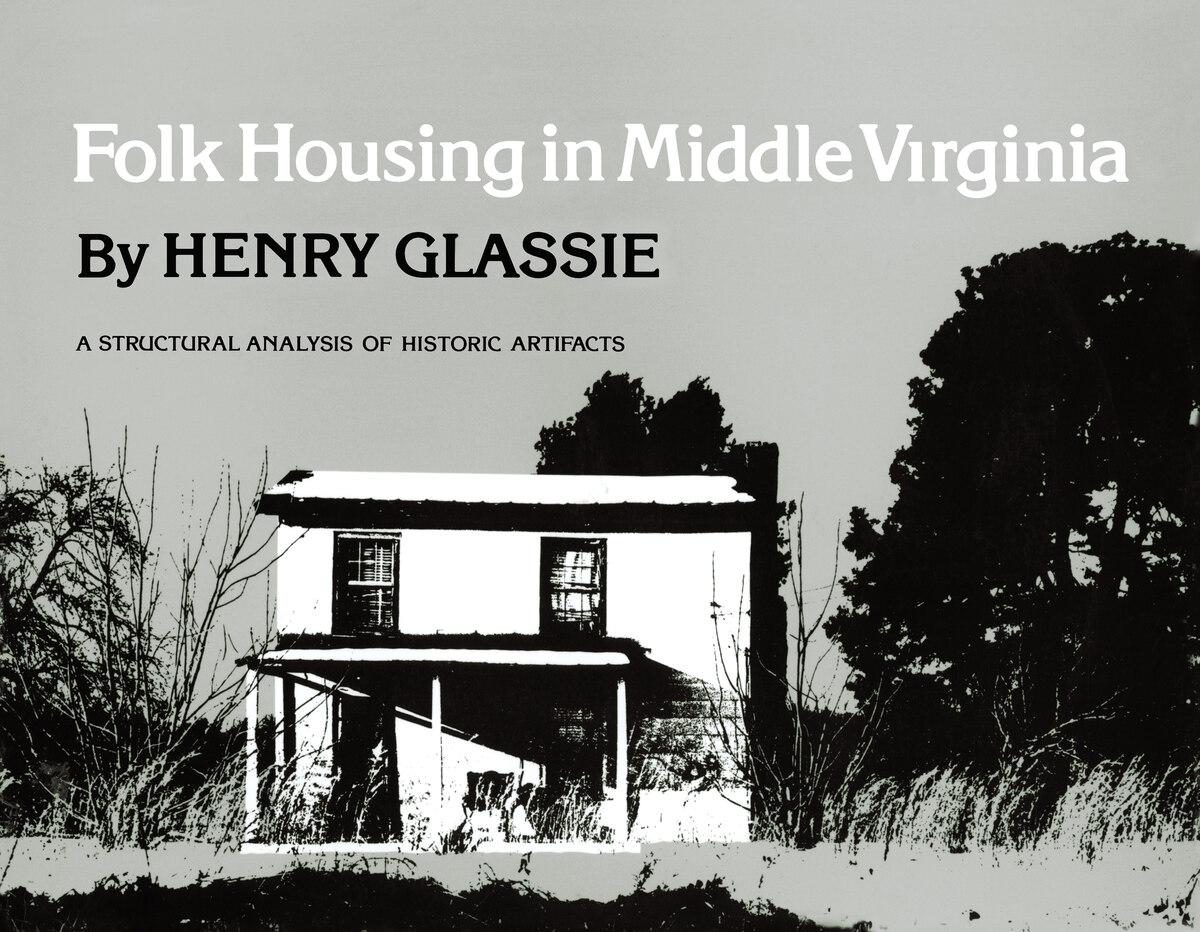
In this fascinating analysis of eighteenth-century vernacular houses of Middle Virginia, Henry Glassie presents a revolutionary and carefully constructed methodology for looking at houses and interpreting from them the people who built and used them. Glassie believes that all relevant historical evidence—unwritten as well as written—must be taken into account before historical truth can be found. He is convinced that any study of man’s past must make use of nonverbal and verbal evidence, since written history—the story of man as recorded by the intellectual elite—does not tell us much about the everyday life, thoughts, and fears of the ordinary people of the past. Such people have always been in the majority, however, and a way has to be found to include them in any valid history. In Folk Housing in Middle Virginia, Glassie admirably sets forth such a way.
The people who lived in Middle Virginia in the eighteenth century are almost unknown to history because so little has been written about them. After Glassie selected the area—roughly Goochland and Louisa counties—for study, he selected a representative part of the countryside, recorded all the older houses there, developed a transformational grammar of traditional house designs, and examined the area’s architectural stability and change.
Comparing the houses with written accounts of the period, he found that the houses became more formal and less related to their environment at the same time as the areas established political, economic, and religious institutions were disintegrating. It is as though the builders of the houses were deliberately trying to impose order on the surrounding chaotic world. Previous orthodox historical interpretations of the period have failed to note this. Glassie has provided new insights into the intellectual and social currents of the period, and has rescued a heretofore little-known people from historiographical oblivion. Combining a fresh, perceptive approach with a broad interdisciplinary body of knowledge, Glassie has made an invaluable breakthrough in showing the way to understand the people of history who have left their material things as their only legacy.
Pay easily by card, Klarna, Apple Pay or Google Pay. Not happy? You always have a 14-day money-back guarantee. Read more in our terms. If you have any questions, email us at hello@memmo.org.
Memmo makes studying easier – wherever you are in the world. We bring your course books and smart study tools together in one place: summaries, quizzes, podcasts and flashcards. Plus Ted, your study buddy who answers anything you wonder. Over 50,000 students already study here – built to help you learn faster and stress less.