
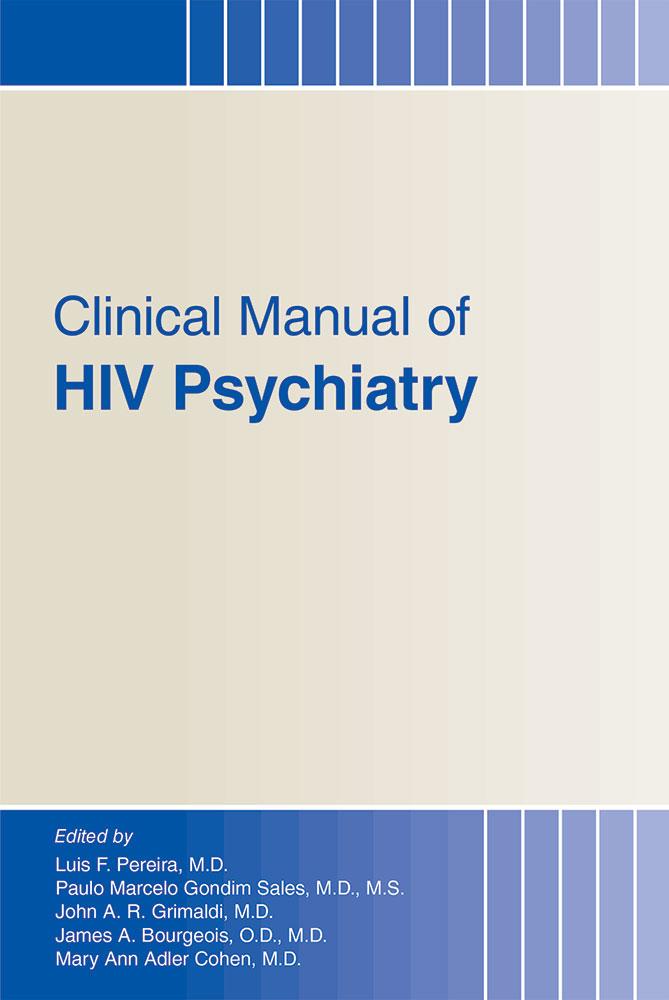
When the AIDS pandemic emerged in 1981, the diagnosis of AIDS was considered terminal. Over the four decades since then, advances in medicine have transformed HIV/AIDS into chronic and manageable—if still severe— condition. Despite this success, the annual incidence of HIV remains high, with 1.3 million new HIV infections worldwide and more than 30,000 in the United States.
The chapters in this illuminating and concise new manual suggest that this continued high incidence is driven at least in part a lack of a biopsychosocial approach to HIV prevention and care. The authors suggest that destigmatizing mental illness and integrating psychiatric aspects into multispecialty medical treatment, research, and public health policy are essential for the next level of meaningful progress in both prevention of HIV transmission and in the care of persons infected with and affected by HIV.
Drawing on the expertise of over 20 contributors, this book is organized into four key sections that examine
• Psychiatric screening, risk assessment, consultation, and evaluation in HIV care, including discussions of HIV testing, prevention, and stigma• Psychiatric illnesses associated with HIV infection, such as depressive, anxiety, substance-related and addictive, and neurocognitive disorders• The clinical management of psychiatric comorbidities in HIV-positive individuals, with attention to interactions between antiretrovirals and psychotropics, palliative and end-of-life care, and ethical considerations in HIV psychiatry • The challenges of providing HIV care against the backdrop of the COVID-19 pandemic and in resource-limited settings
Offering quick-reference tables and take-home points that distill key information, this clinically focused manual is an essential resource for infectious disease specialists, internists, pediatricians, psychiatrists, psychologists, nurses, and social workers who care for patients across the lifespan.
Pay easily by card, Klarna, Apple Pay or Google Pay. Not happy? You always have a 14-day money-back guarantee. Read more in our terms. If you have any questions, email us at hello@memmo.org.
Memmo makes studying easier – wherever you are in the world. We bring your course books and smart study tools together in one place: summaries, quizzes, podcasts and flashcards. Plus Ted, your study buddy who answers anything you wonder. Over 50,000 students already study here – built to help you learn faster and stress less.