
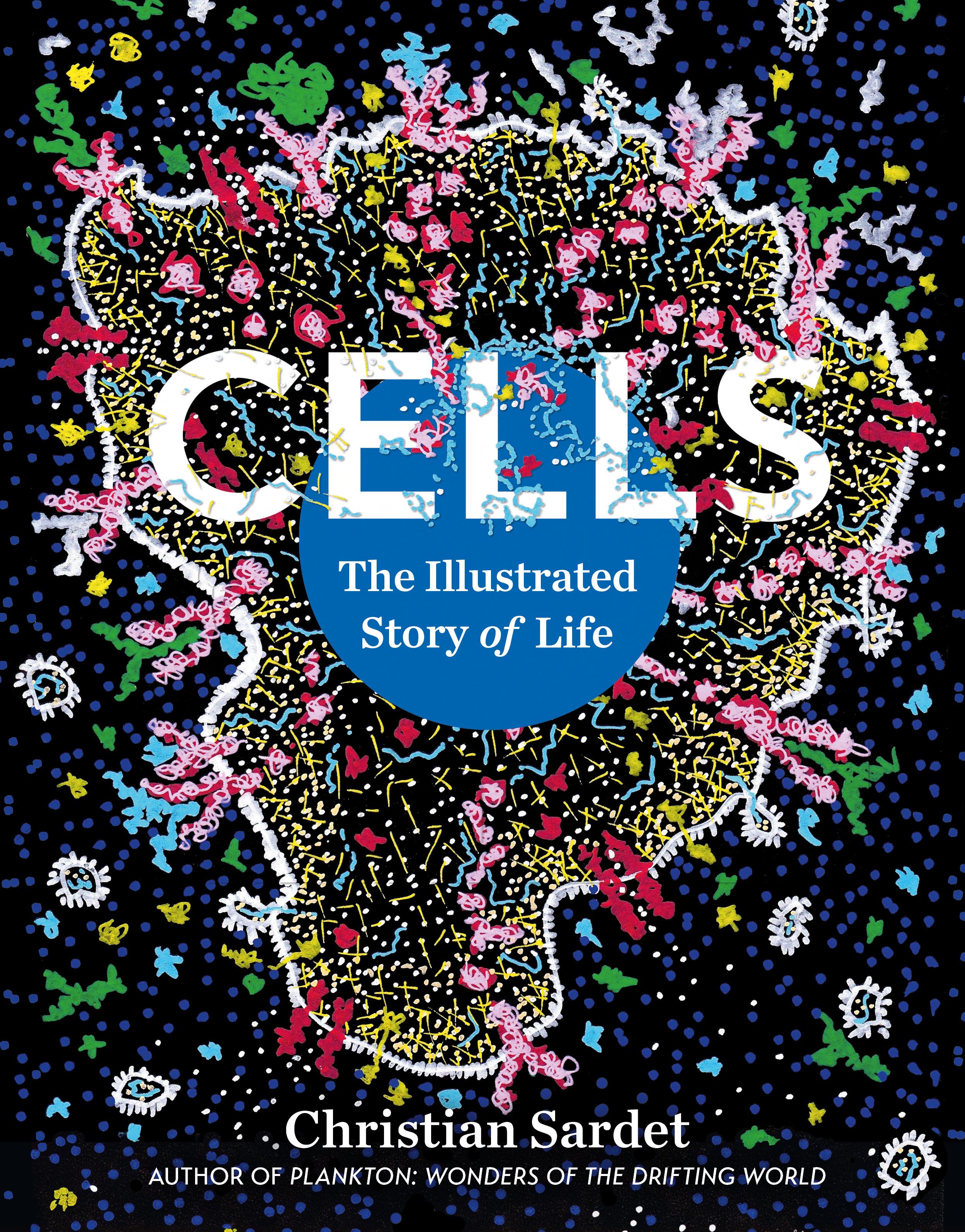
A fascinating journey through the origins and evolution of life, from an award-winning biologist and artist
“A vibrant exploration of the history of life.”—Kirkus Reviews
“Magnificent . . . I am amazed by the scope of Cells.”—Tim Hunt, PhD, Nobel Prize–winning biochemist
Note: This book is recommended for larger, full-color devices. Please pan and zoom to explore the detailed illustrations.
In the 19th century, biologists established that all living organisms—from animals and plants to algae and fungi—are composed of cells. Around the same time, Charles Darwin introduced his theory of evolution, proposing that all life on Earth shares a common origin. Today, the scientific community has defined that origin as LUCA: the last universal common ancestor.
This is the story of how LUCA—the ancestral cell—emerged billions of years ago and gave rise to the vast diversity of life-forms we see today. Blending art with science, biologist Christian Sardet explores the tiny structures and life-giving functions of DNA, RNA, and proteins; examines the mysteries of reproduction, aging, and death; and offers a novel answer to the immortal question, “What is life?”
Life is a social network of cells.
Pay easily by card, Klarna, Apple Pay or Google Pay. Not happy? You always have a 14-day money-back guarantee. Read more in our terms. If you have any questions, email us at hello@memmo.org.
Memmo makes studying easier – wherever you are in the world. We bring your course books and smart study tools together in one place: summaries, quizzes, podcasts and flashcards. Plus Ted, your study buddy who answers anything you wonder. Over 50,000 students already study here – built to help you learn faster and stress less.