
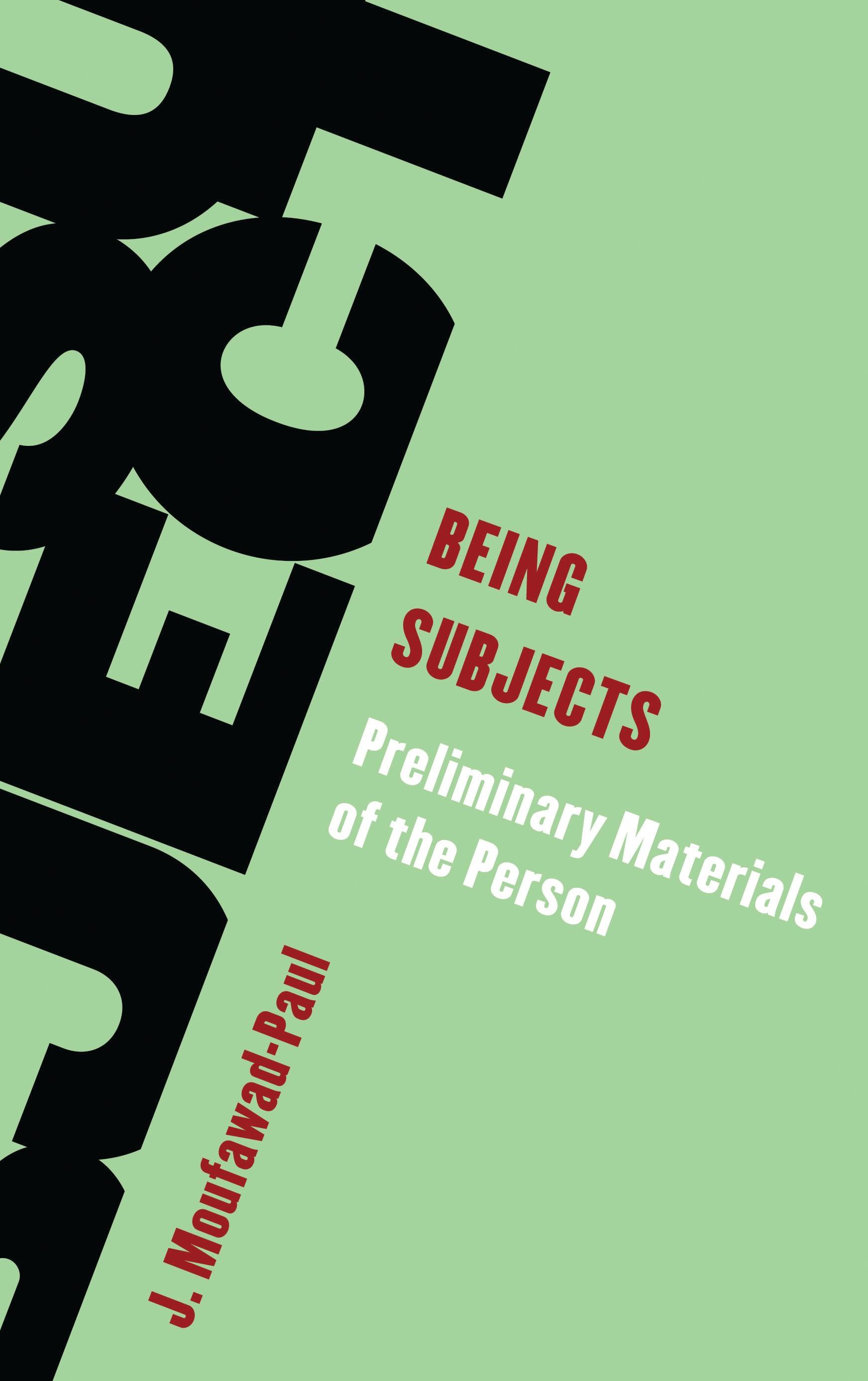
The concept of the subject remains one of the most important and debated notions in social theory and philosophy. Whether it is adopted as a central notion of personhood or rejected as a product of ideology or fiction, its usage has been a theme in a variety of political and speculative thought. Unfortunately, the prevalence of the term has often rendered its meaning opaque.
Being Subjects examines the history of this notion from Descartes to the present and discusses its emergence as a philosophical category as well as its connection to related notions such as essence and being. Drawing from the tradition of Fanon's revolutionary existentialism and a historical materialist approach to thought, J. Moufawad-Paul argues that despite the rejection of the subject by thinkers such as Althusser and Foucault, thinking the subject remains a meaningful philosophical practice for a politics dedicated to radical social transformation. If we can think through the category of the subject, we can also think through the legacy of modernity which includes settler-colonialism, slavery, and capitalism. We can also think through a conception of transformative subjectivity and the path to a new personhood and collective agency beyond this legacy's weight of dead generations.
Being Subjects examines the history of this notion from Descartes to the present and discusses its emergence as a philosophical category as well as its connection to related notions such as essence and being. Drawing from the tradition of Fanon's revolutionary existentialism and a historical materialist approach to thought, J. Moufawad-Paul argues that despite the rejection of the subject by thinkers such as Althusser and Foucault, thinking the subject remains a meaningful philosophical practice for a politics dedicated to radical social transformation. If we can think through the category of the subject, we can also think through the legacy of modernity which includes settler-colonialism, slavery, and capitalism. We can also think through a conception of transformative subjectivity and the path to a new personhood and collective agency beyond this legacy's weight of dead generations.
Pay easily by card, Klarna, Apple Pay or Google Pay. Not happy? You always have a 14-day money-back guarantee. Read more in our terms. If you have any questions, email us at hello@memmo.org.
Memmo makes studying easier – wherever you are in the world. We bring your course books and smart study tools together in one place: summaries, quizzes, podcasts and flashcards. Plus Ted, your study buddy who answers anything you wonder. Over 50,000 students already study here – built to help you learn faster and stress less.