
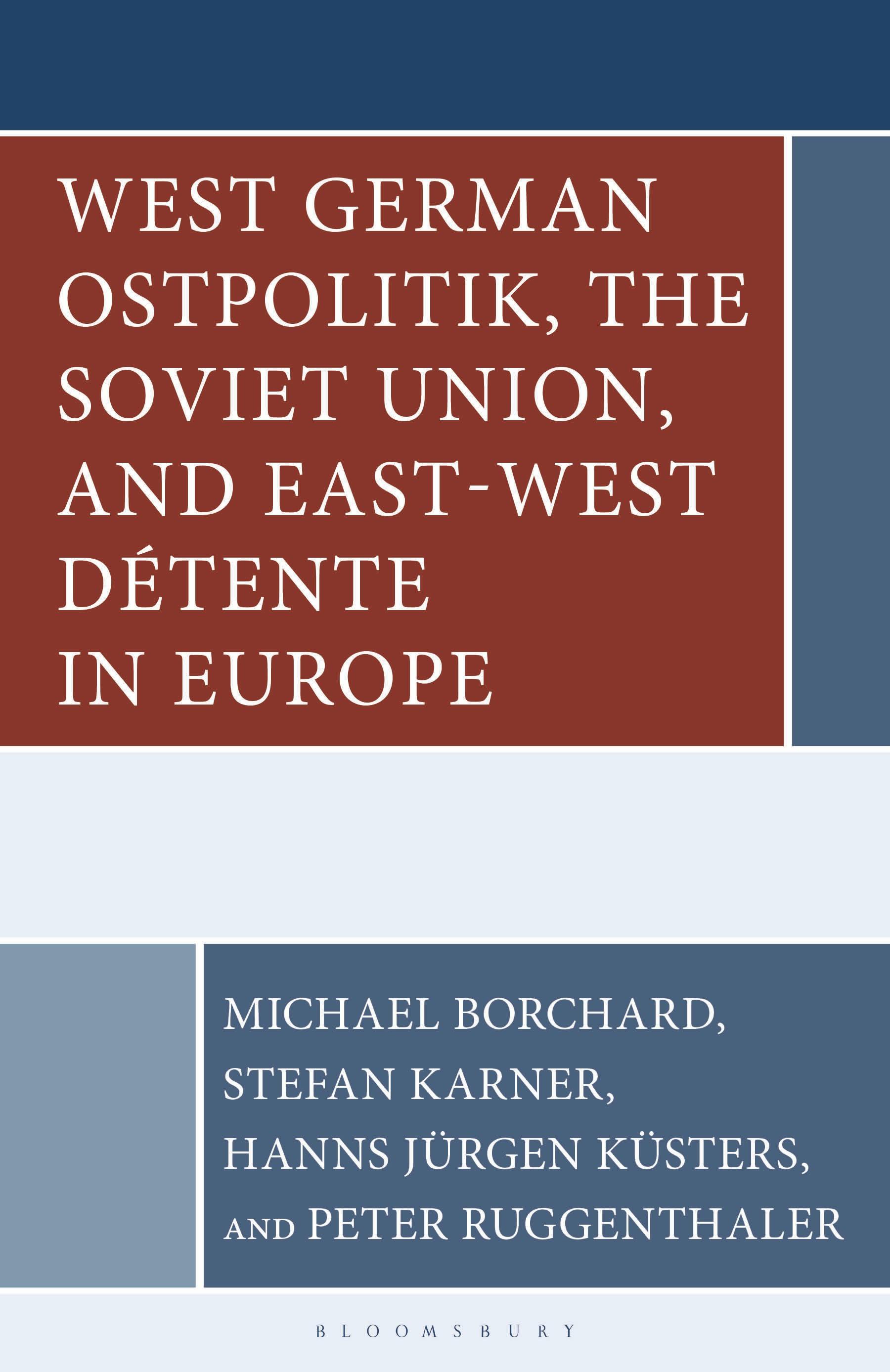
West German Ostpolitik, the Soviet Union, and East-West Détente in Europe explores how the détente policy changed the character of the Cold War.
The Moscow files, now opened for the first time show 50 years later, reveal new insights and implications into the creation and implementation of the détente policy. This collection offers a detailed examination of European security from the mid-1960s to the mid-1970s with focus on five areas: 1) the first stirrings of détente in West German-Soviet relations, the framework conditions of domestic and foreign policy on the two sides and the extent to which interests ultimately enshrined in treaties were contradictory and/or compatible; 2) the preconditions of détente in the first half of the Brezhnev era; 3) economic interests as a driving force of political change; 4) the consequences of the Treaty of Moscow for East European states; and 5) the consequences of the Transatlantic partnership. The contributors highlight the complexity of domestic and international considerations that produced Ostpolitik and the subsequent emergence of long-term East-West détente in Europe, while offering the argument that Eastern policies and détente only came to fruition after the climax of the Cold War.
The Moscow files, now opened for the first time show 50 years later, reveal new insights and implications into the creation and implementation of the détente policy. This collection offers a detailed examination of European security from the mid-1960s to the mid-1970s with focus on five areas: 1) the first stirrings of détente in West German-Soviet relations, the framework conditions of domestic and foreign policy on the two sides and the extent to which interests ultimately enshrined in treaties were contradictory and/or compatible; 2) the preconditions of détente in the first half of the Brezhnev era; 3) economic interests as a driving force of political change; 4) the consequences of the Treaty of Moscow for East European states; and 5) the consequences of the Transatlantic partnership. The contributors highlight the complexity of domestic and international considerations that produced Ostpolitik and the subsequent emergence of long-term East-West détente in Europe, while offering the argument that Eastern policies and détente only came to fruition after the climax of the Cold War.
Pay easily by card, Klarna, Apple Pay or Google Pay. Not happy? You always have a 14-day money-back guarantee. Read more in our terms. If you have any questions, email us at hello@memmo.org.
Memmo makes studying easier – wherever you are in the world. We bring your course books and smart study tools together in one place: summaries, quizzes, podcasts and flashcards. Plus Ted, your study buddy who answers anything you wonder. Over 50,000 students already study here – built to help you learn faster and stress less.