
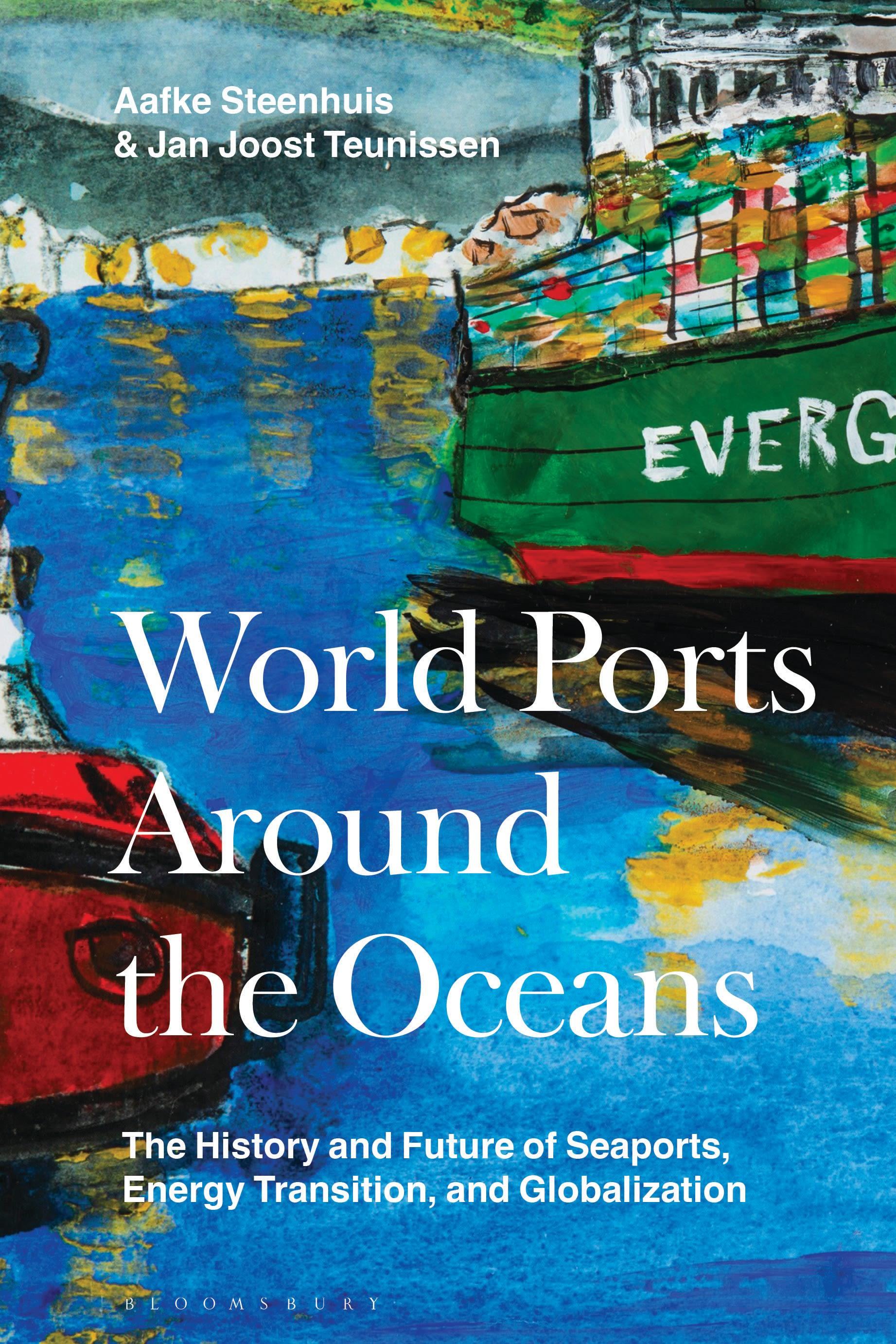
Shipping, ports and trade are essential to humanity. Oceans, seas and rivers cover more than two-thirds of the Earth's surface. Since ancient times, people transported their goods across the water in rafts, canoes and sailboats. Now we sail across the oceans with container ships, bulk carriers and tankers. Indeed, ninety percent of world trade moves from port to port by ship. Ports are the hubs of the global society.
But ports and world trade are easily disrupted: a shipping accident in the Suez Canal, the COVID-19 pandemic, wars, climate change, geopolitical tensions. What happens in world ports? How did they originate? How have they developed? How did China's ports expand so dramatically? Can ports continue to grow indefinitely? What are they doing about climate change and energy transition? What will the maritime world look like in the future?
These are questions that Aafke Steenhuis and Jan Joost Teunissen asked over the past ten years as they traveled to strategic and colorful ports in the world, speaking with port experts, economists, writers and sociologists, and uncovering the facinating ecosystem of ports including Shanghai, Singapore, Mumbai, Dubai, Alexandria, Cape Town, Rotterdam, Hamburg, Marseille, Genoa, Los Angeles and Santos.
But ports and world trade are easily disrupted: a shipping accident in the Suez Canal, the COVID-19 pandemic, wars, climate change, geopolitical tensions. What happens in world ports? How did they originate? How have they developed? How did China's ports expand so dramatically? Can ports continue to grow indefinitely? What are they doing about climate change and energy transition? What will the maritime world look like in the future?
These are questions that Aafke Steenhuis and Jan Joost Teunissen asked over the past ten years as they traveled to strategic and colorful ports in the world, speaking with port experts, economists, writers and sociologists, and uncovering the facinating ecosystem of ports including Shanghai, Singapore, Mumbai, Dubai, Alexandria, Cape Town, Rotterdam, Hamburg, Marseille, Genoa, Los Angeles and Santos.
Pay easily by card, Klarna, Apple Pay or Google Pay. Not happy? You always have a 14-day money-back guarantee. Read more in our terms. If you have any questions, email us at hello@memmo.org.
Memmo makes studying easier – wherever you are in the world. We bring your course books and smart study tools together in one place: summaries, quizzes, podcasts and flashcards. Plus Ted, your study buddy who answers anything you wonder. Over 75,000 students already study here – built to help you learn faster and stress less.